 Open Umay
Sharpening and maintaining knives
The simple habit that keeps your knives truly sharp every day.
« The former is done often, the latter rarely. »
What it is
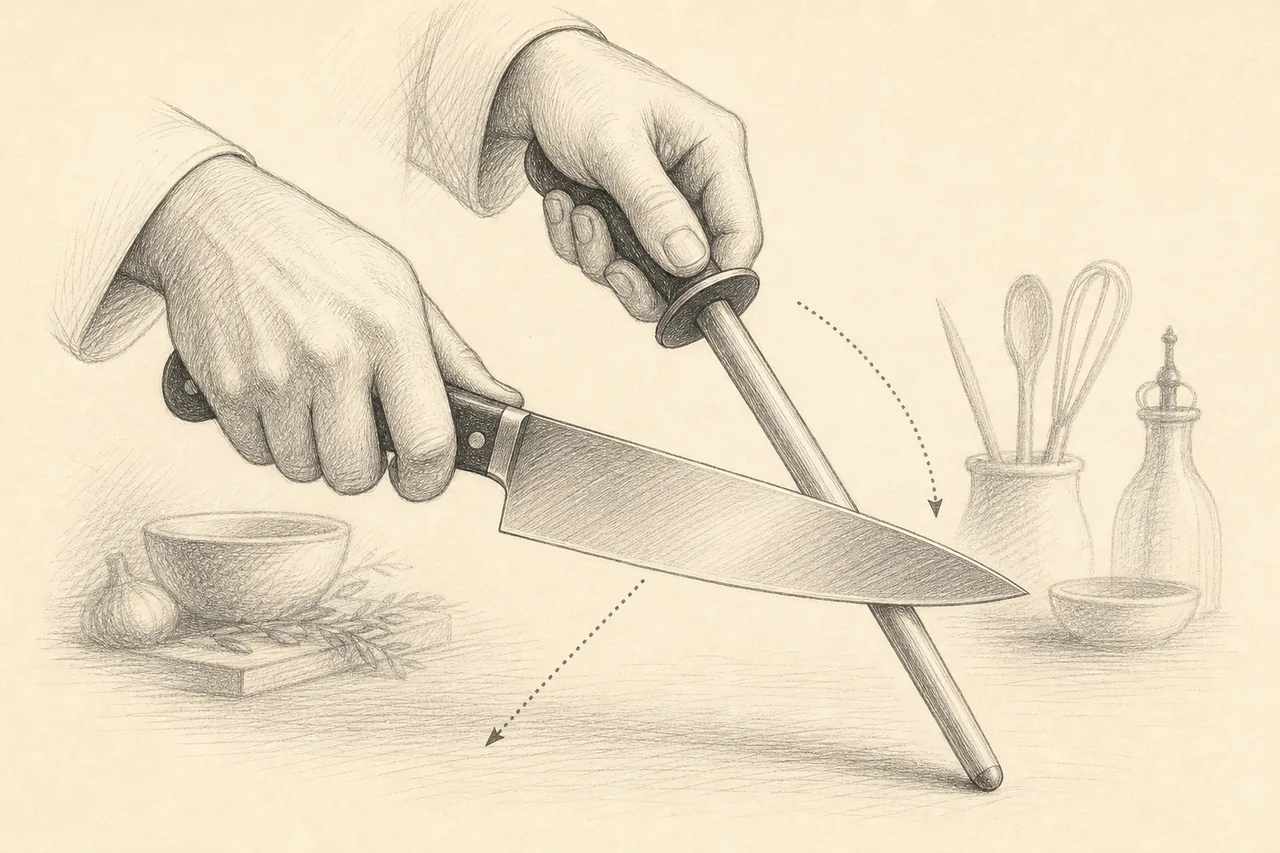
A sharp knife cuts on its own; a dull knife requires force and slips. Maintaining your knives involves two distinct actions: honing with a steel, which straightens the edge between sharpenings, and using a whetstone or sharpener, which removes material to recreate an edge. The former is done often, the latter rarely.
« A knife used every day requires more maintenance than an occasionally used knife. »
When to use it
Run the knife over a honing steel before every major prep session; it takes ten seconds. Actually sharpen (with a whetstone or sharpener) as soon as the knife slips on a tomato instead of biting into it, generally every two to three months depending on use. A knife used every day requires more maintenance than an occasionally used knife.
How to choose
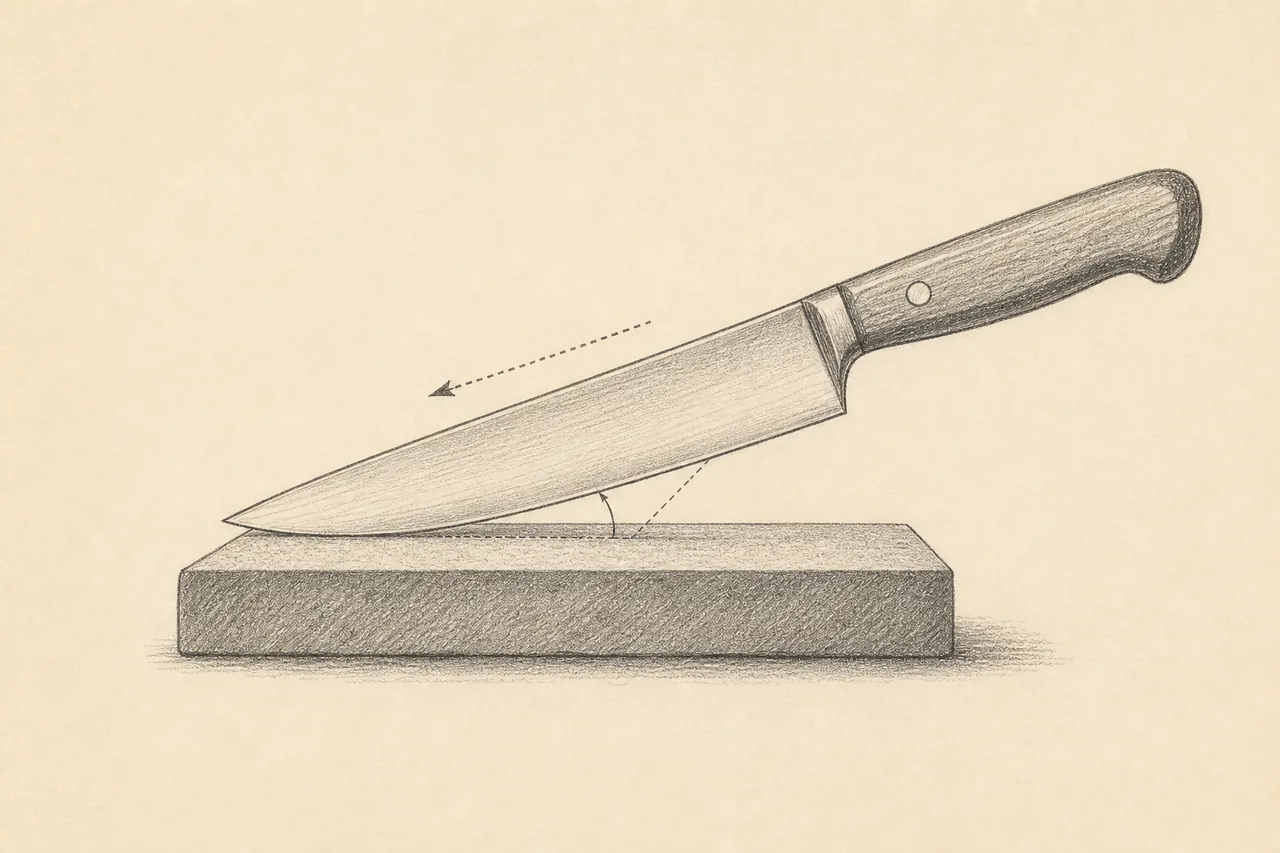
Steel or ceramic honing rod, 25 to 30 cm. For a whetstone, a grit of 1000 for sharpening, 3000 to 6000 for polishing is more than enough at home. Pull-through sharpeners are fast but remove more material with each pass, making them more aggressive. Start with a honing steel; it's the most useful everyday habit.
« - Constant angle, about 15 to 20 degrees depending on the knife - Always in the same direction, from heel to tip - Rin »
Care
- Constant angle, about 15 to 20 degrees depending on the knife
- Always in the same direction, from heel to tip
- Rinse and dry the blade after each pass on the stone
- Store the stone away from moisture between uses
« A simple, regular pass on the honing steel already prevents 80% of trips to the whetstone. »
The common mistake
Believing that a knife that cuts poorly is a bad knife, rather than simply a poorly maintained one. A second common mistake is sharpening too often and too hard, which wears down the blade faster than necessary. A simple, regular pass on the honing steel already prevents 80% of trips to the whetstone.