 Open Umay
The pressure cooker
The pressure that cuts the cooking time of simmered dishes in half
What it is
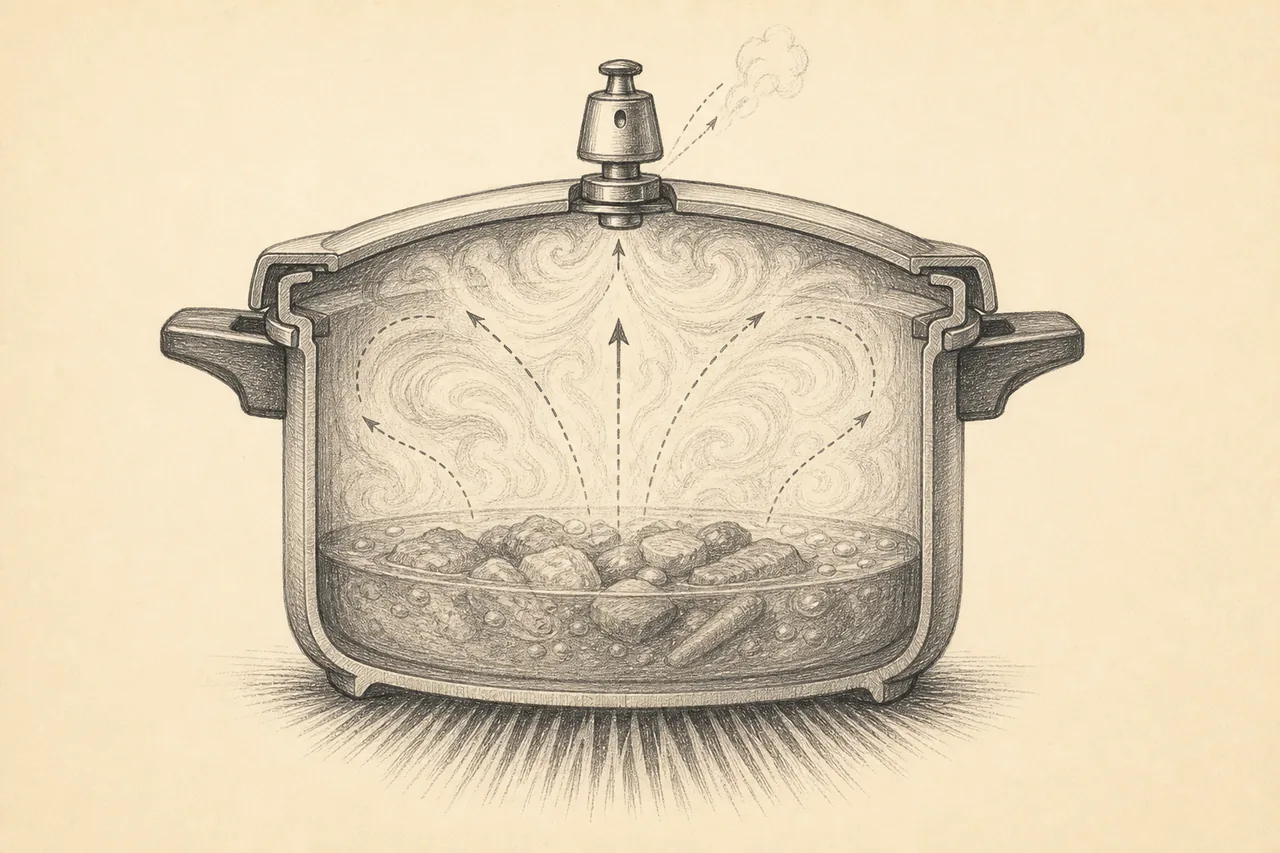
An airtight pot that builds pressure: the trapped steam pushes the temperature beyond 100°C, up to 110-120°C. Food fibers cook much faster, legumes soften without long soaking, and meats in sauce become melt-in-your-mouth tender in a fraction of the usual time. The traditional stovetop pressure cooker and the electric pressure multicooker follow the same principle.
« Cut the time by two or three without losing tenderness, perhaps even gaining some. »
When to use it
For long-cooking dishes you want to shortcut: pot-au-feu, beef bourguignon, lentils, dried chickpeas, marrow bones. Cut the time by two or three without losing tenderness, perhaps even gaining some. Less useful for short or delicate cooking, like crisp green vegetables or a quick steamed fish.
« - Stainless steel rather than aluminum: more durable, does not react with acidic foods - Check for the presence of at »
How to choose
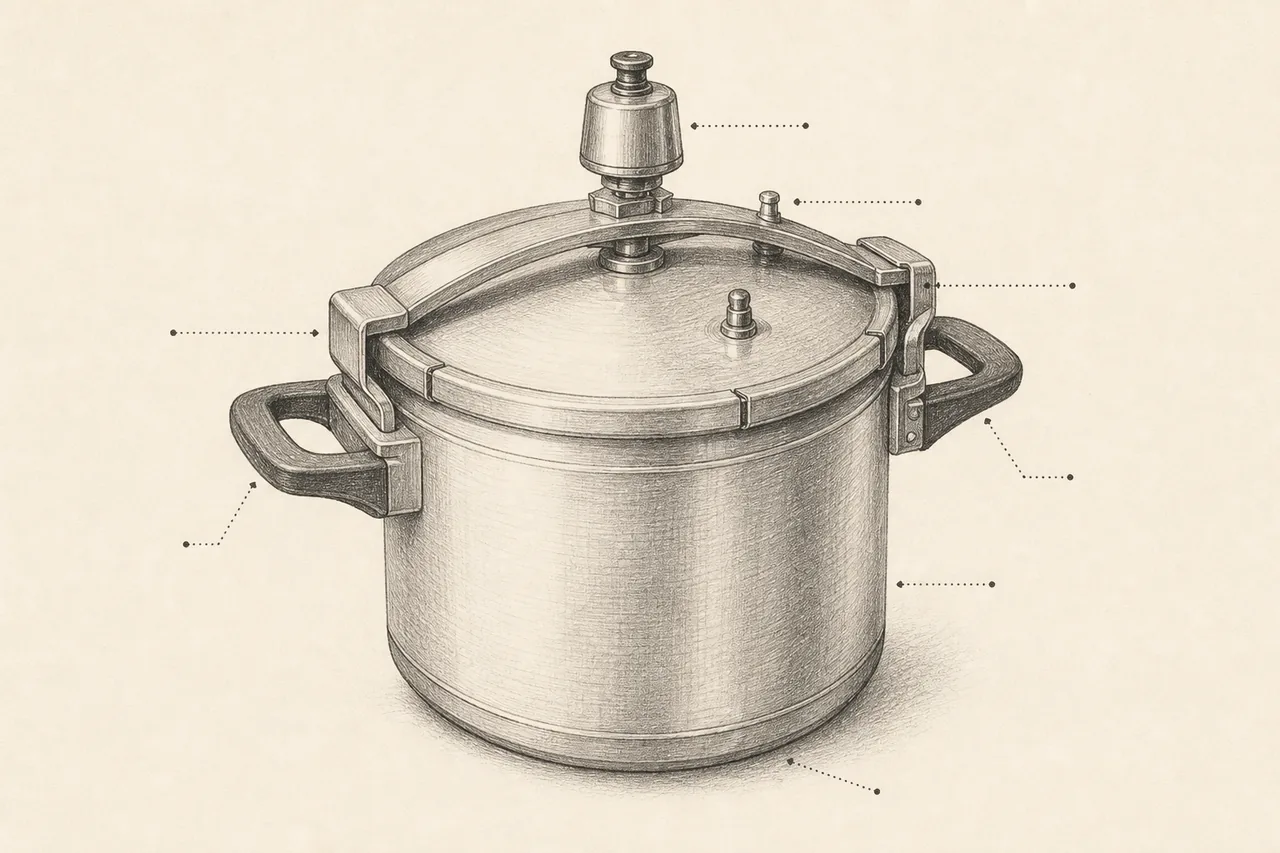
- Stainless steel rather than aluminum: more durable, does not react with acidic foods
- Check for the presence of at least two safety systems (valve and safety gasket)
- The electric multicooker adds programming and automatic keep-warm functions
- Actual usable capacity: count on about 2/3 of the total advertised volume
« Replace the gasket as soon as it hardens or cracks, generally every one to two years. »
Maintenance
Wash the rubber gasket separately in soapy water, and let it dry completely to avoid odors. Check that the valve is not obstructed before each use; a clogged hole prevents the pressure from building correctly. Replace the gasket as soon as it hardens or cracks, generally every one to two years.
« Use quick release under the tap or wait for natural release. »
The common mistake
Opening the cooker without releasing the pressure: this action is dangerous, never force the locked lid. Use quick release under the tap or wait for natural release. Second trap: overfilling, beyond the maximum mark the steam no longer has room to circulate and the pressure struggles to rise.