 Open Umay
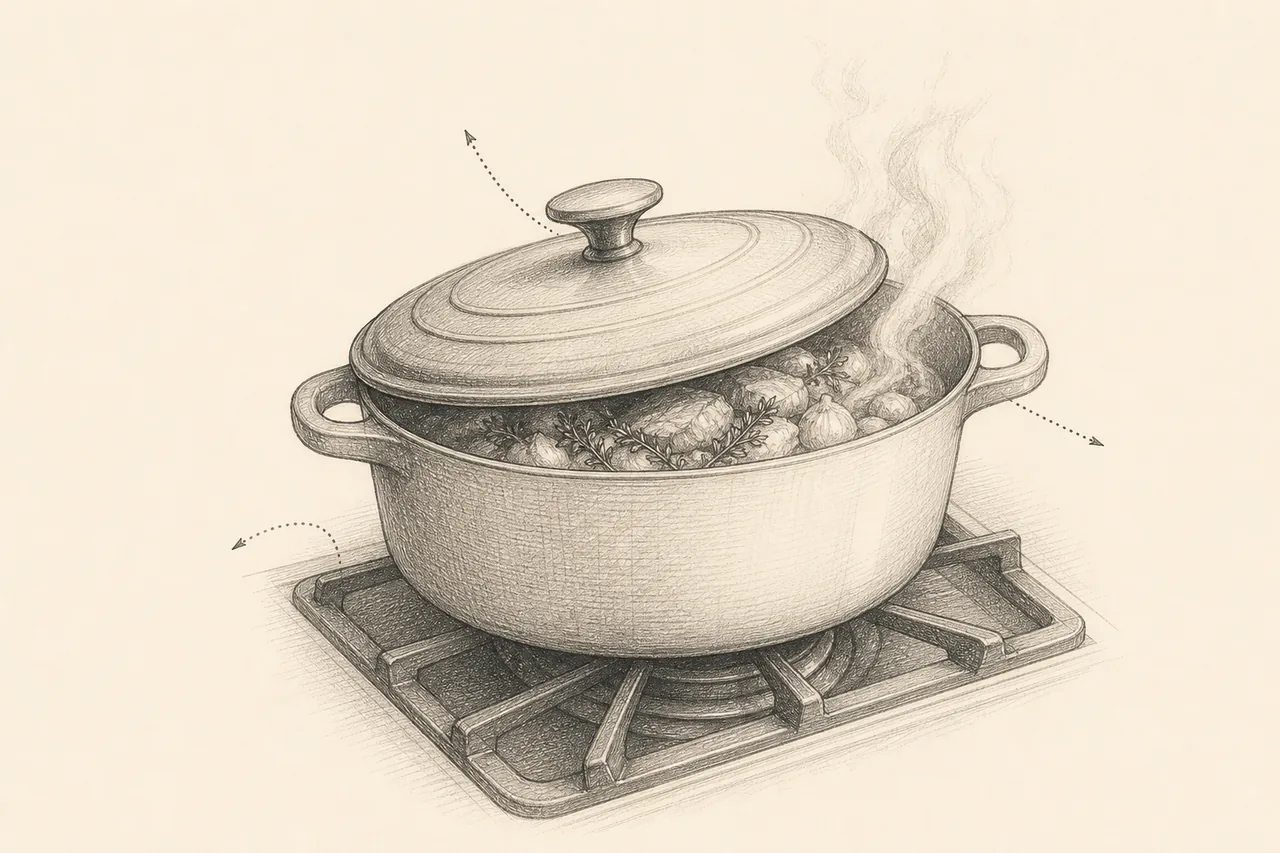
The cast-iron Dutch oven
The heavy pot that simmers gently for hours on end.
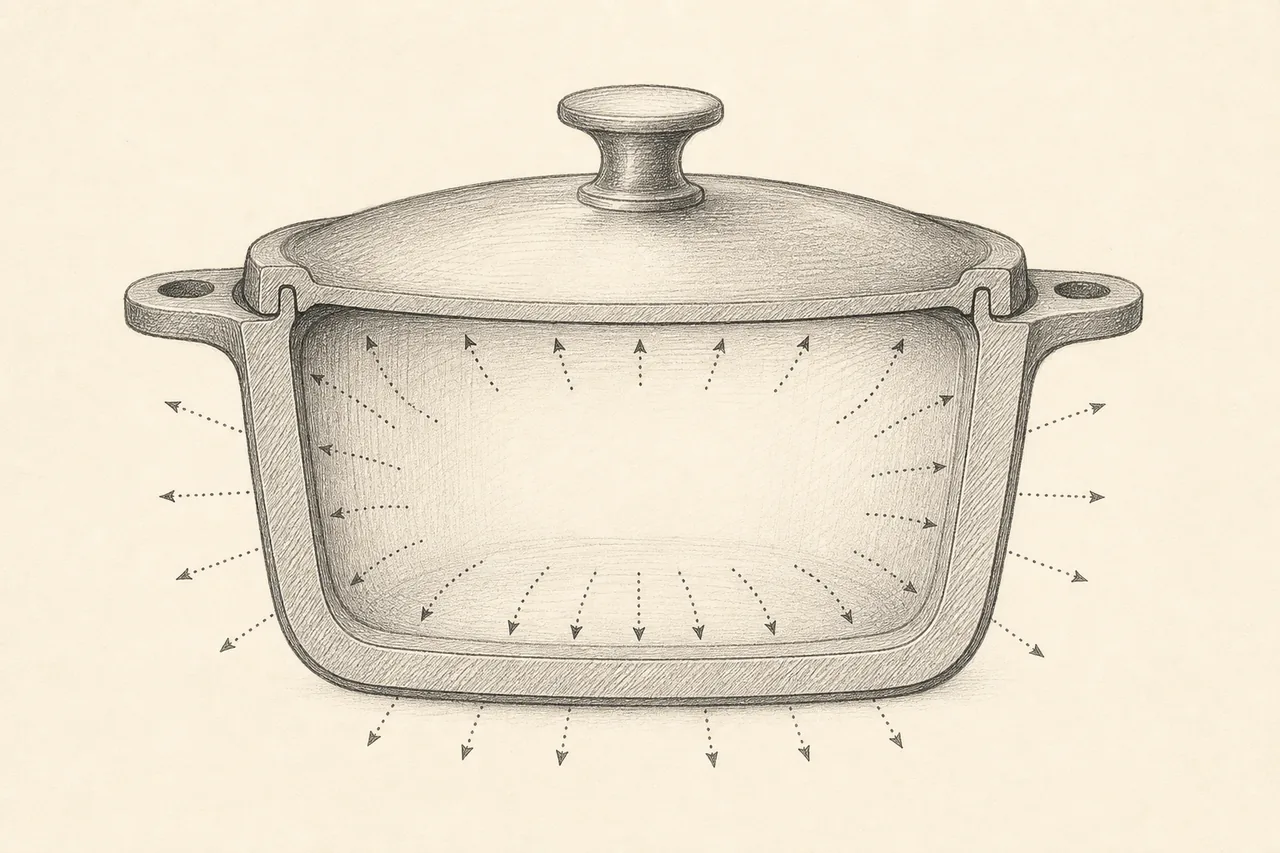
What it is
A thick cast-iron pot, often enameled, that absorbs and radiates heat very slowly and very evenly. Perfect for long, low-heat cooking: stews, braises, homemade bread, and legumes. Heavy, often 4 to 6 kg when empty. It goes seamlessly from the stovetop to the oven and keeps dishes warm for a long time after taking it out.
« It also excels at searing and then cooking slowly in the same vessel, without switching pots. »
When to use it
For anything that simmers a long time: beef bourguignon, pot roast, curry, and crusty bread baked covered. It also excels at searing and then cooking slowly in the same vessel, without switching pots. Less useful for quick everyday cooking, where its weight becomes a drawback rather than an asset.
« Enameled cast iron for easy maintenance, raw cast iron for purists ready to maintain it. »
How to choose
Enameled cast iron for easy maintenance, raw cast iron for purists ready to maintain it. Check the weight of the lid; it needs to close tightly to keep moisture in during long cooking. Consider it a lasting investment: a good cast-iron Dutch oven gets passed down, it lasts decades without faltering.
« - Enameled cast iron: wash with hot water, avoid violent thermal shocks - Never pour cold water into a still-hot Dutch »
Care
- Enameled cast iron: wash with hot water, avoid violent thermal shocks
- Never pour cold water into a still-hot Dutch oven
- Raw cast iron: dry immediately and oil lightly after washing
- Let it cool down before storing or washing
« Pouring cold water into a hot Dutch oven to cool it quickly: the enamel can crack under the thermal shock. »
Common mistake
Pouring cold water into a hot Dutch oven to cool it quickly: the enamel can crack under the thermal shock. Another trap is letting it soak full of water for hours; this damages the enamel and encourages rust on the unenameled edges.