 Open Umay
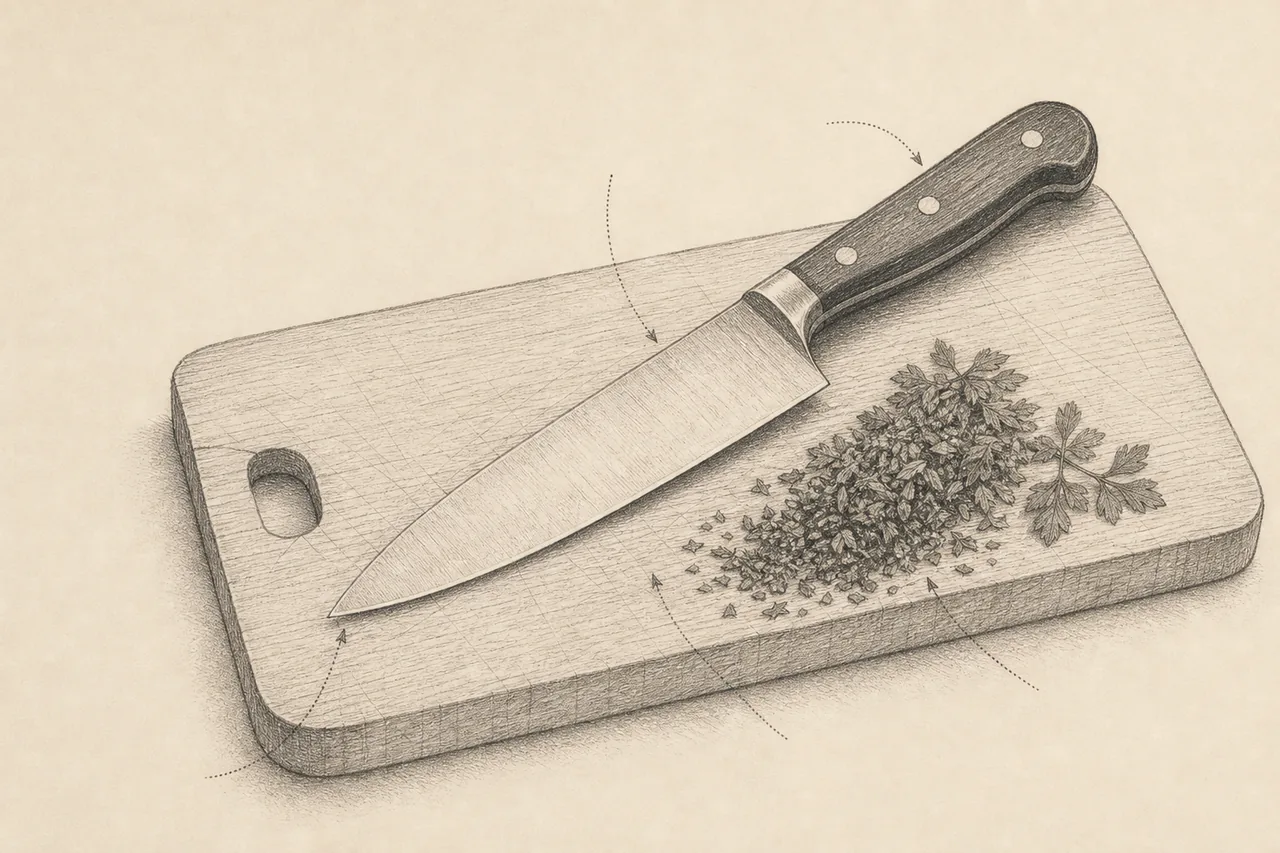
The chef's knife
The knife that does almost all the work in the kitchen.
What it is
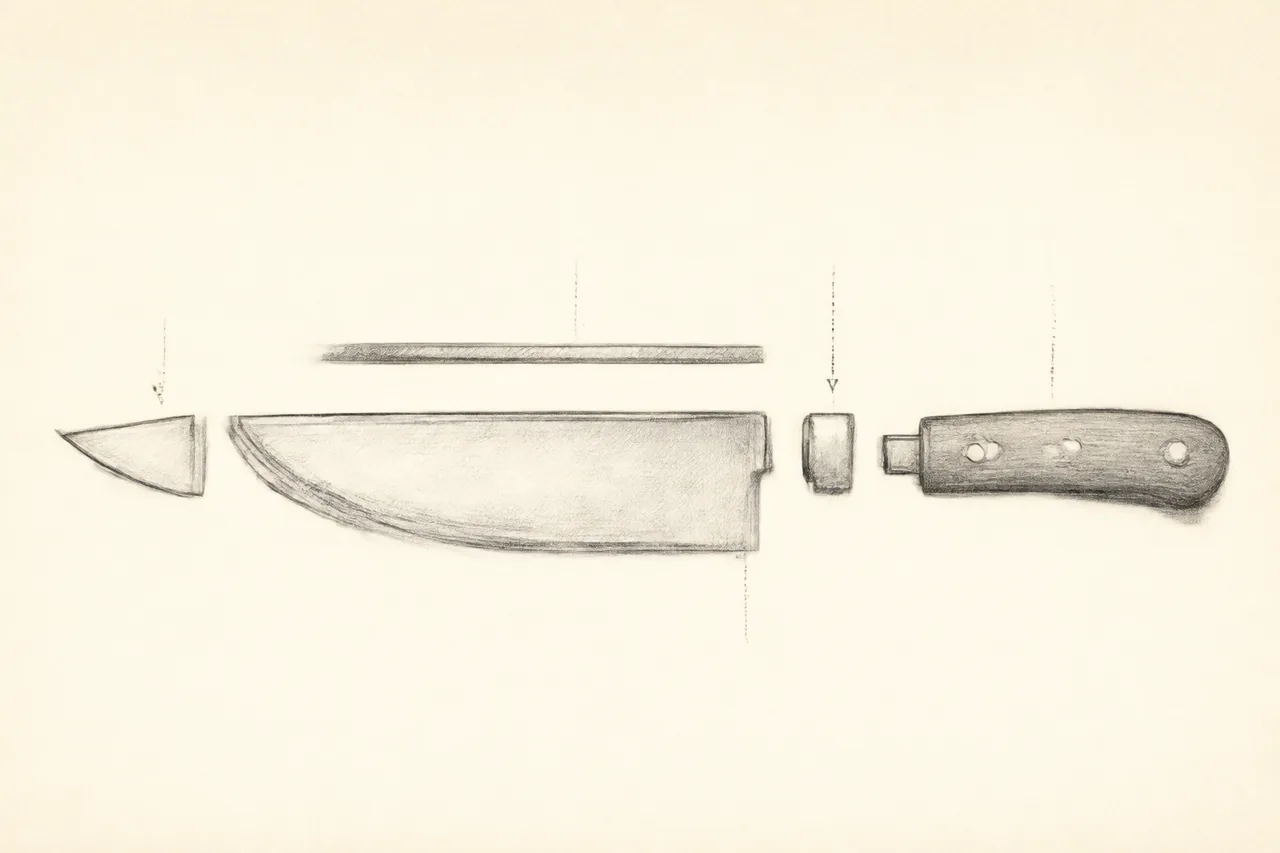
The knife that does 90% of the work in the kitchen. A wide, curved blade designed for a rocking motion: the tip stays in contact with the board, and the heel goes up and down. It slices, minces, smashes garlic, and breaks down poultry. 18 to 22 cm blade for most hands. A single, well-maintained good knife replaces ten mediocre knives lying around in the drawer.
« It is the knife you reach for first and put away last. »
When to use it
For everything: vegetables, meat, herbs, and hard cheese. It is the knife you reach for first and put away last. Whenever a task requires both precision and power at the same time, this is the one. For very fine tasks (garlic brunoise, filleting fish), a paring knife takes over.
« Avoid serrated blades and hollow handles that come loose. »
How to choose
Stainless steel or carbon, a full handle that runs through the blade (full tang). Test the weight in your hand: neither too heavy nor too light, the balance is felt at the heel. Avoid serrated blades and hollow handles that come loose. A good knife for 60-80 euros lasts twenty years if maintained.
« - Hand wash, dry immediately - Store in a block, on a magnetic knife strip, or with a blade guard - Never in the dishw »
Care
- Hand wash, dry immediately
- Store in a block, on a magnetic knife strip, or with a blade guard
- Never in the dishwasher: thermal shock and friction damage the edge
- Hone or use a sharpening steel regularly to keep the edge sharp
« Letting it get dull and then forcing it. »
Common mistake
Letting it get dull and then forcing it. A dull knife slips instead of slicing; it is the real danger, not the sharp blade. Second common mistake: cutting directly on a stainless steel or glass countertop, which destroys the edge in just a few cuts.