 Open Umay
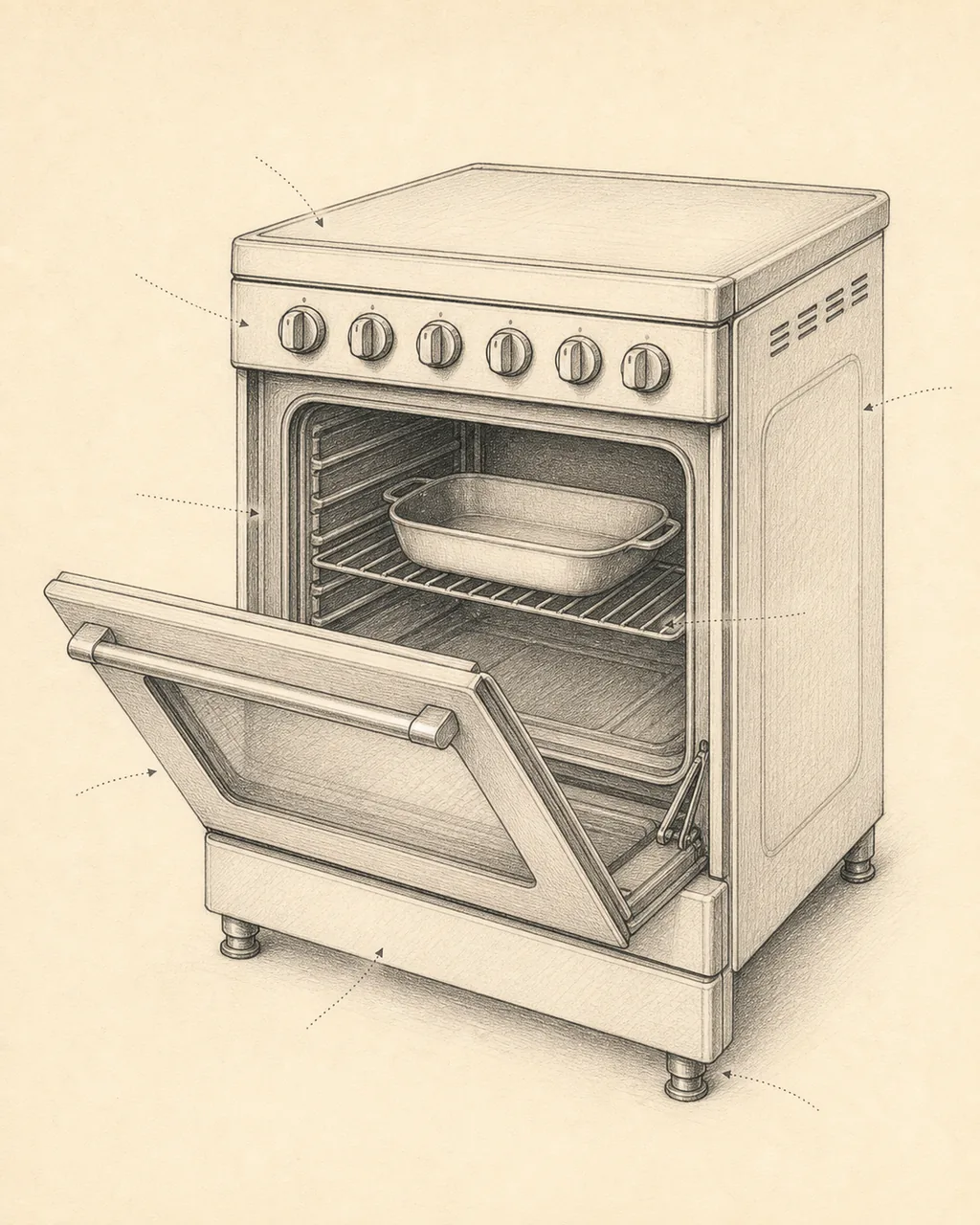
The Oven
Convection or conventional heat, each mode has its ideal use
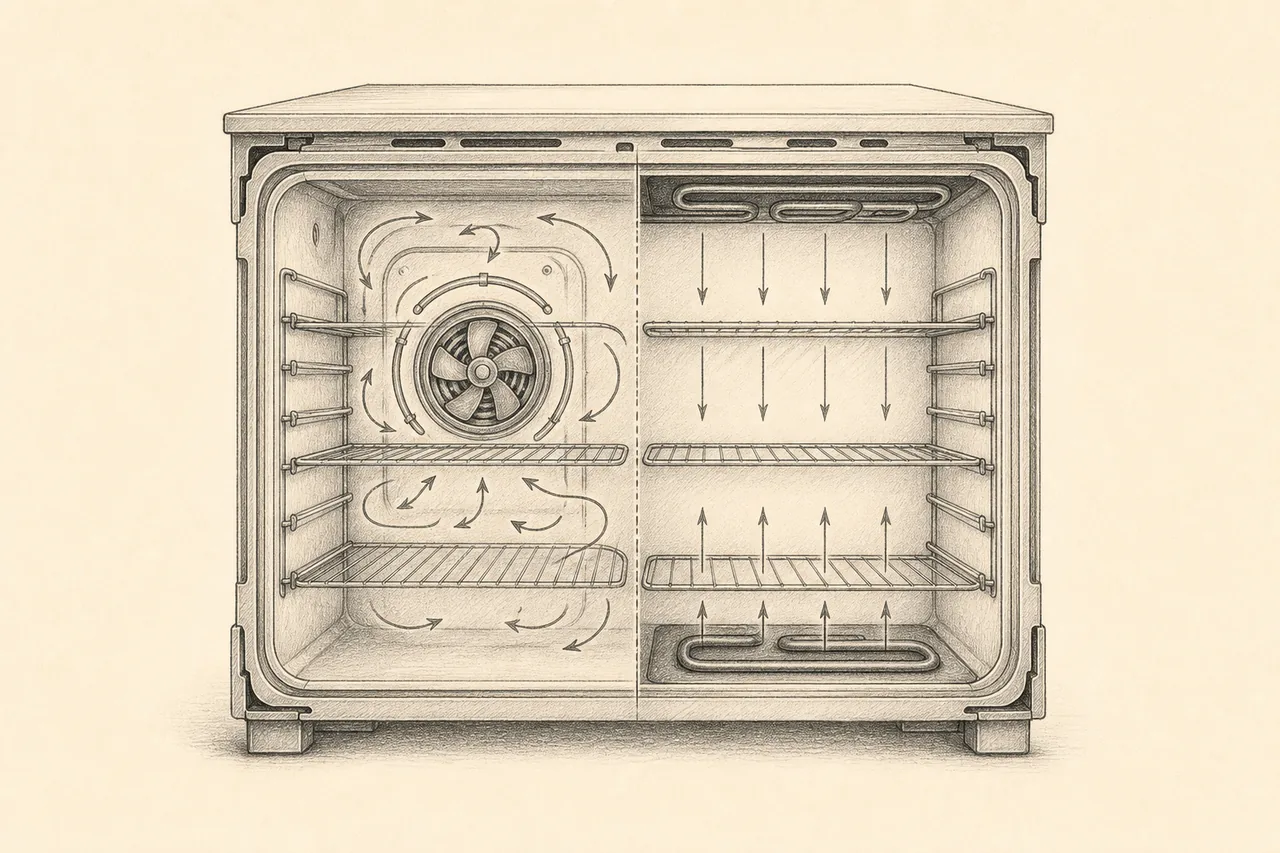
What It Is
Convection pushes hot air with a fan: faster, more even cooking, on multiple baking sheets at the same time. Conventional heat (top and bottom elements) heats from above and below, without air circulation: gentler, more reliable for delicate pastries. Both modes coexist on most modern ovens, it's up to you to choose based on the recipe.
« Switch to conventional for soufflés, sponge cakes, and tarts that do not like drafts. »
When to Use It
For gratins, roasts, and roasted vegetables that like forced air and fast cooking on multiple levels. Switch to conventional for soufflés, sponge cakes, and tarts that do not like drafts. Preheating is not optional: allow 10 to 15 minutes before putting food in the oven, otherwise cooking starts too slowly and the results suffer.
« Aim for an oven with a built-in temperature probe if you cook meat. »
How to Choose
Rack position changes everything: bottom of the oven to brown a pastry crust, middle for everyday cooking, top to broil at the end of cooking. Aim for an oven with a built-in temperature probe if you cook meat. If upgrading, look for true convection with a circular heating element: it is more stable than a simple fan circulating conventional heat.
« - Wipe up splatters while the oven is still warm with a damp cloth, before they carbonize - Use the self-cleaning func »
Care
- Wipe up splatters while the oven is still warm with a damp cloth, before they carbonize
- Use the self-cleaning function once a month maximum, no more (it wears out the seals)
- Remove the rack and the drip pan to wash them in the dishwasher
- Check the door seal: if it hardens, heat escapes and cooking becomes uneven
« You mostly lose out on texture and even cooking. »
Common Mistake
Opening the door during cooking to check: the temperature drops suddenly and the sponge cake falls, the roast dries out on the edges. Use the interior light and look through the window. Second trap: putting food in without preheating, thinking you'll save time. You mostly lose out on texture and even cooking.