 Open Umay
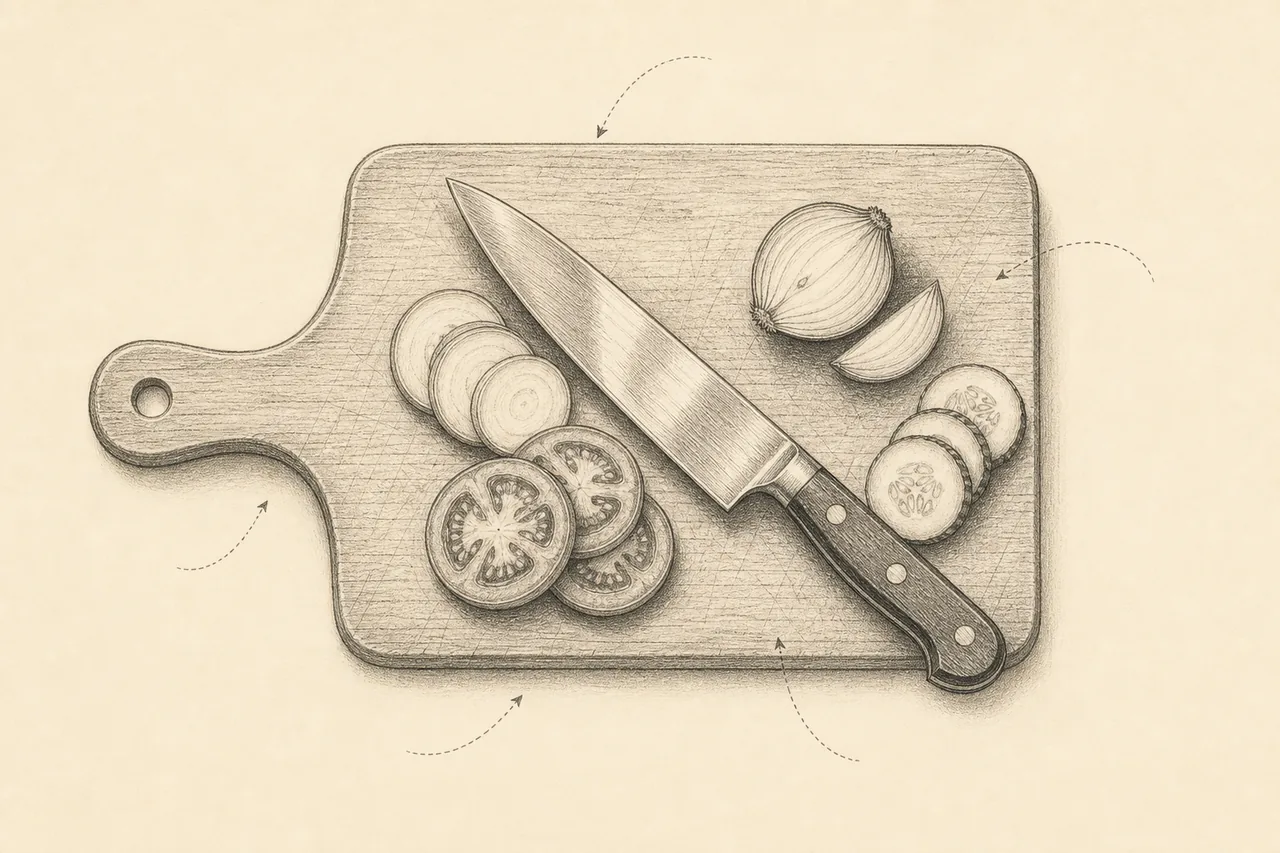
The cutting board
The surface that protects your blades and your countertop.
« Common size: 30 x 40 cm minimum to have enough room. »
What it is
The cutting board protects your countertop and especially the edge of your knives. Wood or plastic, it absorbs the shock of the blade instead of letting it slip on a hard surface. Common size: 30 x 40 cm minimum to have enough room. A good board is the invisible tool that extends the life of all your knives.
« Always, as soon as a knife touches food. »
When to use it
Always, as soon as a knife touches food. Use a different or thoroughly washed board between raw meat and vegetables to prevent cross contamination. Large boards also double as a serving surface for a cheese board or an appetizer platter, placed directly on the table.
How to choose
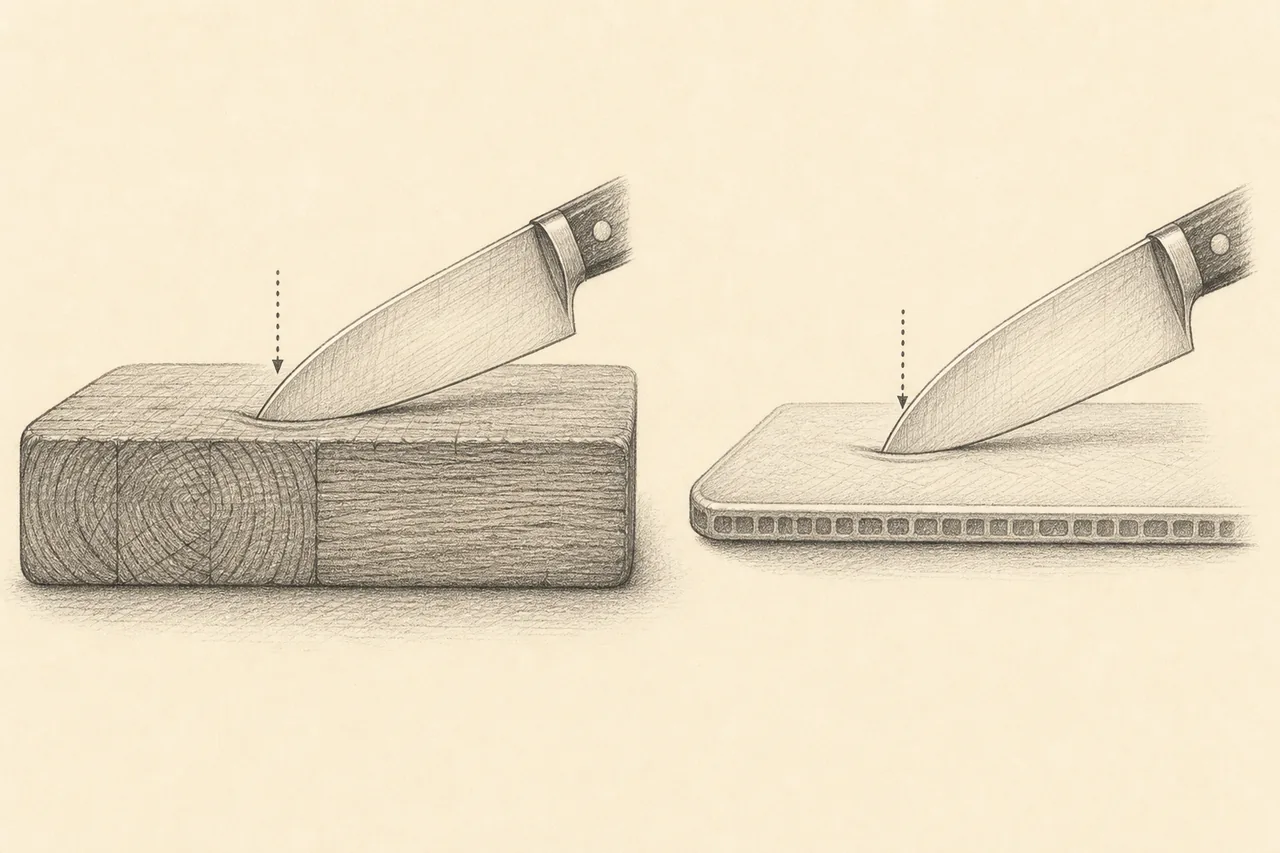
Solid wood (beech, olive) for durability and gentleness on blades, plastic for hygiene and dishwasher safety. Get one large enough to move a whole chicken or a large bunch of herbs without spilling over. Avoid glass and marble, which are beautiful but destructive to a cutting edge.
« - Wood: wash with hot soapy water, dry standing up, never soak for a long time - Oil the wood regularly with mineral o »
Care
- Wood: wash with hot soapy water, dry standing up, never soak for a long time
- Oil the wood regularly with mineral oil to prevent cracks
- Plastic: put in the dishwasher, replace it if it is too heavily scored
- Disinfect with white vinegar after raw meat
« Leaving a wooden board soaking in the sink for a long time: it cracks and warps as it dries. »
The common mistake
Leaving a wooden board soaking in the sink for a long time: it cracks and warps as it dries. Another classic: using the same board for raw meat and then for raw vegetables without washing it in between, a real health risk for the whole table.