 Open Umay
Wine and beer glasses
The shape of the glass determines what your nose will smell first
« The wine glass changes what you smell and taste. »
What it is
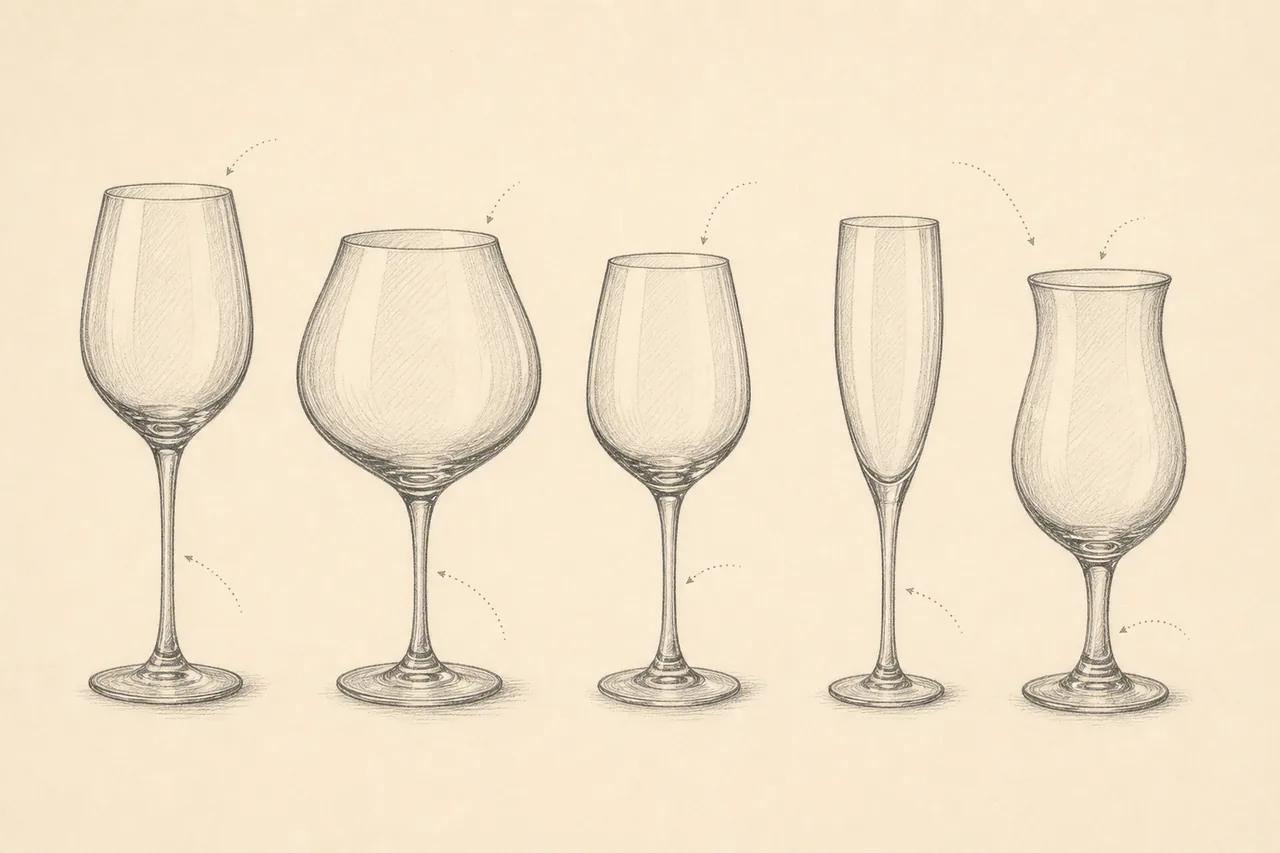
The wine glass changes what you smell and taste. The Bordeaux glass is tall and narrow, to direct the alcohol to the back of the mouth for tannic wines. The Burgundy glass is wide and rounded, to capture the delicate aromas of lighter wines. The INAO glass, being universal, is used to taste any wine without fuss. The flute keeps champagne bubbles longer thanks to its narrow shape.
« - Flute: champagne, crémant, any sparkling wine. »
When to use it
- Bordeaux: tannic red wines, cabernet, syrah, age-worthy wines.
- Burgundy: pinot noir, light red wines, full and aromatic whites.
- INAO: tastings, blind tasting, when you only have one glass for everything.
- Flute: champagne, crémant, any sparkling wine.
- Beer glass: each style has its own, tulip for IPAs, pint for blondes.
How to choose
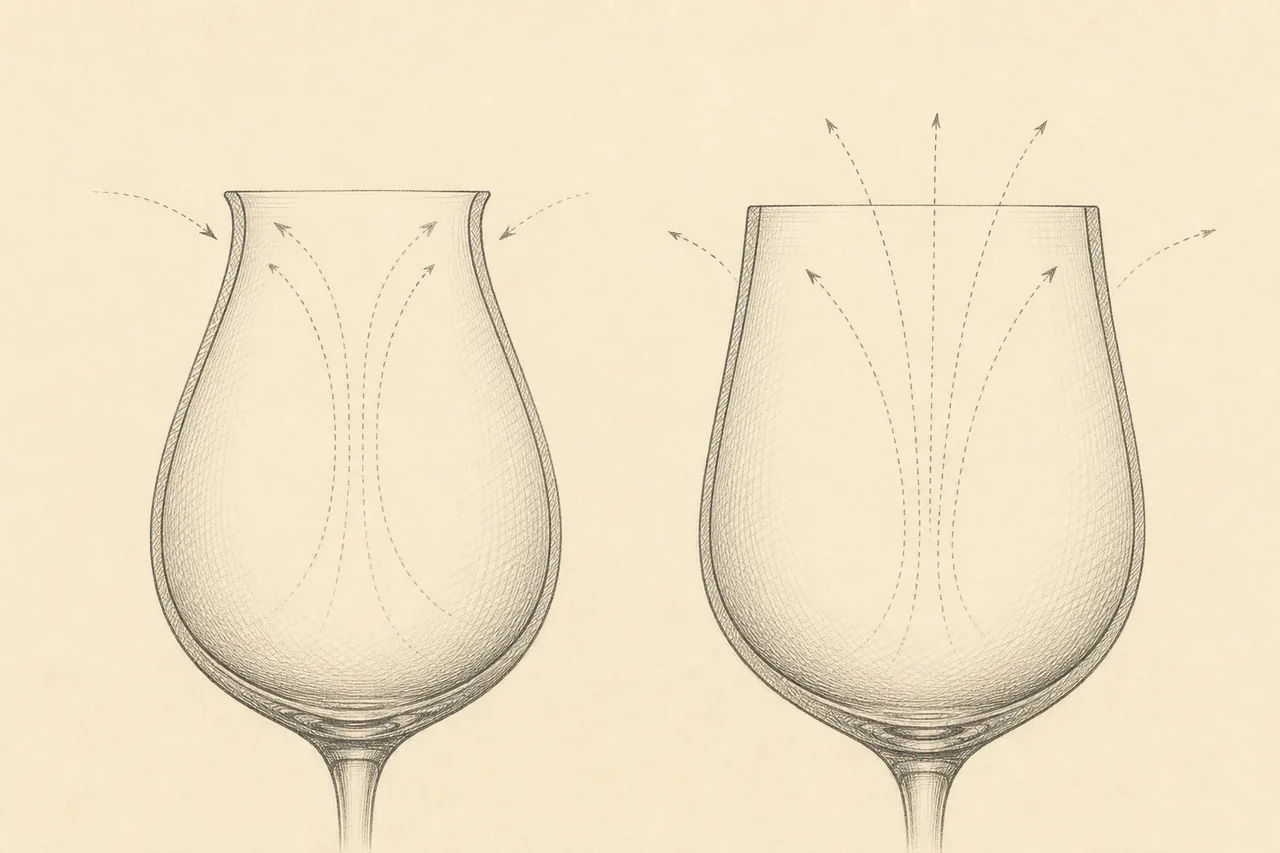
Choose a thin-stemmed glass with a clear, unpatterned bowl to judge the color of the wine. The bowl should narrow slightly at the top; this concentrates the aromas under your nose. For beer, look for a shape that narrows at the top if you want to keep the foam, or wide and open for light, thirst-quenching beers. Thin glass is more expensive but truly changes the nose.
« Store them upright, not upside down, or the stem will bend. »
Care
Wash without scented soap and rinse with very hot water; detergent residue kills beer foam and distorts the nose of the wine. Dry with a linen dish towel, without rubbing the rim, as fine crystal is fragile. Never put them in the dishwasher next to heavy stemmed glasses; they will knock together and chip. Store them upright, not upside down, or the stem will bend.
« Match the glass to the wine, not the reverse; the shape does half the work. »
The common mistake
Serving an age-worthy wine in a small INAO glass and wondering why it does not open up: the surface area exposed to air matters as much as decanting time. Another trap is a flute that is too narrow, which concentrates the bubbles but crushes the aromas of vintage champagne. Match the glass to the wine, not the reverse; the shape does half the work.