 Open Umay
Kneading
Develop the gluten network for an elastic dough
The technique
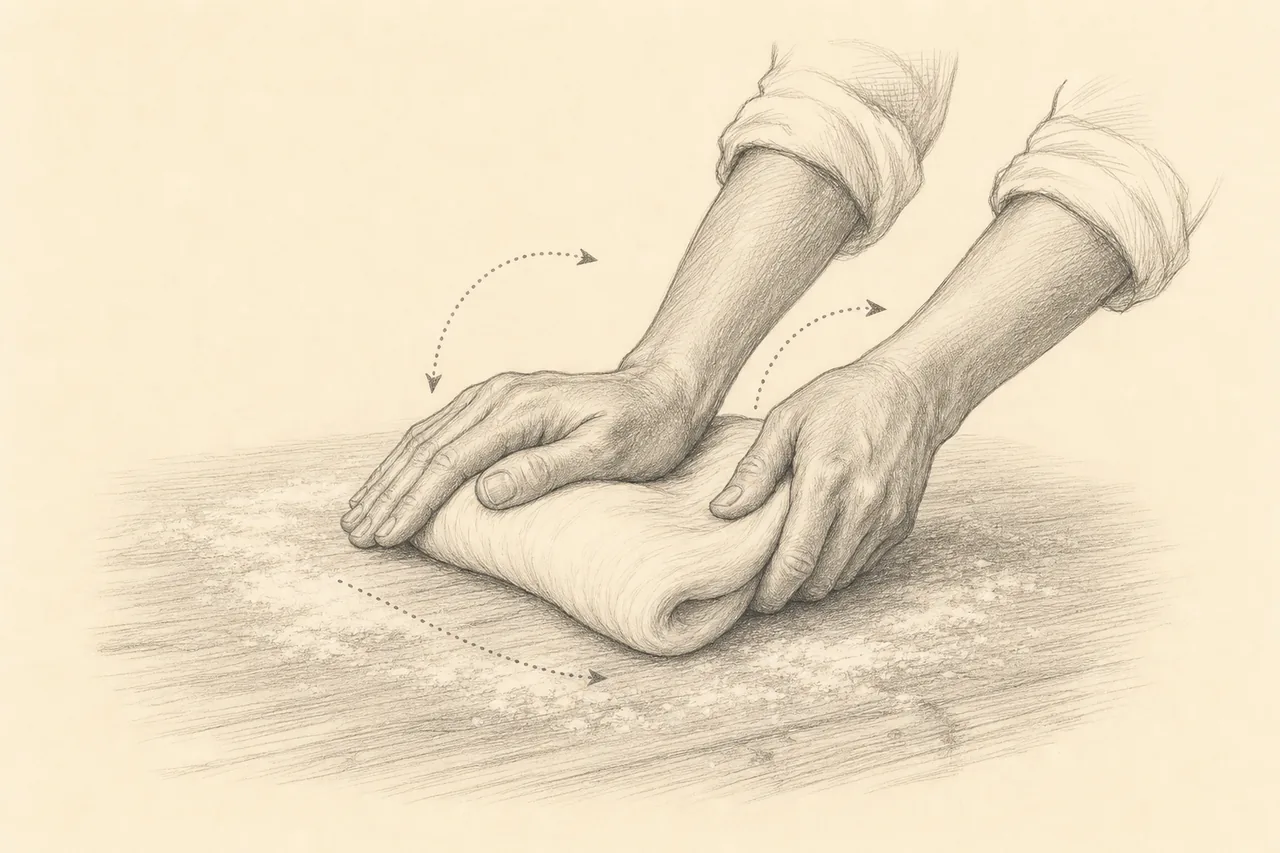
Push the dough away from you with the heel of your hand, fold it over itself, give it a quarter turn, and repeat. On the work surface, this repeated motion stretches and relaxes the gluten network. When kneading by hand, keep a steady rhythm rather than jerky movements.
« For any bread, brioche, or yeast dough that needs a strong gluten network to trap fermentation gases and rise properly »
When to use it
For any bread, brioche, or yeast dough that needs a strong gluten network to trap fermentation gases and rise properly. Doughs with a low gluten content, like certain wheat-free doughs, require a shorter kneading time, or none at all.
« Kneading a dough that is already well developed makes it rubbery and dense »
Pitfalls
- Adding too much flour while kneading to keep it from sticking dries out the dough
- Stopping too soon leaves you with a dough that tears instead of stretching
- Kneading a dough that is already well developed makes it rubbery and dense
« It generally takes 8 to 12 minutes by hand for an everyday bread. »
The cue
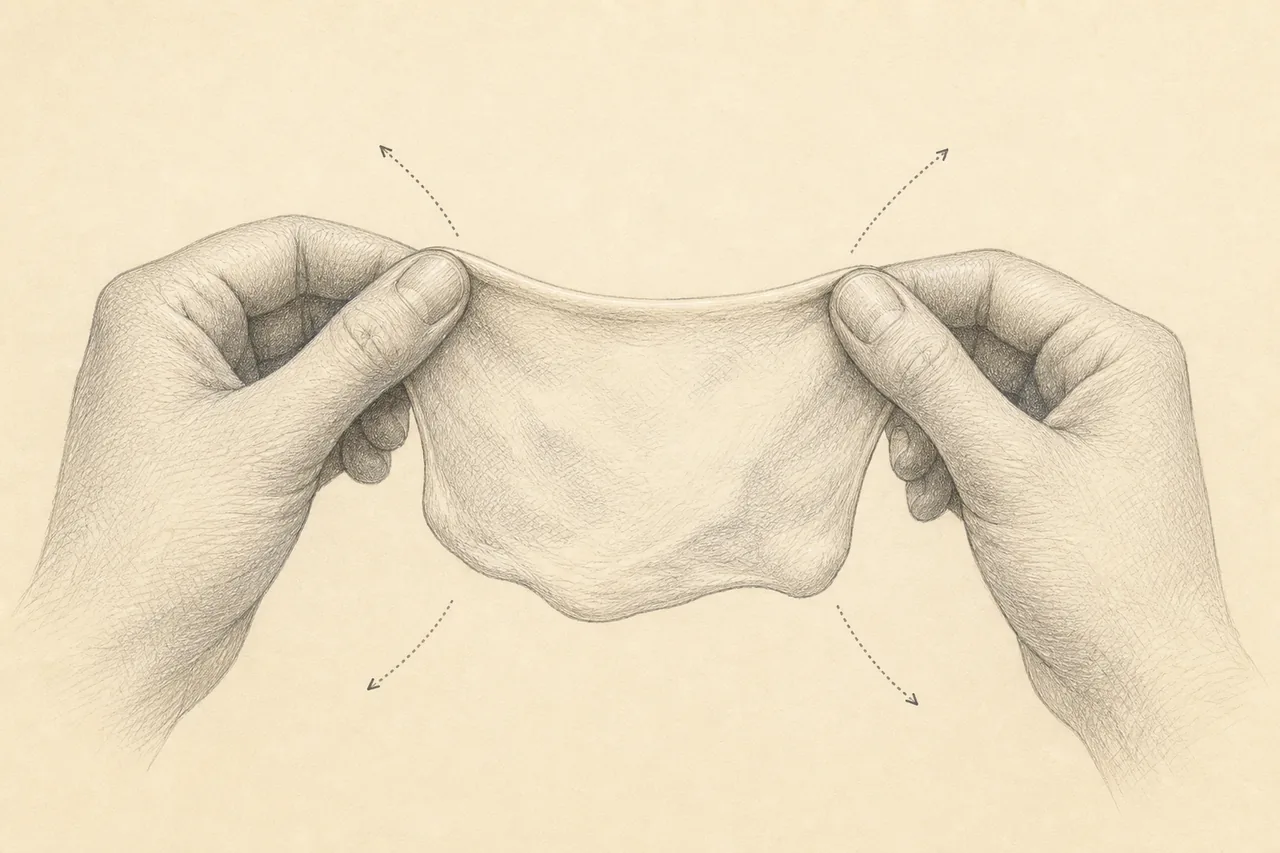
Stretch a small piece of dough between your fingers: if it forms a thin, translucent membrane without tearing, the windowpane is there, and the dough is ready. It generally takes 8 to 12 minutes by hand for an everyday bread.