 Open Umay
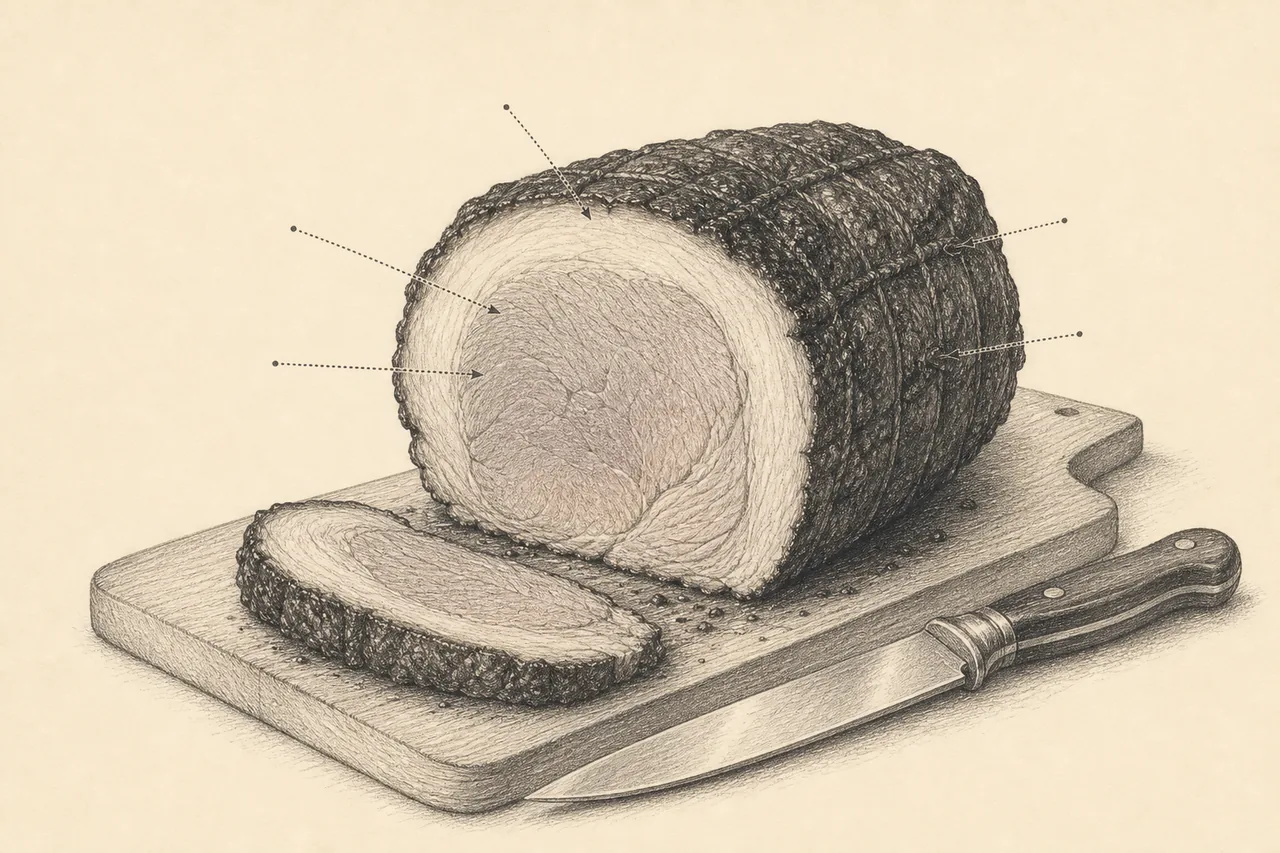
Meat temperatures
The internal temperatures to perfectly cook every meat
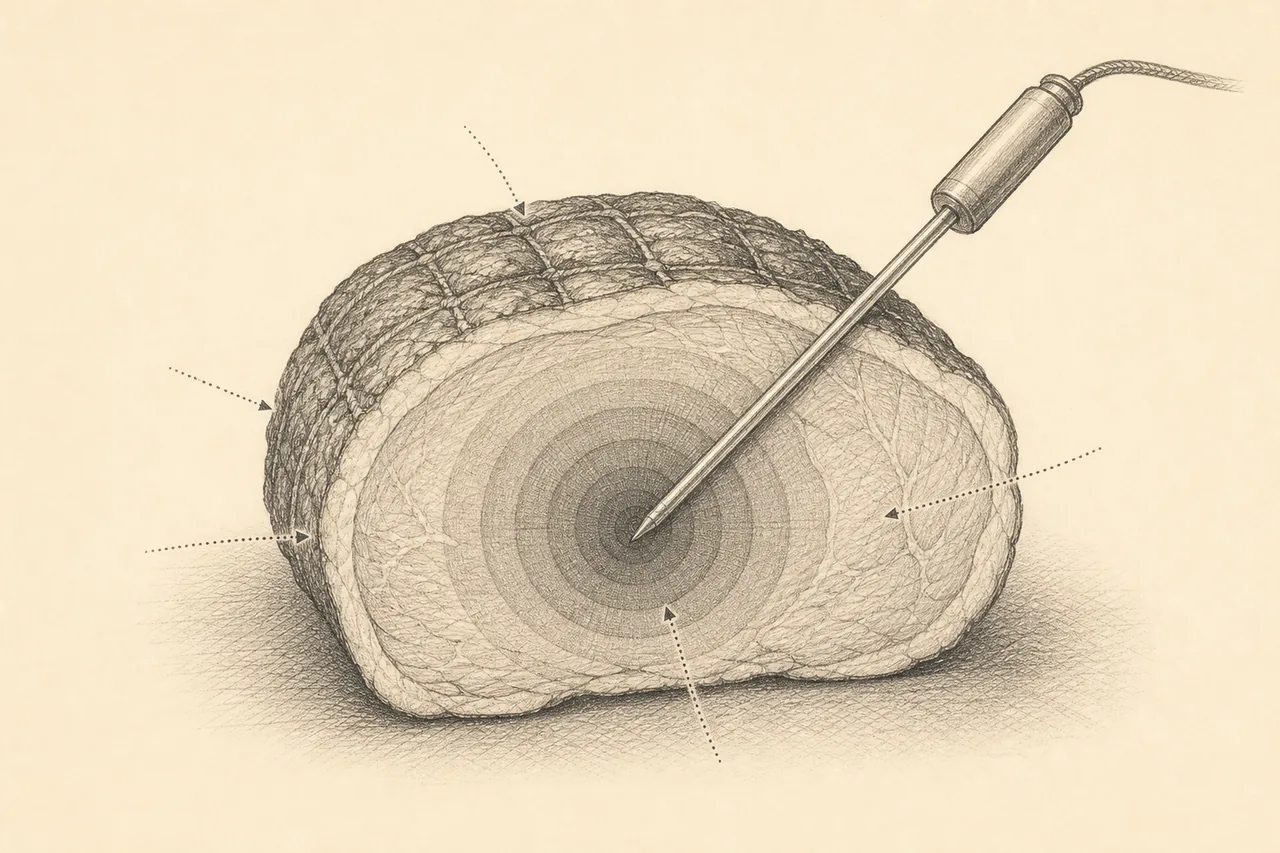
The technique
Insert a meat thermometer into the center of the thickest part, away from bone and fat. Give it a few seconds to settle before you read the number. Take the meat off the heat only once its center reaches the safe minimum, never before: 145 °F (63 °C) for a whole cut of beef, veal, lamb, or pork, 160 °F (71 °C) for ground meat, 165 °F (74 °C) for poultry. Then let a whole cut rest at least 3 minutes before carving: the temperature keeps climbing while it rests.
« Only a thermometer measures it. »
When to use
Use the thermometer on every cut, thick or thin: roasts, leg of lamb, poultry, burgers, and steaks alike. Touch, color, and cooking time can't tell you the internal temperature. Only a thermometer measures it.
« - Inserting the thermometer into bone or fat: the reading will be off. »
Common mistakes
- Inserting the thermometer into bone or fat: the reading will be off.
- Pulling the meat before its minimum and counting on the rest to get there: the minimum is read before it leaves the heat.
- Carving right after cooking: the temperature keeps rising and the juices run out.
- Trusting color: it varies with the cut and the age of the meat, and ground meat can turn brown before it is cooked through.
- Forgetting to remove the probe before putting the meat in a very hot oven.
« Cooking it further is a matter of taste. »
The guidelines
Safety first. USDA FSIS, the USDA's Food Safety and Inspection Service, sets these safe minimum internal temperatures, to reach before you take the meat off the heat:
- Whole cuts of beef, pork, veal, and lamb (steaks, chops, roasts): 145 °F (63 °C), then rest at least 3 minutes.
- Ground meat (burgers, meatballs): 160 °F (71 °C).
- Poultry, whole, in pieces, or ground: 165 °F (74 °C).
Pork cooked to 145 °F may still be slightly pink in the center. Cooking it further is a matter of taste. Staying below means stepping outside the USDA guidelines.
« These steaks carry a risk of bacteria. »
How chefs cook it
Warning: blue, rare, medium rare, and medium stay below the 145 °F (63 °C) minimum recommended by USDA FSIS. These steaks carry a risk of bacteria. They are not recommended for pregnant women, young children, older adults, or immunocompromised people.
This only applies to whole cuts of beef and lamb: steaks, roasts, racks. Here are the final internal temperatures, measured after resting, according to ThermoWorks, a thermometer maker, for beef steaks. Whole cuts of lamb follow the same marks in the kitchen.
- Blue: below 120 °F (49 °C), just past raw, by cooks' convention
- Rare: 120 to 129 °F (49 to 54 °C)
- Medium rare: 130 to 134 °F (54 to 57 °C)
- Medium: 135 to 144 °F (57 to 62 °C)
- Medium well: 145 to 154 °F (63 to 67 °C)
- Well done: 155 °F (68 °C) and up
Why chefs do it: on a whole cut, bacteria sit mostly on the surface. A hard sear on every side greatly reduces the risk, without removing it. That is why ground meat, tenderized or needled meat, and poultry are never served rare: the surface bacteria end up inside.
The chefs' move, for these cuts only: take the meat off the heat 5 to 7 °F (3 to 4 °C) before your target doneness. Its temperature keeps rising while it rests.
« - USDA FSIS, Safe Minimum Internal Temperature Chart: 145 °F (63 °C) and a 3-minute rest for whole cuts, 160 °F (71 °C »
Sources
- USDA FSIS, Safe Minimum Internal Temperature Chart: 145 °F (63 °C) and a 3-minute rest for whole cuts, 160 °F (71 °C) for ground meat, 165 °F (74 °C) for poultry, measured before removing from the heat.
- ThermoWorks, Steak Temperatures: final steak temperatures after resting, from rare to well done, and how the temperature rises during that rest.