 Open Umay
Flemish carbonade with beef cheeks
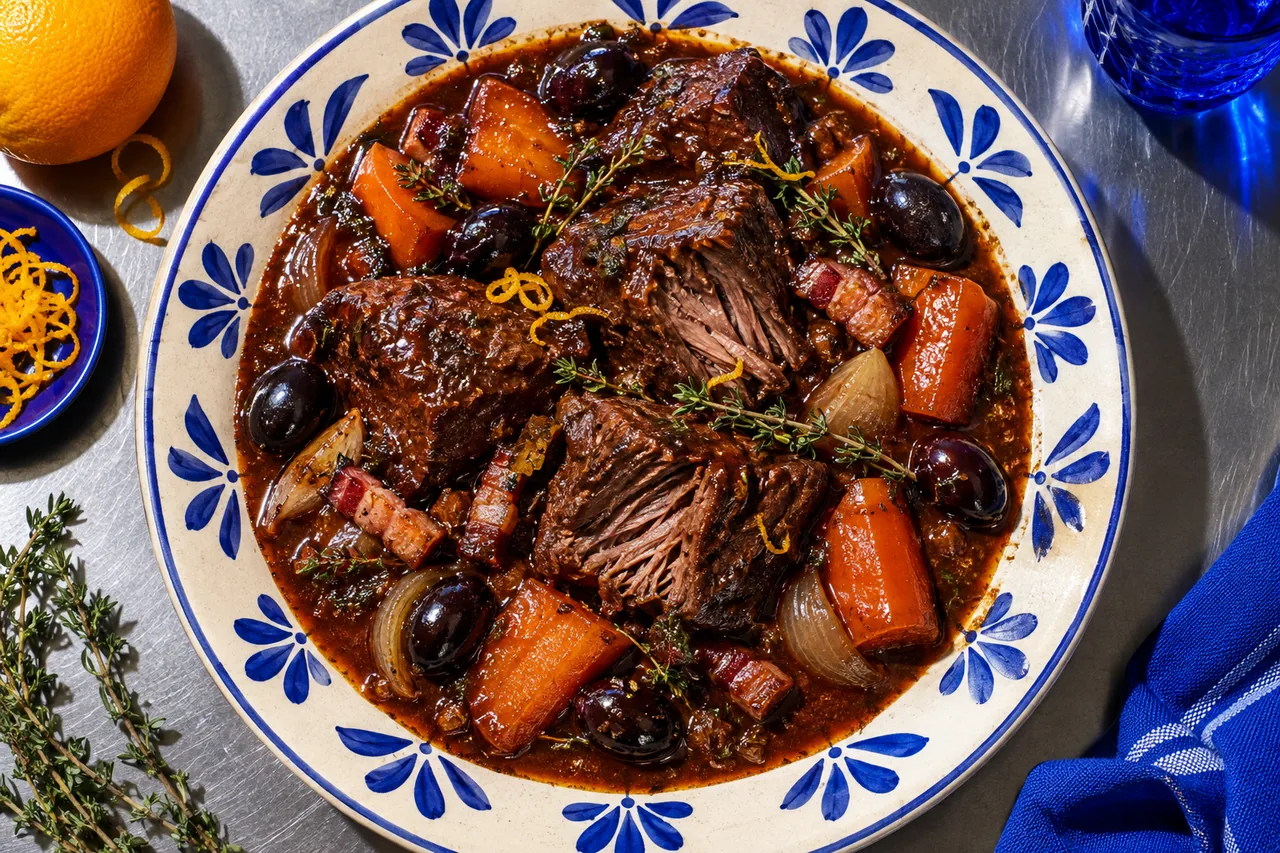
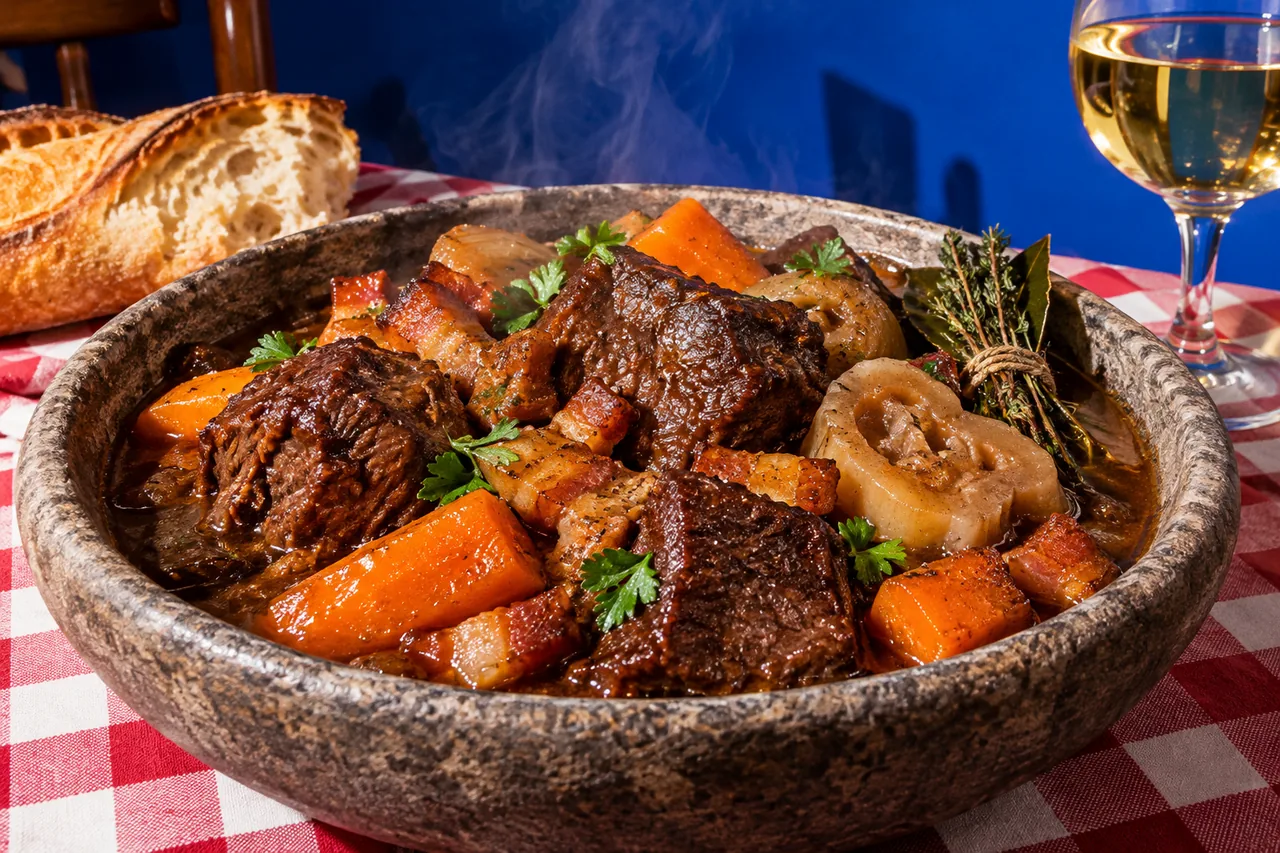
The great classic of Flemish estaminets: generous chunks of beef cheek confit in a creamy Belgian dark beer sauce with melting onions and mustard-slathered gingerbread.
4 servings
Ingredients
Trimmed fresh beef cheek1 kg (2.2 lb)base
Beechwood-smoked pork belly150 g (5.3 oz)base
Yellow storage onion800 g (1.8 lb)base
82% butterfat pasteurized unsalted butter40 g (1.4 oz)pantry
Type T55 wheat flour2 tbsppantry
Top-fermented Belgian dark abbey beer750 ml (3 1/8 cups)base
Sliced traditional honey gingerbread4 slicesbase
Strong Dijon mustard2 tbsppairing
Dark brown vergeoise sugar2 tbsppantry
Apple cider vinegar2 tbsppairing
Dried bay leaf2pantry
Fresh thyme sprig3pantry
Fine cooking salt1 tsppantry
Black peppercorns in a mill1/2 tsppantry
Steps
- Cut the beef cheek into large, even pieces. Carefully pat the meat dry with paper towels to promote quick and clean browning.
- Cut the smoked pork belly into thick lardons.
- Peel the onions, cut them in half, and slice them into thin, even strips.
- Heat a large cast-iron Dutch oven over medium heat. Add the lardons without any fat and let them brown until deeply golden and their fat has rendered. Remove the lardons with a slotted spoon, leaving the rendered fat in the pot.
- Add a portion of the butter to the hot Dutch oven to supplement the pork fat. Increase the heat to high until the butter foams and begins to sizzle.
- Place the beef cheek pieces in the Dutch oven in small batches to avoid dropping the temperature. Sear the meat on all sides until a beautiful caramelized crust forms. Set the browned meat aside on a plate with the lardons.
- Lower the heat under the Dutch oven to low and add the remaining butter. Add the sliced onions along with the fine salt. Mix well, scraping the bottom to release the meat fond, then cover and let sweat gently until the onions are translucent, melting, and slightly amber.
- Uncover the Dutch oven, slightly increase the heat, and sprinkle the dark brown sugar over the onions. Stir continuously for a few minutes to let the onions cook down and caramelize in the sugar.
- Pour in the apple cider vinegar to deglaze the Dutch oven. Boil vigorously for one minute, scraping the bottom with a wooden spatula to dissolve all the caramelized juices, until the acidic liquid has almost completely evaporated.
- Return the beef cheek pieces and lardons to the Dutch oven, along with any resting juices accumulated on the plate. Sprinkle the flour over the meat and mix thoroughly over medium heat for two minutes to coat each piece and toast the flour without burning it.
- Pour the Belgian dark beer down the side of the Dutch oven to cover the meat and onions. Add the bay leaves and thyme sprigs. Stir gently and bring everything to a simmer.
- Generously spread the gingerbread slices with the strong Dijon mustard. Place the slices on the surface of the simmering broth, mustard-side down, in direct contact with the meat and beer.
- Cover the Dutch oven tightly with its heavy lid. Lower the heat source to the minimum to maintain a very gentle simmer, or place the closed Dutch oven in an oven preheated to 140 °C (275 °F). Let simmer very slowly for three hours, without stirring at first to let the gingerbread melt gently into the sauce.
- After two hours of cooking, open the Dutch oven and gently stir with a wooden spoon to incorporate the completely dissolved gingerbread into the sauce. Replace the lid and continue simmering for another hour.
- Remove the lid and check the meat for doneness: the tip of a knife should slide into the beef cheek without any resistance, and the meat should be confit-like and meltingly tender. The sauce should form a mahogany brown, glossy, and syrupy jus that coats the back of a spoon. Remove the thyme sprigs and bay leaves, then taste and season with freshly ground black pepper.
- Serve the carbonade piping hot in warm shallow bowls, or present it directly in its cast-iron Dutch oven. Traditionally, accompany it with fresh french fries cooked in beef tallow, or with steamed potatoes.
The cuts in this recipe
Beef: Beef cheek
Pork: Pork belly
More recipes like this