
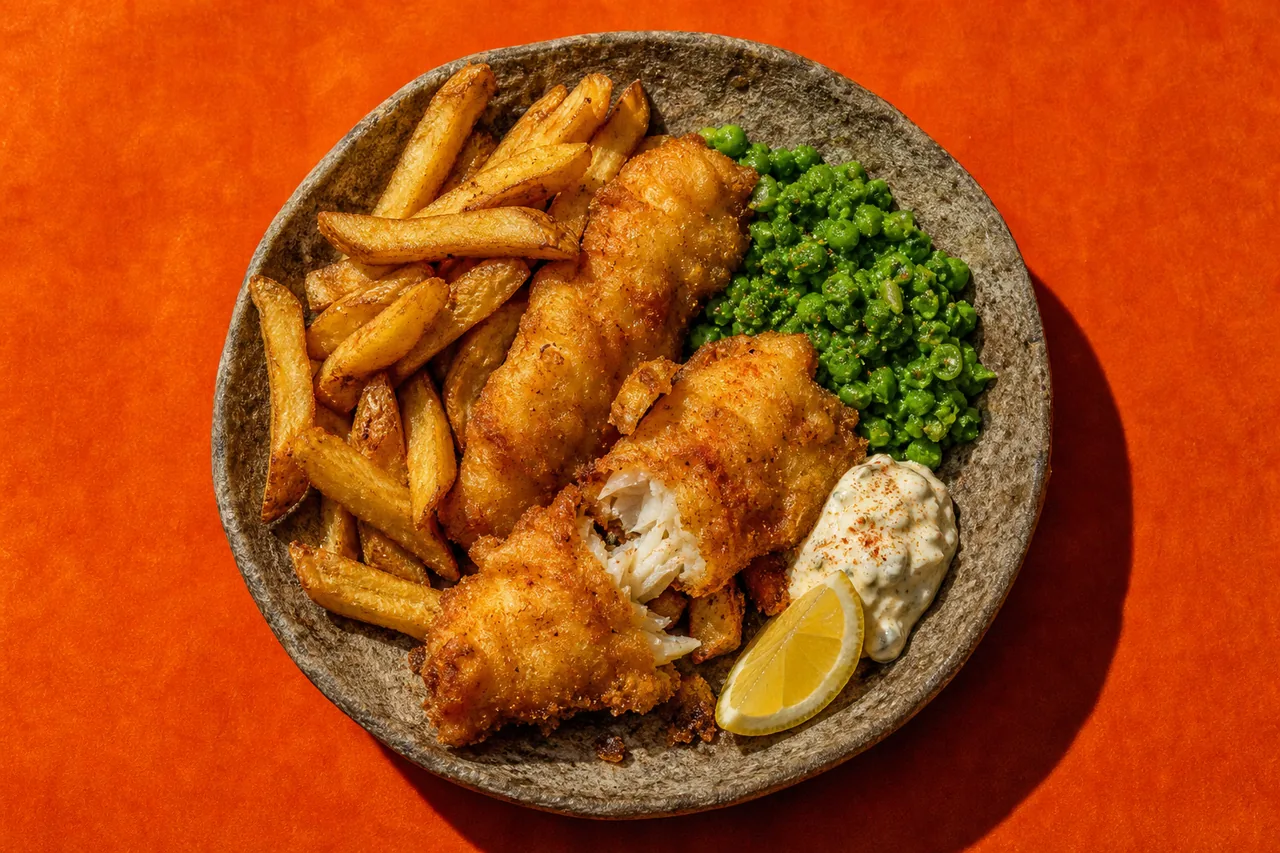
A precise homemade version of fish and chips in which pollock remains the star: pearly flesh, light beer batter, golden fries, barely crushed peas, and tangy tartar sauce.
Ingredients
- 360 g fresh skinless pollock fillet, Atlantic catch if possible
- 250 ml very cold light lager
- 80 ml plain liquid whey
- 120 g good-quality tartar sauce
- 500 g potatoes for fries, Agria or Bintje variety
- 250 g extra-fine frozen peas
- 120 g type 45 wheat flour
- 40 g cornstarch
- 1 tsp baking powder
- 750 ml sunflower oil for frying
- 20 g unsalted butter
- 1 piece untreated yellow lemon
- 1 tsp smoked sweet paprika
- 1 pinch ground cayenne pepper
- 8 g fine salt
- 1 pinch ground black pepper
- 2 sprigs fresh mint
Method
- Pat the pollock fillet dry with paper towels, check that no bones remain, then cut it into long, even pieces. Season lightly with salt and leave it uncovered in the refrigerator for about 15 minutes: the surface should become slightly firmer and more matte, which will help the batter adhere.
- Prepare the potatoes: wash them, cut them into thick fries, then rinse them in cold water until the water is less cloudy. Dry them very thoroughly in a clean kitchen towel; if they are damp, the oil will foam and they will brown poorly.
- Heat the oil in a tall saucepan or deep fryer to 150 °C. Add the fries for their first cooking, without trying to brown them. They should become pliable and pale, with a lightly satin-like surface. Drain them on a rack, not on paper, to keep them from softening.
- Prepare the peas: cook them in salted simmering water until tender but still bright green. Drain them, then crush them roughly with the butter, chopped mint, a little pepper, and a few drops of lemon. Keep an uneven texture: the aim is a rustic mash, not a smooth cream.
- Make the batter at the last moment. Mix the flour, cornstarch, baking powder, paprika, cayenne pepper, salt, and pepper. Pour in the cold beer and cold whey, whisking just enough to obtain a fluid batter as thick as a coating cream. A few small lumps are fine: overworked batter becomes heavy.
- Raise the oil to 180 °C. Return the fries to the oil for their second cooking until well browned, dry to the touch, and slightly hollow-sounding when they knock against one another. Drain them on a rack and season with salt immediately.
- Dust the pollock pieces very lightly with flour taken from the work surface or the bottom of the bowl, then dip them into the cold batter. Let the excess drip off for a few seconds: the fish should be covered, but its shape should still be discernible.
- Fry the pollock at 180 °C in several small batches so the temperature does not drop. The oil should audibly sizzle around the fish. Turn it when the first side is golden, then continue until the crust is blond, craggy, and crisp. At the center, the flesh should separate into pearly flakes without drying out.
- Drain the fish on a rack and season immediately with a fine pinch of salt. Do not cover it: the steam would soften the batter. If necessary, keep the first pieces for a few minutes in a gentle oven with the door ajar.
- Plate without drowning the fish: place the fries on one side, a rustic quenelle of crushed peas on the other, and the fried pollock in the center. Add the tartar sauce in a spoonful beside it, never on the crust. Finish with a lemon wedge and serve immediately, while the batter is still crackling.
Nutrition
Per serving
- Energy
- 1180.3 kcal
- Protein
- 53.81 g
- Carbohydrate
- 119.24 g
- Fat
- 50.73 g
- Fibre
- 14.57 g
- Calcium
- 410.82 mg
- Iron
- 4.99 mg
- Magnesium
- 104.81 mg