 Open Umay
Crispy rice paper lasagna with bolognese and béchamel
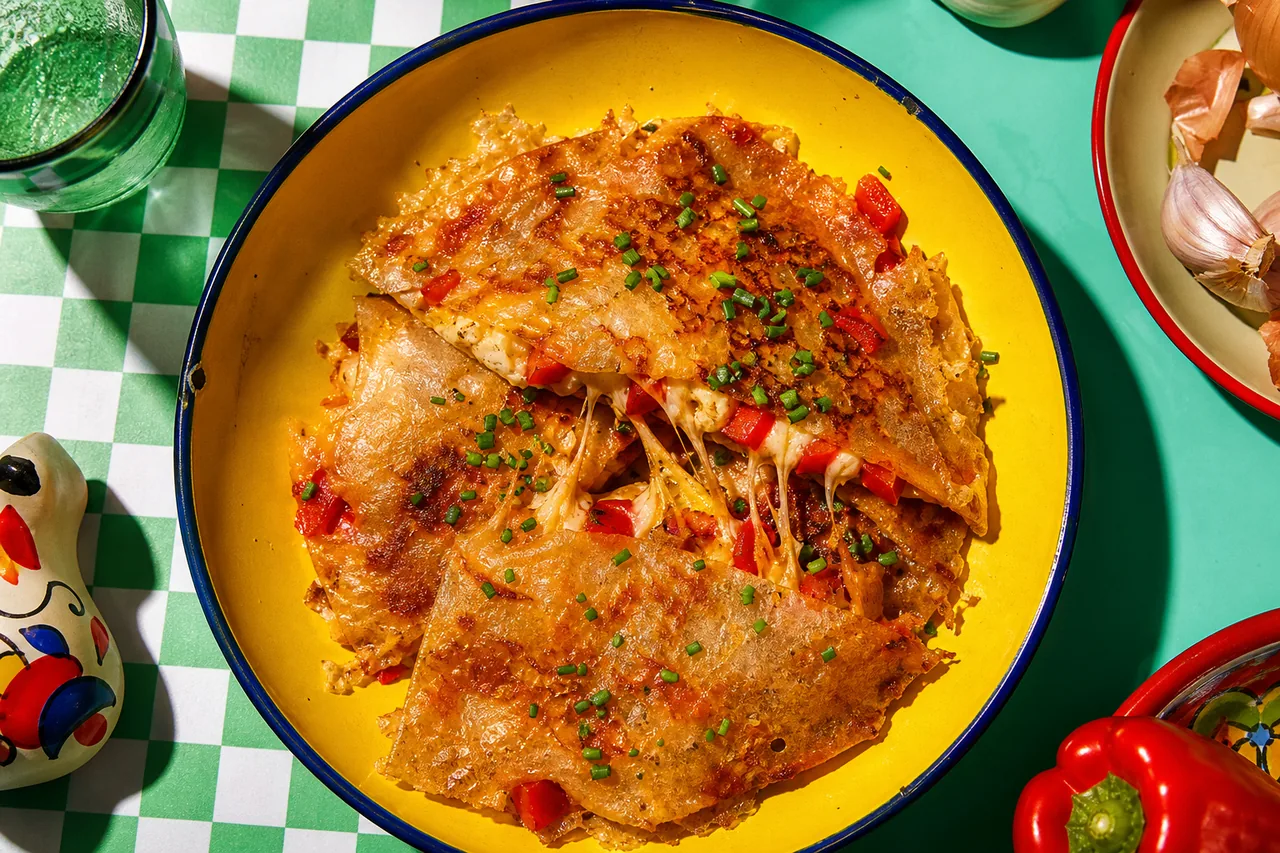
Delicate layered lasagna where rice paper sheets replace pasta: ultra-crispy edges, a soft, slightly chewy center, reduced bolognese sauce, and thick béchamel to prevent any sogginess.
4 servings
Ingredients
round rice paper wrappers for spring rolls18 sheetsbase
ground beef500 g (1.1 lb)base
yellow onion1pairing
fresh garlic3 clovespairing
fresh carrot1pantry
fresh celery stalk1pantry
Italian tomato purée (passata)500 g (1.1 lb)pantry
tomato paste2 tbsppantry
dry red cooking wine100 ml (3.4 fl oz)pantry
extra-virgin olive oil5 tbsppantry
whole milk500 ml (16.9 fl oz)pantry
unsalted butter50 g (3 1/2 tbsp)pantry
all-purpose flour50 g (3/8 cup)pantry
ground nutmeg1 pinchpantry
shredded mozzarella cheese180 g (6.4 oz)pairing
grated Parmesan cheese60 g (2/3 cup)pairing
dried oregano1 tsppairing
dried bay leaf1pantry
fine saltto tastepantry
ground black pepperto tastepantry
fresh chives0.25 bunchesgarnish
Steps
- Preheat the oven to 400 °F (200 °C) in convection mode. Set a rack in the center and place a heavy baking sheet inside: it will help the bottom crisp quickly.
- Prepare the aromatics: peel the onion, garlic, and carrot, then mince them very finely along with the celery. Keep the dice small and even so it melts into the sauce without tearing the delicate rice paper sheets.
- Heat a large skillet over medium-high heat with a drizzle of olive oil. Add the aromatics and sweat for 6 to 8 minutes until translucent, tender, and lightly browned on the edges, making sure not to burn the garlic.
- Add the ground beef and break it up with a wooden spoon. Cook over high heat for 6 to 7 minutes until the liquid evaporates, all pink color disappears, and a clear sizzle replaces any boiling sounds.
- Stir in the tomato paste and toast for 2 minutes in the rendered fat until it turns a deep brick-red. Deglaze with the red wine, scraping up the browned bits from the bottom of the pan, and simmer over medium heat for 3 minutes until almost completely reduced and the alcohol aroma dissipates.
- Stir in the tomato purée, oregano, bay leaf, salt, and black pepper. Simmer gently over low heat (around 185 °F / 85 °C), uncovered, for 25 minutes until the sauce is very thick and leaves a clean 1-inch (2 cm) trail when dragged with a spoon. Discard the bay leaf.
- While the bolognese reduces, prepare the béchamel. Melt the butter in a saucepan over medium heat for 2 minutes until foamy without browning. Whisk in the flour and cook for 2 minutes until it forms a blond roux with a warm, biscuity aroma.
- Gradually pour in the milk, whisking constantly. Cook over medium heat for 5 to 6 minutes until noticeably thickened and large, slow bubbles appear at 195 °F (90 °C). Season with salt, pepper, and nutmeg. The béchamel should be thick and coat the whisk generously.
- Generously grease the bottom and sides of a baking dish with olive oil. Layer the dry rice paper sheets directly into the dish, overlapping them slightly to form a continuous base. Do not soak them: the moisture from the sauces is plenty.
- Spread a thin layer of bolognese over the sheets, followed by a light layer of béchamel. Sprinkle with a little mozzarella and Parmesan. Keep the layers thin: if they are too heavy, the rice paper will turn soggy instead of crisping up.
- Repeat the layers, alternating dry rice paper sheets, bolognese, béchamel, and cheese. Press down very gently on each layer with the back of a spoon to eliminate air pockets without compacting the dish.
- Finish with a final layer of rice paper sheets, a thin film of béchamel, and the remaining cheese. Brush any exposed edges with the remaining olive oil: these will blister and become wonderfully shatter-crisp.
- Set the baking dish onto the preheated sheet pan and bake at 400 °F (200 °C) for 25 to 30 minutes, until the top is deeply golden brown, the edges are blistered, and a crisp crackle sounds when gently tapped with the tip of a knife.
- Let the dish rest at room temperature for 12 minutes before slicing. Resting allows the layers to set and settle around 150 °F (65 °C) for clean, neat slices.
- Slice with a serrated knife, sawing gently to keep from crushing the layers. Serve hot, topped with finely chopped chives at the last minute for a fresh herbal finish.
More recipes like this