
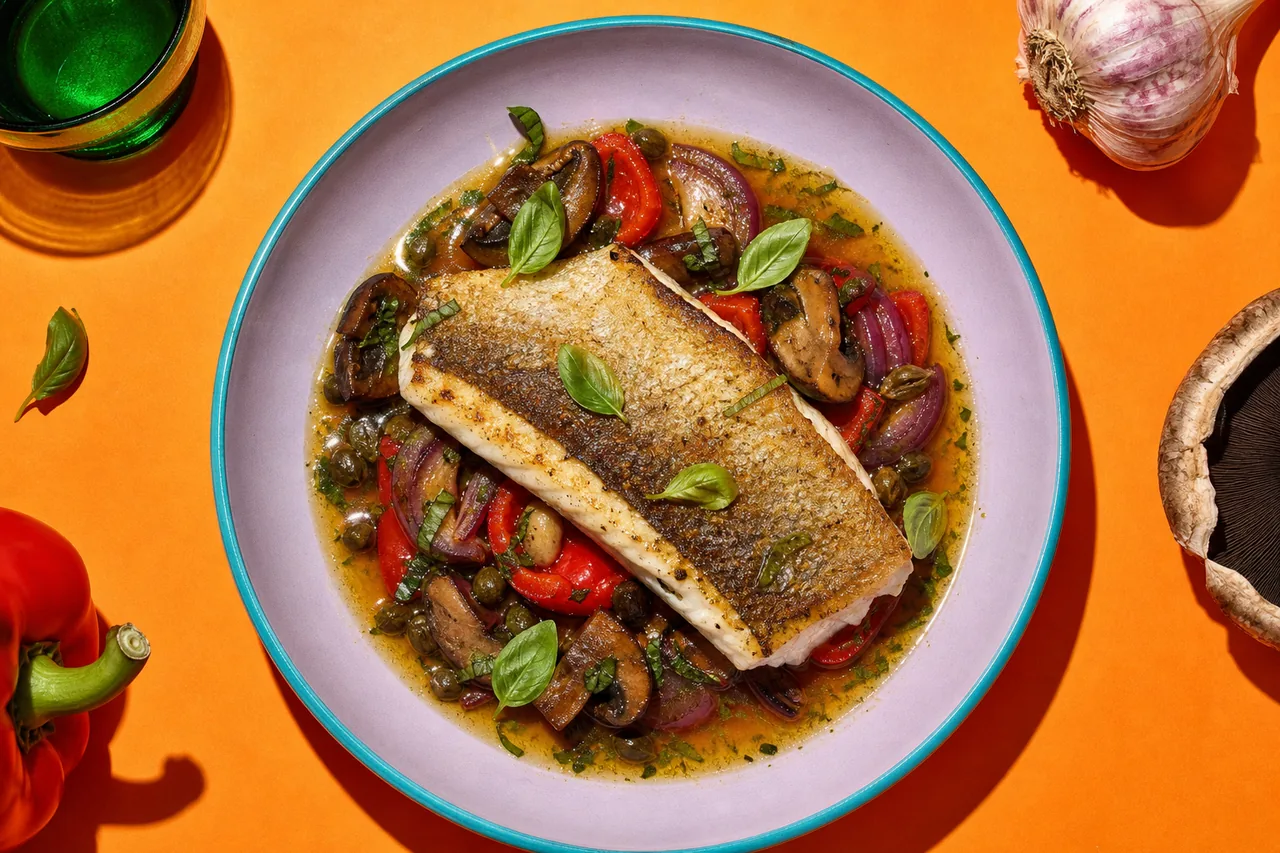
A clean, bright fish dish: the meagre is seared skin-side down to keep its flesh pearly, then coated with a warm vinaigrette made with chicken jus, sherry vinegar, fruit juice and basil. The Mediterranean garnish stays restrained, juicy and tangy, supporting the fish without masking it.
Ingredients
- 360 g very fresh skin-on meagre fillets, scaled
- 250 ml ready-to-use chicken stock or chicken jus
- 25 ml sherry vinegar
- 60 ml white grape juice or cloudy apple juice
- 40 ml olive oil salad vinaigrette
- 45 ml extra-virgin olive oil
- 1 bunch fresh basil
- 180 g portobello mushrooms
- 1 piece red bell pepper
- 1 piece red onion
- 20 g capers in vinegar
- 25 g unsalted butter
- 20 g wheat flour
- 1 pinch ground cayenne pepper
- to taste fine salt
- to taste whole black peppercorns
Method
- Take the meagre out of the refrigerator and pat it dry carefully. Lightly season the flesh and skin sides with salt, then leave it at room temperature while you prepare the rest: the surface must become dry to the touch, which is essential for properly seared skin.
- Prepare the vegetables: finely slice the red onion, cut the bell pepper into short strips, and cut the portobello mushrooms into thick slices. Reserve a few small basil leaves for finishing, then chiffonade the rest at the last moment to keep it from darkening.
- Start the garnish in a large skillet over medium-high heat with some of the olive oil. Add the portobello mushrooms and let them brown without stirring too much, until they release their water and begin to sizzle again. They should be browned at the edges, not boiled.
- Add the red onion and bell pepper to the same skillet. Cook over medium heat until the onion becomes glossy and the pepper softens while retaining some bite. Add the capers and a touch of pepper, then keep warm. The mixture should be juicy, tangy and modest in volume on the plate.
- Pour the chicken stock into a small saucepan and reduce at a steady simmer. The liquid should become darker, slightly syrupy and coat the back of a spoon. Add the fruit juice and continue reducing until the aroma shifts from sweet juice to roasted, tangy jus.
- Off the heat, whisk in the sherry vinegar, salad vinaigrette and some of the olive oil. Return to very low heat for a few moments without boiling: the sauce should be warm, glossy and supple, with clear but not aggressive acidity.
- Taste the warm vinaigrette. Adjust with salt, pepper and a very small pinch of cayenne. Add the chopped basil only once the saucepan is no longer boiling: its aroma should remain fresh and almost green, not cooked.
- Lightly flour the skin side of the meagre, then tap off any excess. The flour should not form a coating; it is only there to help the skin dry and crisp.
- Heat a nonstick or steel skillet over medium-high heat with a drizzle of oil. Place the meagre skin-side down, press gently with a spatula for the first few seconds to keep it from bowing, then cook without moving it until the skin is golden, the edges have shrunk slightly and the flesh is opaque at the sides.
- Lower the heat, add the butter and baste the fish with the foaming butter. When the butter smells nutty and the top of the fillet is still pearly, briefly turn it flesh-side down to finish cooking gently. The center should remain juicy and flake into large pieces.
- Arrange the vegetables in a small bed on warm plates. Place the meagre on top, with the skin visible and crisp. Spoon the warm chicken jus vinaigrette around and just lightly over the edge of the fish, without covering the whole skin.
- Finish with the reserved basil leaves, a twist of black pepper and a few drops of olive oil. Serve immediately, while the skin still contrasts with the warm sauce.
Nutrition
Per serving
- Energy
- 552.8 kcal
- Protein
- 40.31 g
- Carbohydrate
- 14 g
- Fat
- 37.55 g
- Fibre
- 3.6 g
- Calcium
- 21.84 mg
- Iron
- 0.66 mg
- Magnesium
- 14.2 mg