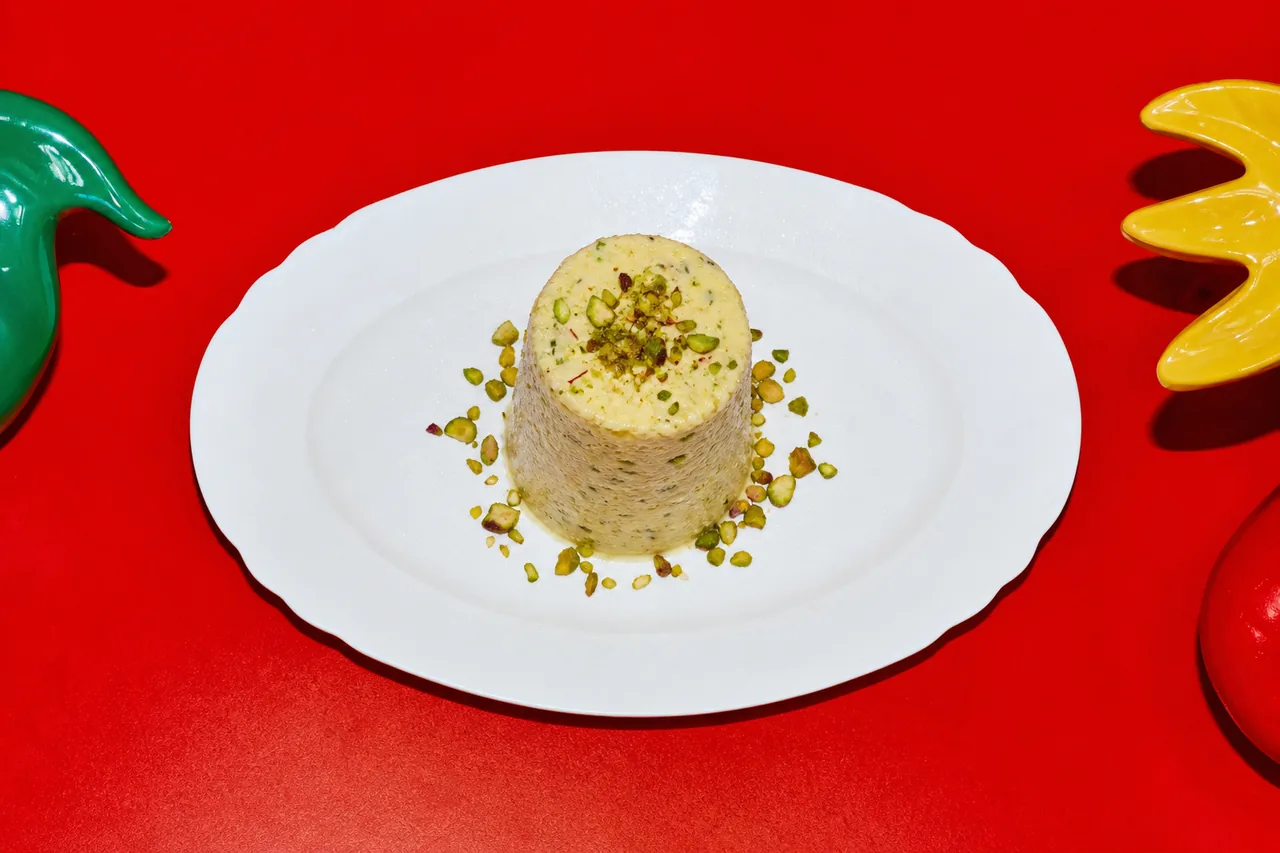
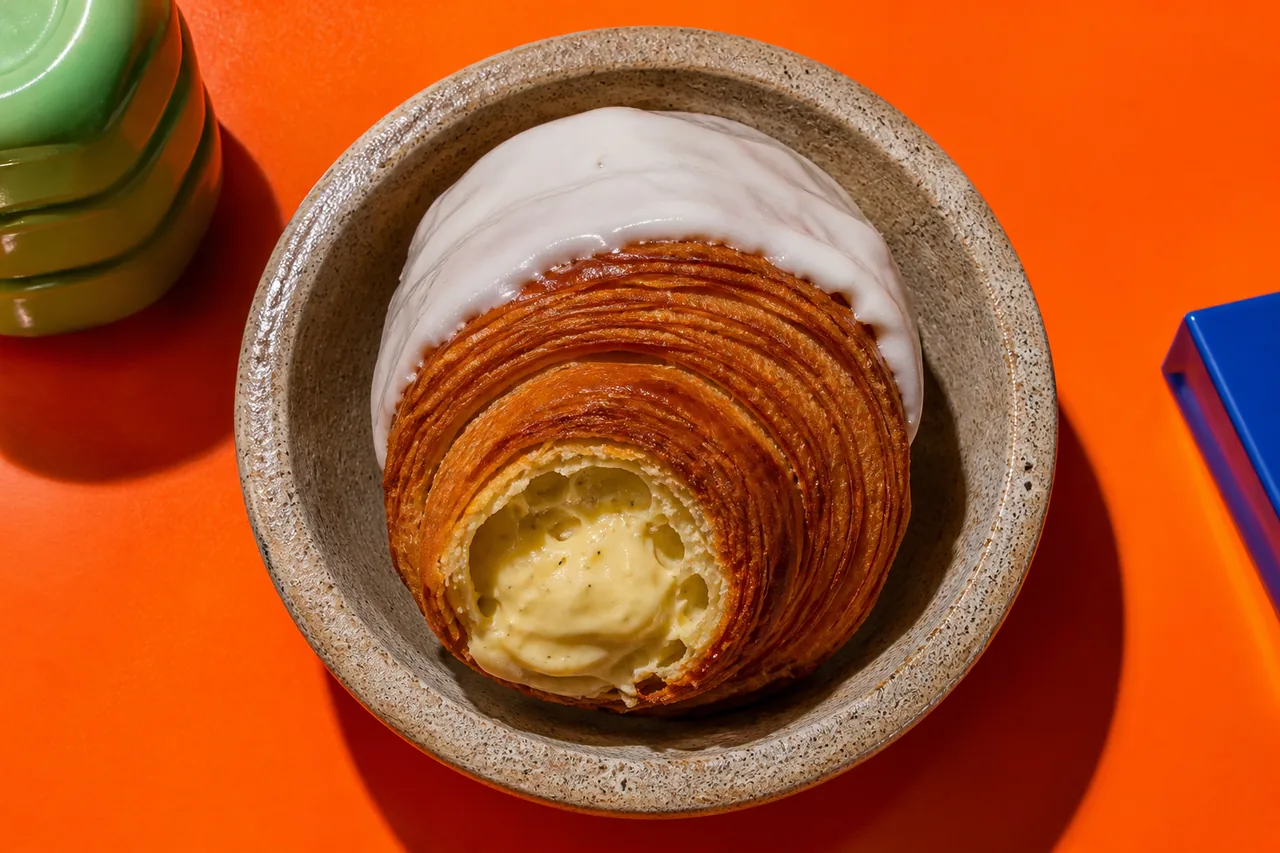
A pure butter croissant dough spiral, baked in a pastry ring for its tall, uniform shape, then generously filled with vanilla pastry cream and glazed on top.
Ingredients
- 220 g T45 wheat flour
- 315 ml whole milk
- 5 g active dry yeast
- 72 g granulated sugar
- 4 g fine salt
- 145 g unsalted butter
- 2 pieces fresh egg
- 22 g cornstarch
- 1 piece vanilla bean
- 80 g powdered sugar
- 1 tsp pure vanilla extract
Method
- Prepare the dough (détrempe) the day before. Mix the flour, the yeast, and the first portion of the sugar. Add the small portion of whole milk, then knead until the dough begins to come together.
- Incorporate the salt and the small portion of unsalted butter. Knead until you obtain a smooth, supple, and elastic dough, without letting it heat up. Shape into a rectangle, wrap it tightly, and place in the refrigerator overnight.
- Shape the remaining butter for the lamination into an even square between two sheets of parchment paper. Refrigerate: the butter and the dough will need to have a similar firmness when it's time to laminate.
- Roll out the dough into a rectangle, place the butter square in the center, and fold the dough over to enclose it completely. Seal the seams without trapping any flour.
- Gently roll out the dough, keeping the edges straight. Perform a double fold (tour double), wrap, and let rest in the cold. Next, perform a single fold (tour simple), then refrigerate again so the gluten relaxes and the butter firms up.
- During the resting times, prepare the pastry cream. Split the vanilla bean, scrape out its seeds, and heat the remaining milk with the bean and the seeds, without letting it boil over.
- Whisk the first egg with the remaining sugar, then whisk in the cornstarch. Gradually pour the hot milk over this mixture while whisking constantly, return everything to the saucepan, and cook over medium heat until thickened.
- Maintain a slight boil while whisking to properly cook out the cornstarch. Remove from the heat and stir in a small pat of butter. Remove the vanilla bean, spread the cream in a dish, cover with plastic wrap pressed directly onto the surface, and cool quickly.
- Roll out the cold laminated dough into an even rectangle about five millimeters thick. Trim the edges with a very sharp knife, being careful not to crush the layers.
- Cut into long strips of even width. Roll each strip up into a spiral, without rolling too tightly, tucking the end underneath the roll.
- Place each spiral in the center of a buttered metal pastry ring set on a parchment-lined baking sheet. The rings must be tall and wide enough to allow the laminated dough to expand.
- Cover without touching the dough and let proof in a warm place until the rolls are visibly puffed, soft, and jiggly. The butter must never start to melt.
- Gently brush the surface with the second beaten egg. Place a sheet of parchment paper and then a second baking sheet on top of the rings to constrain the rise and achieve the characteristic cylindrical shape.
- Bake in a preheated oven at 190 °C until the rolls are well developed. Then remove the top baking sheet and continue baking until you achieve an even golden-brown color and the dough is fully baked in the center.
- Let rest briefly, carefully remove the rings, then let cool completely on a wire rack. Do not fill the rolls while they are still warm.
- Briefly whisk the chilled pastry cream to restore its smooth texture. Transfer it to a piping bag fitted with a filling nozzle.
- Discreetly pierce each roll on the side and inject the cream in several spots to distribute the filling all the way to the center without breaking the layers.
- Mix the powdered sugar with a small amount of water and the natural vanilla extract to obtain a thick, smooth, white glaze. Spread a disc of glaze over the top of each roll and let it set before serving.
Nutrition
Per serving
- Energy
- 715.5 kcal
- Protein
- 12.29 g
- Carbohydrate
- 87.02 g
- Fat
- 35.13 g
- Fibre
- 2.1 g
- Calcium
- 100.95 mg
- Iron
- 0.81 mg
- Magnesium
- 25.01 mg