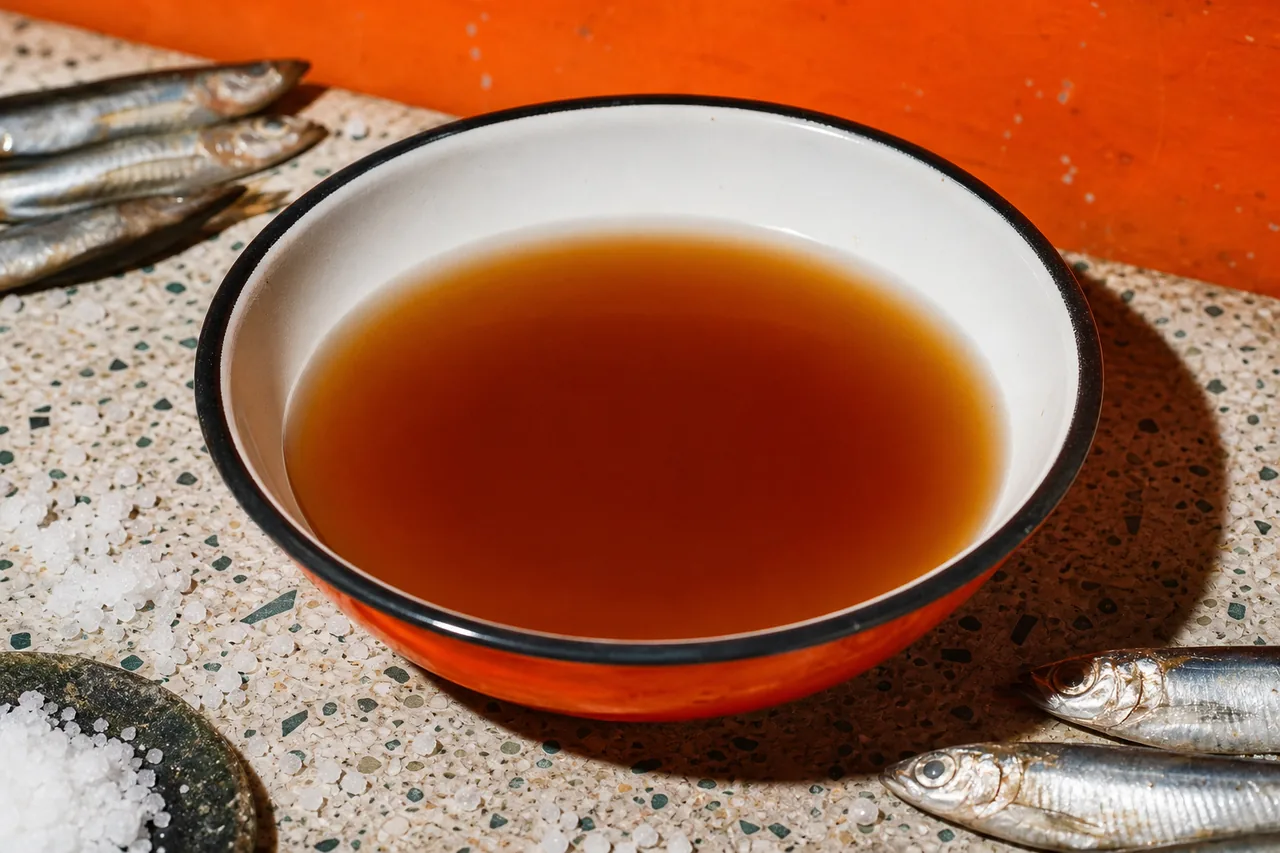
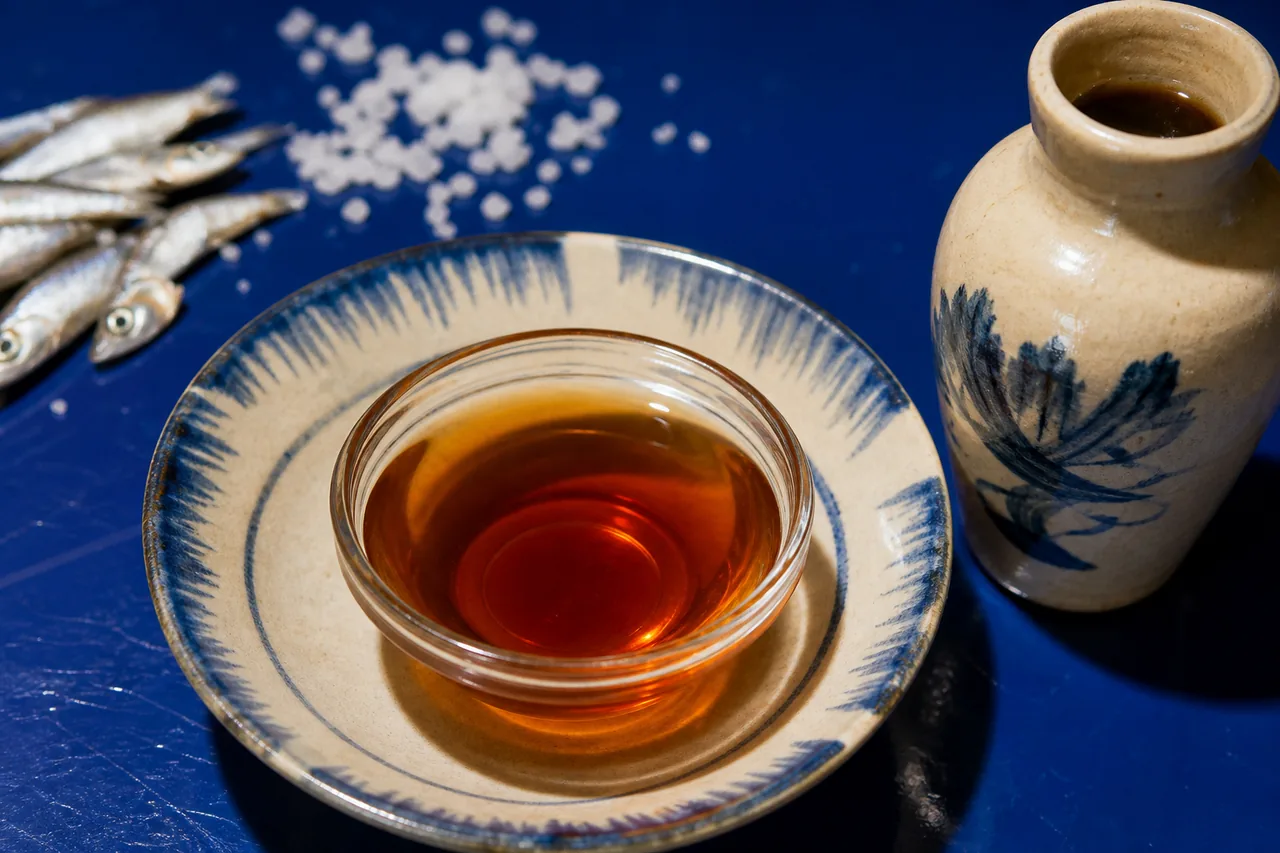
Traditional Vietnamese fish sauce made by slowly fermenting whole small fish in sea salt, then pressing and filtering them into an amber, salty, deeply flavored condiment with natural umami.
Ingredients
- 2000 g very small whole fresh anchovies, such as blue fish used for brining
- 600 g coarse non-iodized sea salt
Method
- Choose a perfectly clean crock or stoneware jar with no residual odor. Scald it with boiling water, let it air-dry completely, then check that no free water remains at the bottom.
- Sort the whole fresh anchovies: keep only fish that are shiny, firm, and have a clean sea smell. Discard any fish that are soft, dull, or smell of ammonia, because fermentation must start with impeccable raw material.
- Quickly wipe the fish if necessary, without washing them thoroughly: the goal is to preserve their natural juices and avoid adding too much water. They should be moist but not dripping.
- Mix the anchovies with the coarse salt in a large nonreactive container. Gently massage with your hand or a spatula to distribute the salt everywhere without crushing the fish. Each fish should be visibly coated with crystals.
- Place a thin layer of coarse salt in the bottom of the jar, then fill it with the fish-and-salt mixture, packing it down firmly in layers. Press to drive out air pockets: the surface should become compact, moist, and glossy.
- Finish with a protective layer of salt, place a small plate or clean weight directly on the mass, then close the jar without making it completely airtight. The fermentation must be able to breathe slightly while remaining protected from insects and dust.
- Leave it to ferment in a warm, stable, well-ventilated place, at a high room temperature but out of harsh direct sunlight. During the first days, check that the fish release juice and that the mass remains covered by its natural brine. The smell should be strong, marine, and salty, never putrid.
- During maturation, open it briefly at regular intervals to check the surface. If any solid portion rises above the liquid, push it back under with a clean utensil. A healthy brine gradually becomes more amber, more fluid, and more aromatic.
- Continue fermenting for several months, until the liquid is golden brown to amber, very salty, clear at the surface, and intensely umami-rich. The solids should have settled, and the aroma should suggest dried fish, the sea, salt, and concentrated broths.
- Draw off the first juice without disturbing the bottom: open the lower part of the jar if it has a tap, or gently ladle it from the top. Avoid disturbing the sediment, because this first flow is the purest.
- Filter very slowly through clean cheesecloth set over a fine-mesh strainer. Do not press the solids hard: let the liquid drain on its own to keep the sauce clear. If the liquid remains cloudy, filter it again after resting.
- Pour the filtered nuoc-mâm into a sterilized bottle. Let it rest before use in a cool, dark place: fine particles settle, the aroma rounds out, and the color becomes more even.
- Serve in small amounts as a condiment, plain or incorporated into a Vietnamese table sauce. To use it plain, pour only a small teaspoonful: the flavor should be intensely salty, lingering, and amber-toned, with no added acidity or sugar.
Nutrition
Per serving
- Energy
- 39.3 kcal
- Protein
- 6 g
- Carbohydrate
- 0 g
- Fat
- 1.44 g
- Fibre
- 0 g
- Calcium
- 3.62 mg
- Magnesium
- 10.06 mg