
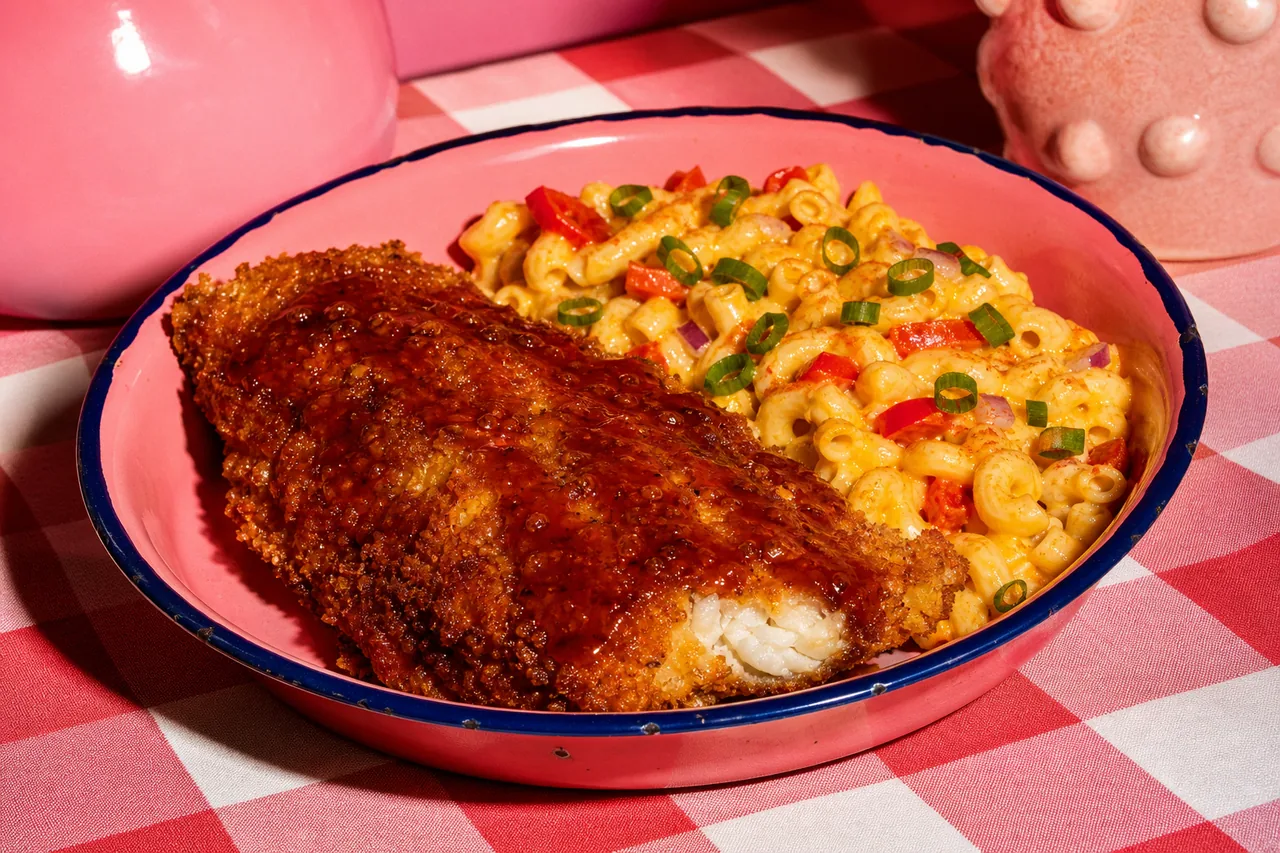
A meaty, crisp and pearly wolffish fillet served over a small portion of smoky macaroni and cheese, with a glossy Korean barbecue glaze that is just spicy enough to support the fish without masking it.
Ingredients
- 360 g Fresh wolffish fillet, skin removed, sustainably caught if possible
- 120 g Dry macaroni
- 90 g Grated aged cheddar
- 180 ml Whole milk
- 25 g Unsalted butter
- 55 g Wheat flour
- 70 g Panko breadcrumbs
- 1 piece Free-range egg
- 90 ml Korean barbecue sauce
- 2 tsp Mild smoked paprika
- 1 piece Red bell pepper
- 1 piece Red onion
- 2 tbsp Extra-virgin olive oil
- 400 ml Sunflower oil for cooking
- 1 tbsp Rice vinegar
- 1 clove Garlic clove
- 2 pieces Fresh scallion
- to taste Fine salt
- to taste Ground black pepper
Method
- Prepare the fish: pat the wolffish fillet thoroughly dry, remove any remaining bones with tweezers, then cut it into two thick portions. Season lightly with salt and refrigerate while the other preparations get started; the surface should become firmer and less damp.
- Roast the pepper garnish: heat the oven to 220 °C. Cut the red bell pepper and red onion into strips, toss them with the olive oil, some of the smoked paprika, salt, and pepper. Spread them on a hot baking sheet and roast until the edges brown and the pepper is tender but still juicy.
- Cook the macaroni: bring a large pot of salted water to a rolling boil. Add the macaroni and cook until al dente, with a slight bite remaining. Drain, reserving a little cooking water to loosen the sauce if needed.
- Make the cheese base: in a saucepan, melt the butter over medium heat until foamy but not browned. Add some of the flour and stir until you have a smooth paste that smells like warm biscuits. Gradually pour in the milk while whisking, then cook until the sauce thickens and leaves a clean trail on the spatula.
- Finish the macaroni and cheese: lower the heat, add the grated cheddar, finely grated garlic, a pinch of smoked paprika, and a small splash of rice vinegar. Stir until smooth, glossy, and thick enough to coat the spoon. Add the macaroni and roasted vegetables, then keep warm over very low heat; the texture should stay creamy, not compact.
- Prepare the breading: place the remaining flour, beaten egg, and panko breadcrumbs in three shallow dishes. Season the flour and breadcrumbs with salt, pepper, and the remaining smoked paprika. Coat each fish portion in flour, then egg, then panko, pressing gently to secure an even layer.
- Fry the fish: heat the sunflower oil in a deep skillet to 175 °C, or until a panko crumb sizzles immediately without turning dark. Add the breaded portions and cook, turning them carefully, until the breading is golden, dry to the touch, and makes a crisp sound when tapped.
- Check the cooking: transfer the fish to a wire rack rather than paper towels to preserve its crispness. The flesh should separate into large pearly flakes and stay juicy in the center; if the portions are very thick, finish them briefly in a low oven until just cooked through.
- Glaze without sogging: warm the Korean barbecue sauce over low heat until fluid and glossy. Brush only the top of the fish, leaving the breaded sides visible and crisp. The sauce should perfume the crust, not turn it into a soggy fritter.
- Plate: arrange the macaroni and cheese in a short ribbon in two warm plates, without making a mound. Place the breaded wolffish on top or slightly to the side so it remains the star. Finish with finely sliced scallion and a few drops of Korean barbecue sauce around the plate.
Nutrition
Per serving
- Energy
- 1226 kcal
- Protein
- 68.53 g
- Carbohydrate
- 99.1 g
- Fat
- 61.34 g
- Fibre
- 7.84 g
- Calcium
- 494.57 mg
- Iron
- 2.85 mg
- Magnesium
- 62.35 mg