 Open Umay
Soy Sauce with Rice Wine
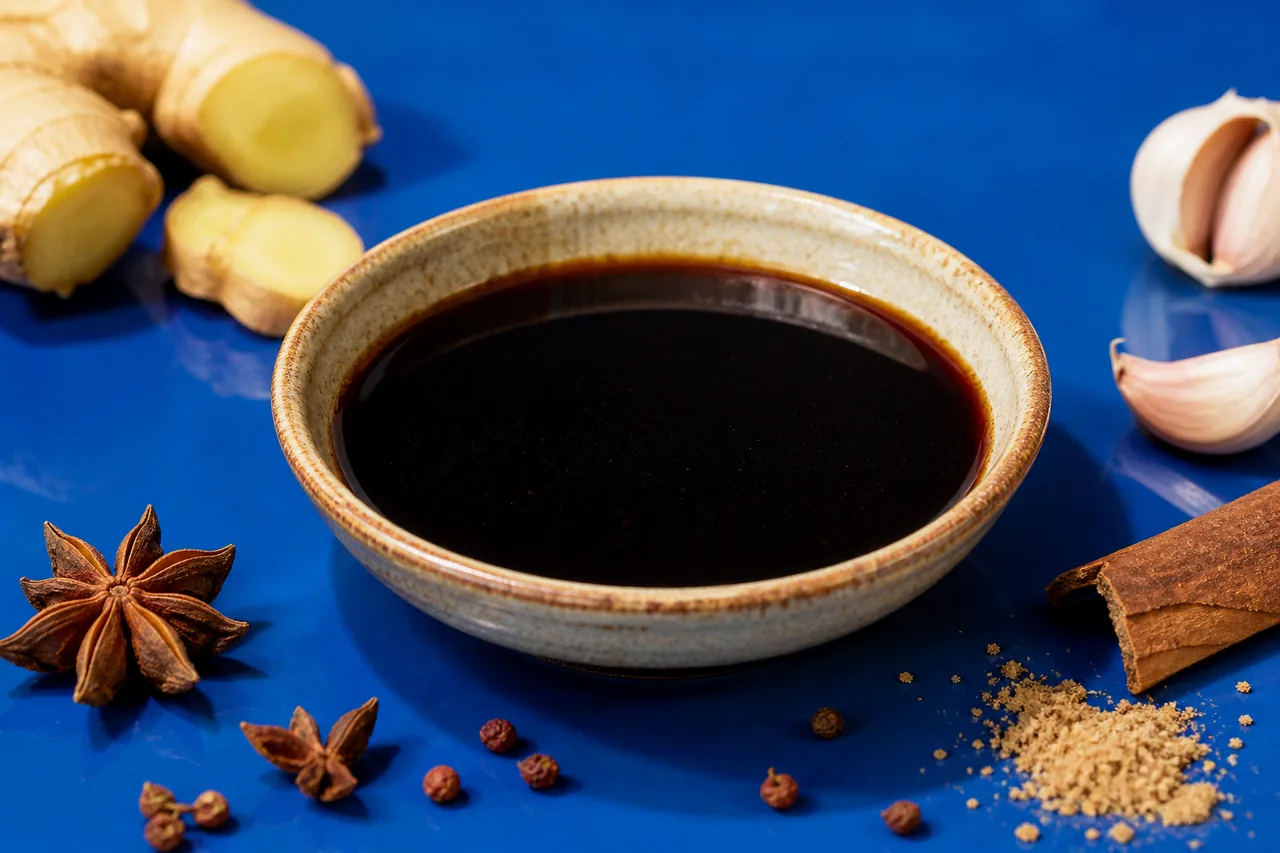
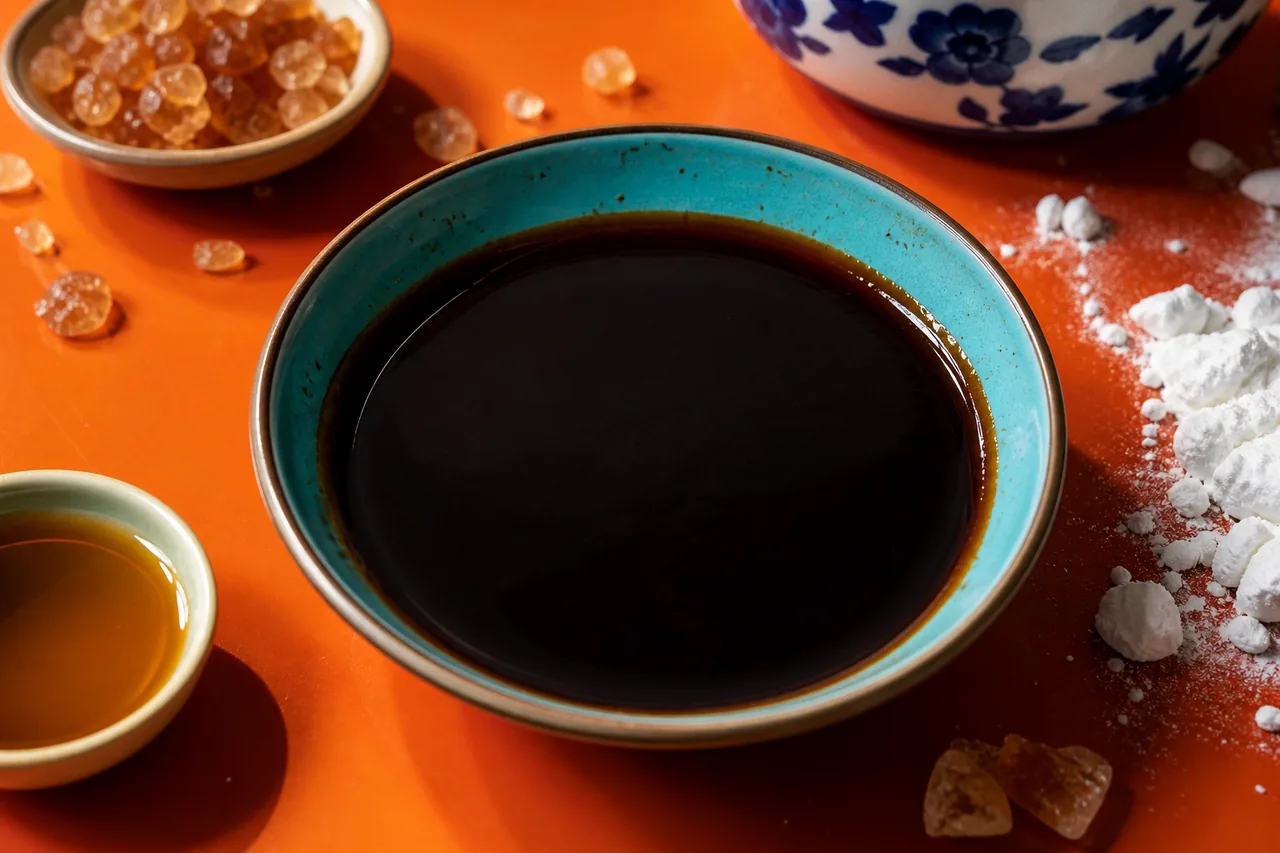
A classic Chinese sauce, dark, salty, and slightly sweet, scented with Shaoxing rice wine and aromatics, used in small amounts to season fried rice, vegetables, noodles, or meats.
4 servings
Ingredients
Chinese light soy sauce160 ml (2/3 cup)base
Shaoxing rice wine90 ml (3/8 cup)base
Chinese dark soy sauce25 ml (1 2/3 tbsp)pairing
white granulated sugar18 g (0.6 oz)pantry
fresh ginger20 g (0.7 oz)pairing
fresh garlic2 clovespairing
filtered water40 ml (2 2/3 tbsp)pantry
toasted sesame oil1 tspgarnish
Steps
- Prepare the aromatics: peel the ginger and lightly crush it with the flat side of a knife, then crush the garlic cloves without chopping them. The aim is to perfume the sauce, not leave pieces suspended in it.
- Pour the soy sauces, Shaoxing rice wine, water, and sugar into a small heavy-bottomed saucepan. Add the crushed ginger and garlic.
- Heat over medium-low, stirring until the sugar has completely dissolved. The sauce should become glossy and homogeneous, without coming to a full boil.
- When small bubbles appear around the edges of the saucepan and the raw alcohol aroma of the rice wine softens, lower the heat. Maintain a very gentle simmer, just enough for the surface to tremble slightly.
- Let it infuse over low heat until the sauce smells of warm soy, mellow rice wine, and ginger, with no burnt or sharp note. If the boil becomes vigorous, briefly remove the saucepan from the heat to keep the salty flavor from becoming harsh.
- Turn off the heat, add the toasted sesame oil, and stir gently. It should remain a fragrant finishing note and should not be cooked.
- Strain the sauce through a small fine-mesh strainer to remove the ginger and garlic. Press the aromatics very lightly with the back of a spoon, without crushing them into a purée.
- Let it cool to lukewarm before using. The final texture should be fluid, dark, and glossy, closer to a concentrated seasoning than a thick sauce.
- To serve, use a small amount: spoon it over food or season off the heat, or add it at the end of cooking fried rice to tint it lightly without making it soggy.
More recipes like this