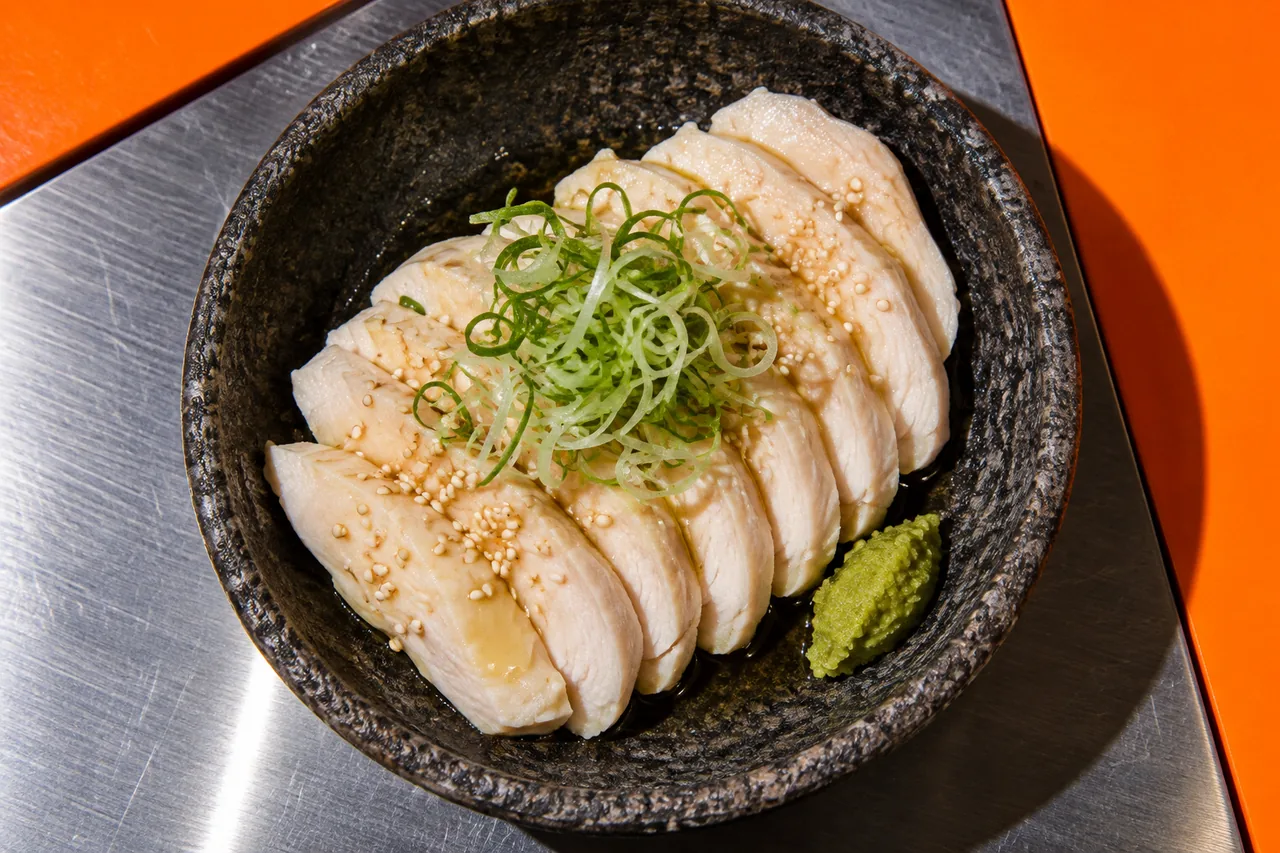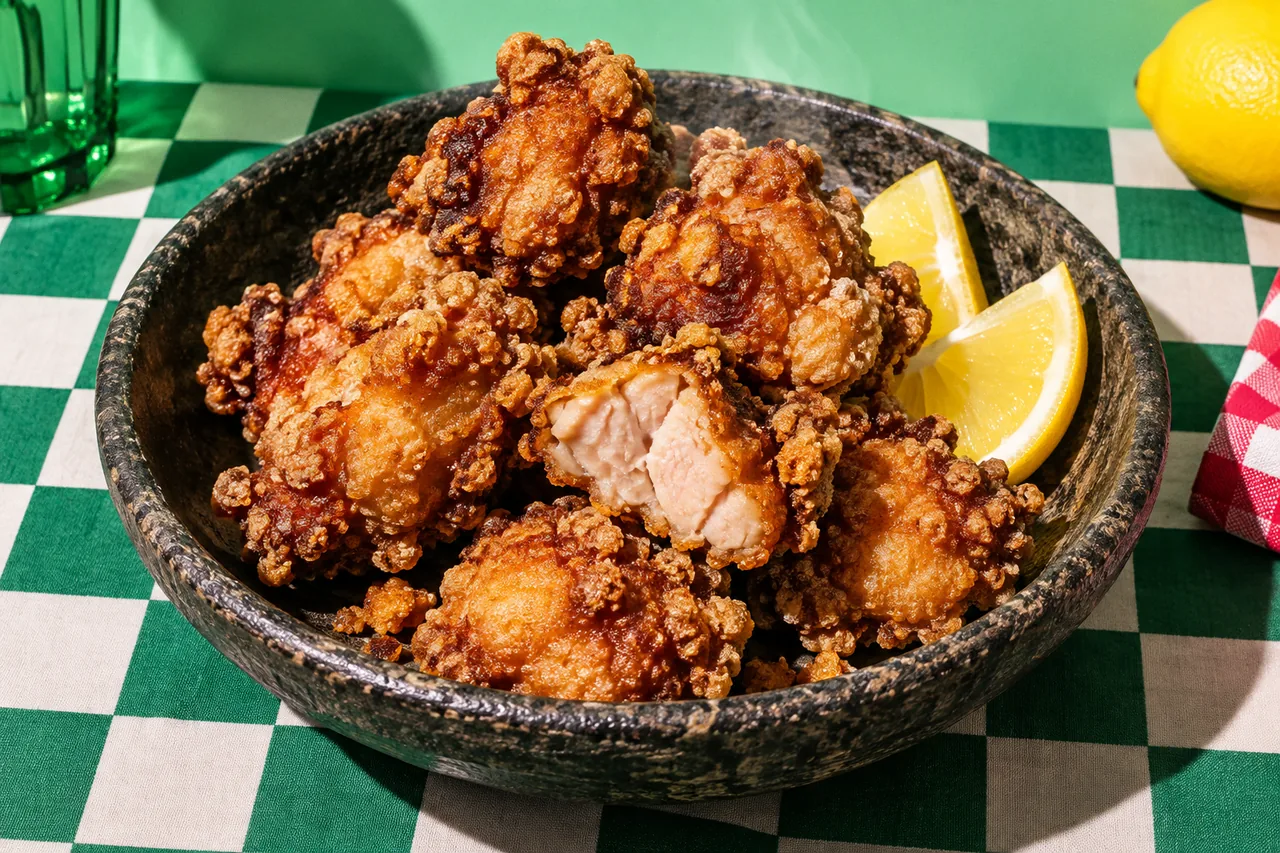
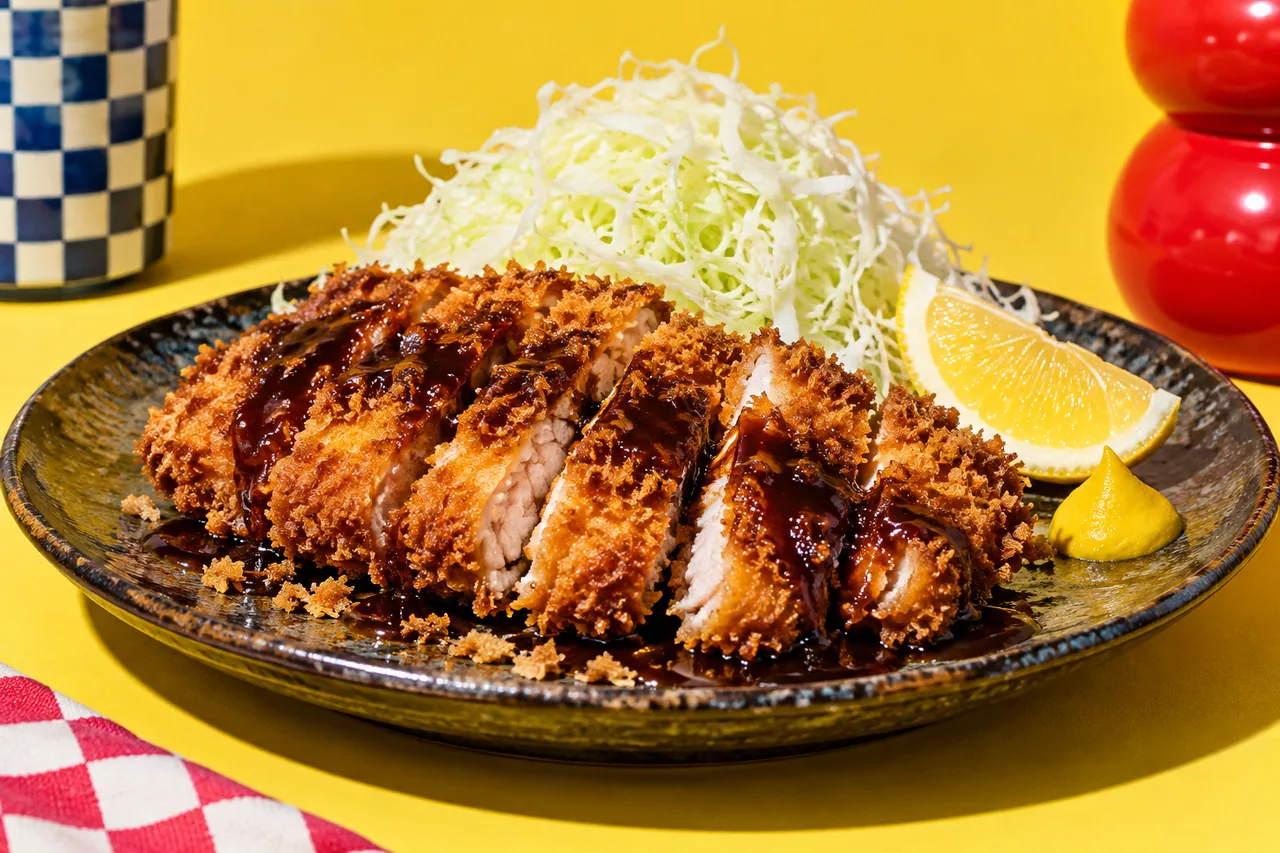
Japan's iconic breaded chicken breast, featuring an airy, golden panko crust and tender, juicy meat. Traditionally served with finely shredded cabbage, a sharp touch of karashi mustard, and rich, savory tonkatsu sauce.
Ingredients
- 600 g chicken breasts (tori mune)
- 4 g fine sea salt
- 1 g ground black pepper
- 60 g all-purpose flour (T55)
- 2 pieces fresh free-range whole eggs
- 120 g Japanese wheat panko breadcrumbs
- 800 ml high-oleic sunflower oil for frying
- 300 g fresh green cabbage
- 1 piece fresh untreated lemon
- 80 ml Japanese tonkatsu sauce
- 2 tsp Japanese karashi mustard
Method
- Shred the green cabbage as finely as possible into nearly translucent ribbons. Immediately plunge it into a large bowl of ice water for about 10 minutes to maximize crispness, then drain thoroughly and refrigerate.
- Place the chicken breasts (tori mune) on a clean cutting board and trim away any excess fat or cartilage. Butterfly each breast lengthwise without cutting all the way through, then gently pound with the flat side of a cleaver or a rolling pin to an even thickness of about 1.5 cm.
- Prick the meat all over with the tines of a fork to tenderize the fibers. Season both sides of the chicken with the fine sea salt and ground black pepper, rubbing gently to distribute the seasonings.
- Set up a breading station with 3 shallow dishes. Add the all-purpose flour (T55) to the first, beat the fresh whole eggs in the second until fully blended, and place the Japanese wheat panko breadcrumbs in the third.
- Dredge each prepared chicken breast in the all-purpose flour (T55) to coat lightly, shaking off any excess. Dip into the beaten eggs to coat completely, then press gently into the Japanese wheat panko breadcrumbs with your palm so the flakes adhere without being crushed.
- Pour the high-oleic sunflower oil into a deep skillet and heat over medium heat until it reaches 170 °C. To check the temperature without a thermometer, drop a pinch of panko into the oil: the crumbs should sink halfway and rise immediately to the surface with steady sizzling bubbles.
- Gently lower the breaded chicken cutlets into the hot oil, working in batches to avoid crowding the pan and dropping the oil temperature. Fry undisturbed for 3 to 4 minutes, until the underside is a rich golden brown.
- Carefully flip the cutlets with kitchen tongs and fry the second side for 2 to 3 minutes, until evenly golden and crisp.
- Transfer the chicken from the oil to a wire rack set over a baking sheet, ideally resting the cutlets upright to drain excess oil. Let rest for 2 to 3 minutes to allow the residual heat to finish cooking the meat while steam escapes freely without softening the crust.
- Transfer each crispy cutlet to a cutting board and slice firmly into even strips about 2 cm wide using a sharp knife so the crust stays intact.
- Arrange the sliced katsu closely together on each plate alongside a generous mound of the crisp, drained shredded cabbage. Drizzle the chicken with a ribbon of Japanese tonkatsu sauce, add a dab of Japanese karashi mustard to the side, and finish with a fresh lemon wedge to squeeze just before eating.
Nutrition
Per serving
- Energy
- 445.1 kcal
- Protein
- 42.95 g
- Carbohydrate
- 31.37 g
- Fat
- 16.26 g
- Fibre
- 3.09 g
- Calcium
- 58.01 mg
- Iron
- 0.52 mg
- Magnesium
- 16.89 mg