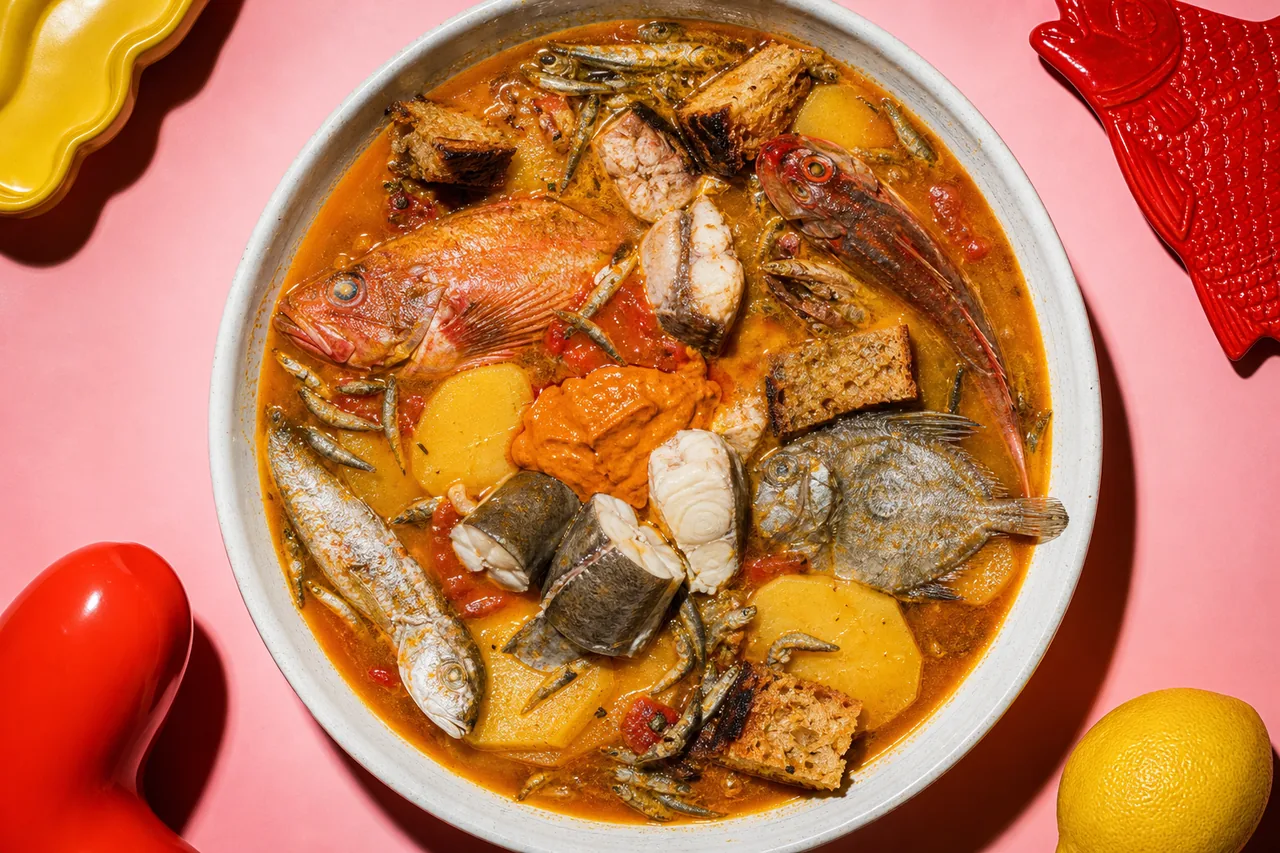
Traditional Marseille bouillabaisse: a rich, saffron-infused rockfish broth served with an assortment of perfectly cooked Mediterranean fish, tender potatoes, garlic-rubbed croutons, and homemade rouille.
Ingredients
- 1 kg small whole rockfish for soup
- 400 g whole red scorpionfish, gutted and scaled
- 350 g whole red gurnard, gutted and scaled
- 350 g conger eel steaks
- 300 g whole weever fish, gutted
- 300 g monkfish steaks on the bone
- 300 g whole John Dory, gutted
- 700 g firm waxy potatoes
- 500 g ripe tomatoes
- 300 g yellow onions
- 250 g leeks, white and light green parts only
- 200 g fresh fennel bulb
- 12 cloves fresh garlic
- 300 ml extra virgin olive oil
- 1 tbsp tomato paste
- 5 cl Marseille pastis
- 0.6 g saffron threads
- 1 piece unwaxed orange
- 4 sprigs fresh thyme
- 2 leaves bay leaf
- 1 tsp fennel seeds
- 12 slices crusty country bread
- 2 pieces fresh egg yolks
- 2 pinches ground cayenne pepper
- to taste fine sea salt
- 1 tsp whole black peppercorns
Method
- Have your fishmonger gut and scale all fish, cut larger specimens into even steaks, and reserve all heads, bones, and trimmings. Carefully remove the gills to prevent any bitterness, then give the fish a quick rinse under cold water and pat dry.
- Prepare the aromatics: thinly slice the onions, leeks, and fennel bulb, roughly chop the tomatoes, crush part of the garlic, and peel a wide strip of orange zest, avoiding the bitter white pith. Steep the saffron threads in a small amount of hot water.
- Heat a portion of the olive oil in a wide, heavy pot. Sweat the sliced onions, leeks, and fennel over medium heat without browning. Stir in the garlic reserved for the broth, tomato paste, chopped tomatoes, fennel seeds, fresh thyme, bay leaf, whole black peppercorns, and orange peel. Cook until the tomatoes break down into a soft compote.
- Add the small whole soup rockfish, fish heads, bones, and trimmings. Cook over medium-high heat, crushing the fish firmly with a sturdy wooden spoon to release their juices. Pour in the pastis, let the alcohol cook off for a minute, and cover generously with cold water.
- Bring to a rapid boil, skim off any foam from the surface, and maintain a lively simmer before lowering the heat slightly. Cook until the small fish fall apart completely and the broth is deeply fragrant.
- Discard the thyme sprigs, bay leaf, and orange peel. Pass the entire contents of the pot through a food mill fitted with a fine disk, pressing hard to extract every bit of liquid and pulp from the fish and aromatics. Strain the broth through a fine-mesh sieve to catch any stray bones. The broth should be dense, vibrant orange, and velvety smooth, without any added cream.
- Return the strained broth to the wide pot. Stir in the steeped saffron liquid, season lightly with fine salt, and bring back to a boil. Peel the potatoes, cut them into thick rounds, and simmer in the broth until nearly tender. Remove one small piece of cooked potato to use as the base for the rouille.
- Prepare the rouille: in a mortar, pound the reserved garlic cloves, cayenne pepper, a pinch of saffron threads, salt, and the warm cooked potato piece into a smooth paste. Whisk in the egg yolks, then slowly drizzle in the remaining olive oil in a steady stream, working continuously until emulsified into a thick, glossy sauce. The rouille should be rich, smooth, garlicky, and deeply aromatic with saffron.
- Toast the slices of country bread until crisp, dry, and golden brown. While still warm, rub them generously with a peeled garlic clove. Set aside uncovered so they remain crisp.
- Once the potatoes are nearly tender, bring the broth to a rolling boil. Add the firmest fish first, including the conger eel, scorpionfish, gurnard, and monkfish steaks. Next, add the weever and John Dory. Immediately lower the heat to a gentle simmer. Do not stir with a spoon; instead, gently swirl the pot by its handles to avoid breaking up the delicate fish flesh.
- Check the fish for doneness near the bone: the flesh should flake easily while remaining pearly and moist. Gently lift the fish and potato slices from the broth with a slotted spoon and arrange them on a warm serving platter. Taste the broth and adjust the salt as needed, keeping its pure sea flavor front and center.
- Serve in the traditional Marseille style: first, ladle the piping hot broth into wide shallow bowls alongside the garlic-rubbed croutons and rouille. Present the platter of fish and potatoes separately at the table, inviting guests to add pieces of fish and potatoes to their bowls with additional ladles of hot broth.
Nutrition
Per serving
- Energy
- 807.4 kcal
- Protein
- 76.9 g
- Carbohydrate
- 57.36 g
- Fat
- 28.91 g
- Fibre
- 8.15 g
- Calcium
- 122.82 mg
- Iron
- 3.78 mg
- Magnesium
- 55.23 mg