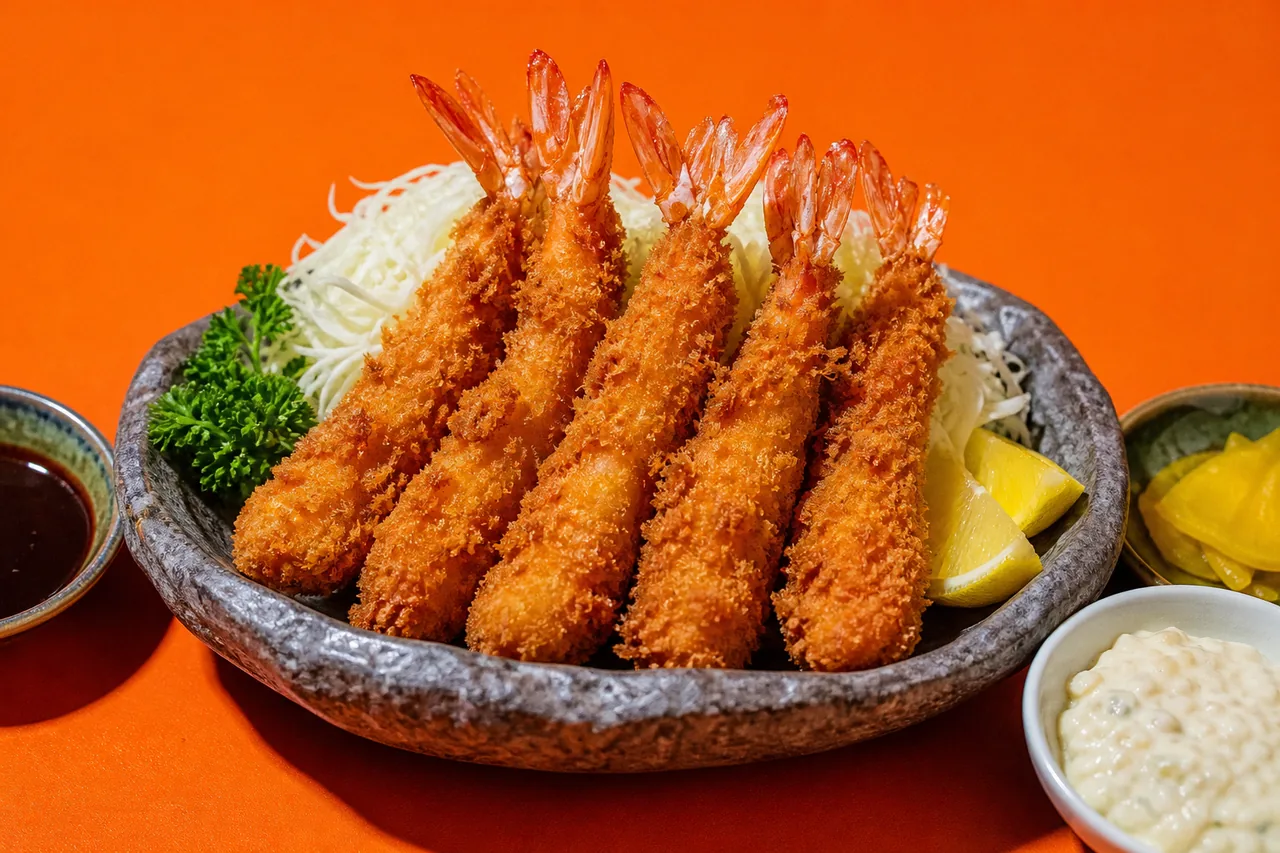
The great Japanese yōshoku classic: large shrimp butterflied, straightened, and coated in flour, egg, and panko, then fried until the crust is pale golden, dry, and wonderfully crisp. Served with finely shredded cabbage, lemon, tonkatsu sauce, and Japanese tartar sauce.
Ingredients
- 800 g Large raw shrimp, peeled with tails on, frying size
- 120 g T45 or T55 wheat flour
- 3 pieces Fresh eggs
- 180 g Japanese panko breadcrumbs
- 2 tsp Fine salt
- 1 pinch Ground white pepper
- 1 l Neutral frying oil
- 300 g Fresh white cabbage
- 2 pieces Unwaxed lemons
- 120 g Japanese tonkatsu sauce
- 120 g Japanese mayonnaise or rich egg-yolk mayonnaise
- 2 pieces Hard-boiled eggs ready to peel
- 80 g Yellow onion
- 60 g Japanese sweet-and-sour pickles or thin pickles
- 0.5 bunches Fresh flat-leaf parsley
- 1 tsp Mild mustard
Method
- Prepare the cabbage garnish: remove the thick ribs, slice the leaves as finely as possible, then plunge them into a bowl of very cold water. The cabbage should firm up, become crisp, and turn slightly translucent at the edges. Drain thoroughly and keep chilled.
- Prepare the Japanese tartar sauce: chop the hard-boiled eggs, onion, pickles, and parsley. Mix with the Japanese mayonnaise and mild mustard. Season lightly with salt and pepper, then refrigerate. The texture should remain thick, with visible pieces, not a smooth cream.
- Prepare the shrimp: remove the black vein if necessary by making a shallow cut along the back. Leave the tails on, pat the flesh very dry with paper towels, then season with salt and pepper. Dry shrimp hold the breading better and splatter less when fried.
- Straighten the shrimp in the Japanese style: make small, shallow cuts underneath the belly without cutting through the flesh, then gently press each shrimp on the board until you feel the fibers relax. It should lengthen and remain almost straight without curling back up.
- Set up the breading: put the flour in a shallow dish, beat the eggs in another until fluid, and spread the panko in a third. Keep one hand for the dry ingredients and one for the egg to keep the breading light.
- Bread the shrimp: dip each one in the flour, tap off the excess, coat it in beaten egg, then roll it in the panko while pressing gently. Leave the tail uncovered. The surface should be completely covered with irregular crumbs, with no visible wet patches.
- Let the breaded shrimp rest on a rack while the oil heats. This short rest sets the breading: it should feel dry to the touch, with the panko firmly attached to the flesh.
- Heat the oil in a deep saucepan or fryer until it reaches a lively frying temperature, around one hundred and seventy to one hundred and eighty degrees. Without a thermometer, a panko crumb should rise immediately with a lively sizzle without browning at once.
- Fry the shrimp in small batches without crowding them. Turn them gently if they are not fully submerged. The frying should sizzle steadily, the breading should puff and turn light golden. Remove them as soon as the crust is dry and crisp and the shrimp are just firm.
- Drain the shrimp on a rack, never directly on paper towels pressed against the breading. Lightly salt them as soon as they come out of the oil. The crust should still sound crisp when touched with tongs.
- Plate immediately: make a mound of very cold cabbage, add the lemon wedges, arrange the shrimp in a row with the tails aligned, then serve with the tonkatsu sauce and Japanese tartar sauce on the side. Eat while the contrast between the piping-hot breading and the fresh garnish is clear.
Nutrition
Per serving
- Energy
- 650.4 kcal
- Protein
- 59.42 g
- Carbohydrate
- 46.34 g
- Fat
- 25.72 g
- Fibre
- 4.52 g
- Calcium
- 235.99 mg
- Iron
- 7.08 mg
- Magnesium
- 122.28 mg