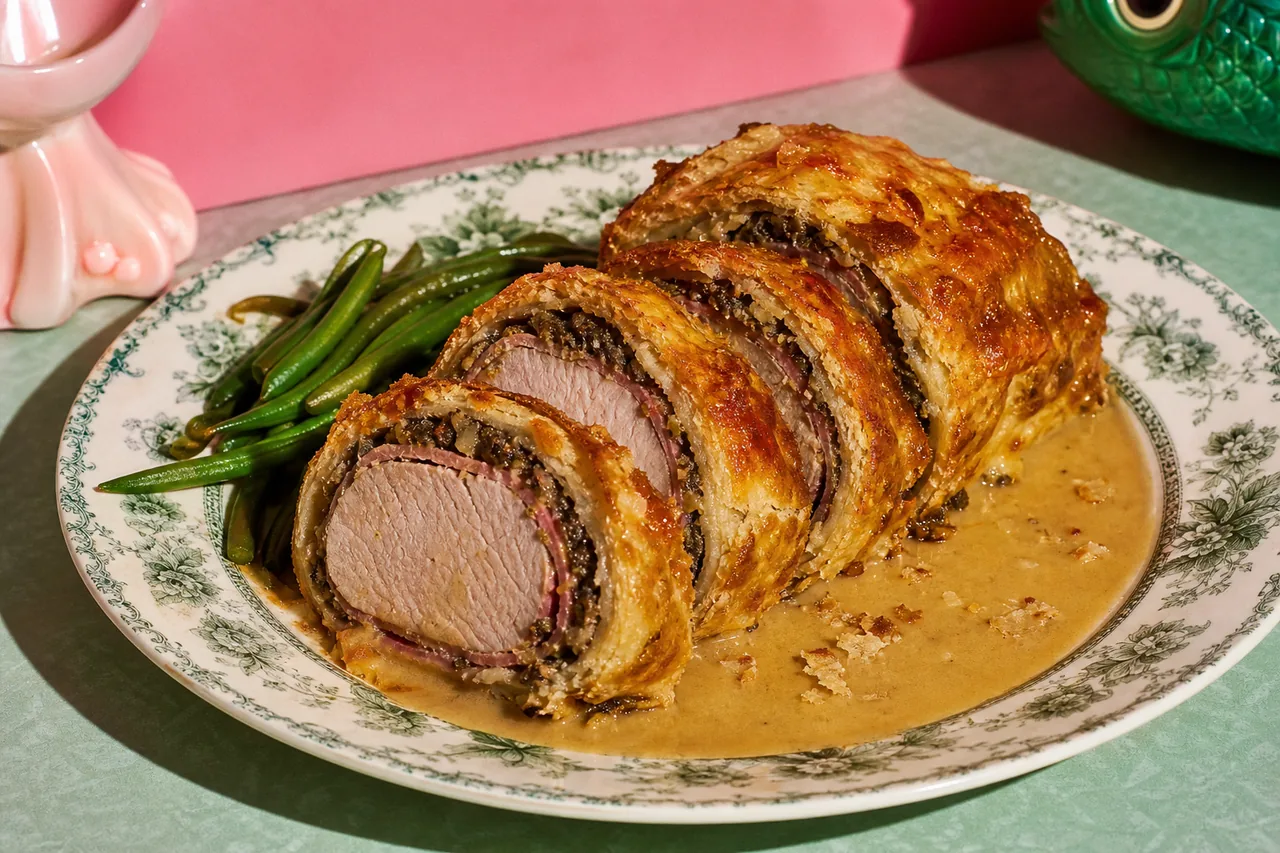
The classic French bistro dish: seared pork tenderloin wrapped in ham, mushroom duxelles, and all-butter puff pastry, served with a creamy veal jus.
Ingredients
- 800 g trimmed pork tenderloin
- 280 g rectangular all-butter puff pastry
- 400 g fresh button mushrooms
- 120 g thinly sliced Paris ham
- 120 g yellow onion
- 50 g fresh shallot
- 2 cloves fresh garlic
- 40 g Dijon mustard
- 1 piece fresh egg
- 50 g unsalted butter
- 2 tbsp sunflower oil
- 100 ml dry white wine
- 300 ml ready-to-use veal stock
- 120 g full-fat crème fraîche
- 20 g wheat flour
- 2 sprigs fresh thyme
- 1 leaf dried bay leaf
- to taste fine salt
- to taste ground black pepper
Method
- Take the pork tenderloin out of the refrigerator ahead of time so it loses its surface chill. Pat it thoroughly dry with paper towels: the meat should feel dry to the touch, otherwise it will steam instead of sear.
- Trim the tenderloin if needed by removing the silver skin and any visible sinews. Season all over with salt and pepper, without cutting into the meat.
- Heat a large skillet over high heat with the oil. When the surface is fluid and shimmering, add the tenderloin and brown it on all sides. The aim is a blond to light-brown crust with a clear sizzle, while keeping the inside raw.
- Transfer the meat to a rack or a cold plate. Immediately brush the surface with Dijon mustard while the residual heat releases its aroma, then let it cool completely. Never enclose hot meat in pastry.
- Finely chop the mushrooms, onion, shallot, and garlic. The cut should be small and even, creating a cohesive duxelles without large pieces that could pierce the pastry.
- Melt some of the butter in the skillet over medium heat. Add the onion and shallot, then cook gently until translucent and slightly sweet, without significant browning.
- Add the garlic, mushrooms, and thyme. Cook over medium to high heat, stirring often, until all the moisture has evaporated. The duxelles is ready when it releases no more liquid, gathers around the spatula, and begins to catch very slightly on the bottom of the skillet.
- Season with salt and pepper, remove the thyme if the stems are tough, then spread the duxelles on a plate so it cools quickly. It must be cold and almost dry before assembly.
- Unroll the very cold puff pastry on a lightly floured work surface. Keep it pliable but firm: if the butter softens or sticks to your fingers, chill it briefly again.
- Arrange the ham slices in a rectangle in the center of the pastry, letting them overlap slightly. Spread the cooled duxelles evenly over the ham, keeping the edges clean to make sealing easier.
- Place the cooled tenderloin in the center, with its most even side facing down. Fold the ham and duxelles around the meat, then wrap it in the pastry, tightening just enough to remove air without crushing the layers.
- Seal the seam with a little beaten egg, place the seam underneath, then fold the ends neatly. Trim away excess pastry if necessary: a thick overlap would cook poorly and become doughy.
- Place the pastry-wrapped tenderloin on a cold baking sheet lined with parchment paper. Brush the entire surface with beaten egg, then refrigerate until the pastry feels firm again.
- Preheat the oven to 200 °C with the fan on, or to 210 °C in a conventional oven. Just before baking, brush with egg a second time and score light patterns with the back of a knife without piercing the pastry.
- Bake in the middle of the oven. Cook until the pastry is well risen, deeply golden, and dry to the touch. If using a probe, the center of the pork should reach about 63 °C before resting so it stays tender.
- While it cooks, prepare the sauce. Lightly degrease the searing skillet if necessary, then deglaze with the white wine over high heat, scraping up the browned bits with a spatula. The liquid should boil vigorously and lose its raw alcohol smell.
- Add the veal stock and bay leaf, then reduce at a simmer until the sauce lightly coats the back of a spoon. Stir in the crème fraîche and continue gently without bringing it to a hard boil.
- Off the heat, whisk in the remaining butter to finish the sauce. Adjust the salt and pepper. The sauce should be glossy, cohesive, and fluid enough to surround the slice without covering the crisp pastry.
- When it comes out of the oven, let the pastry-wrapped tenderloin rest on a rack. This rest stabilizes the juices and keeps the pastry from becoming soggy against a hot baking sheet.
- Slice with a serrated or very sharp knife, without pressing down hard. Serve thick slices with the sauce on the side or around the meat, never poured over the top, to preserve the crust.
Nutrition
Per serving
- Energy
- 909.1 kcal
- Protein
- 59.14 g
- Carbohydrate
- 44.46 g
- Fat
- 54.04 g
- Fibre
- 5.9 g
- Calcium
- 80.01 mg
- Iron
- 1.46 mg
- Magnesium
- 53.98 mg