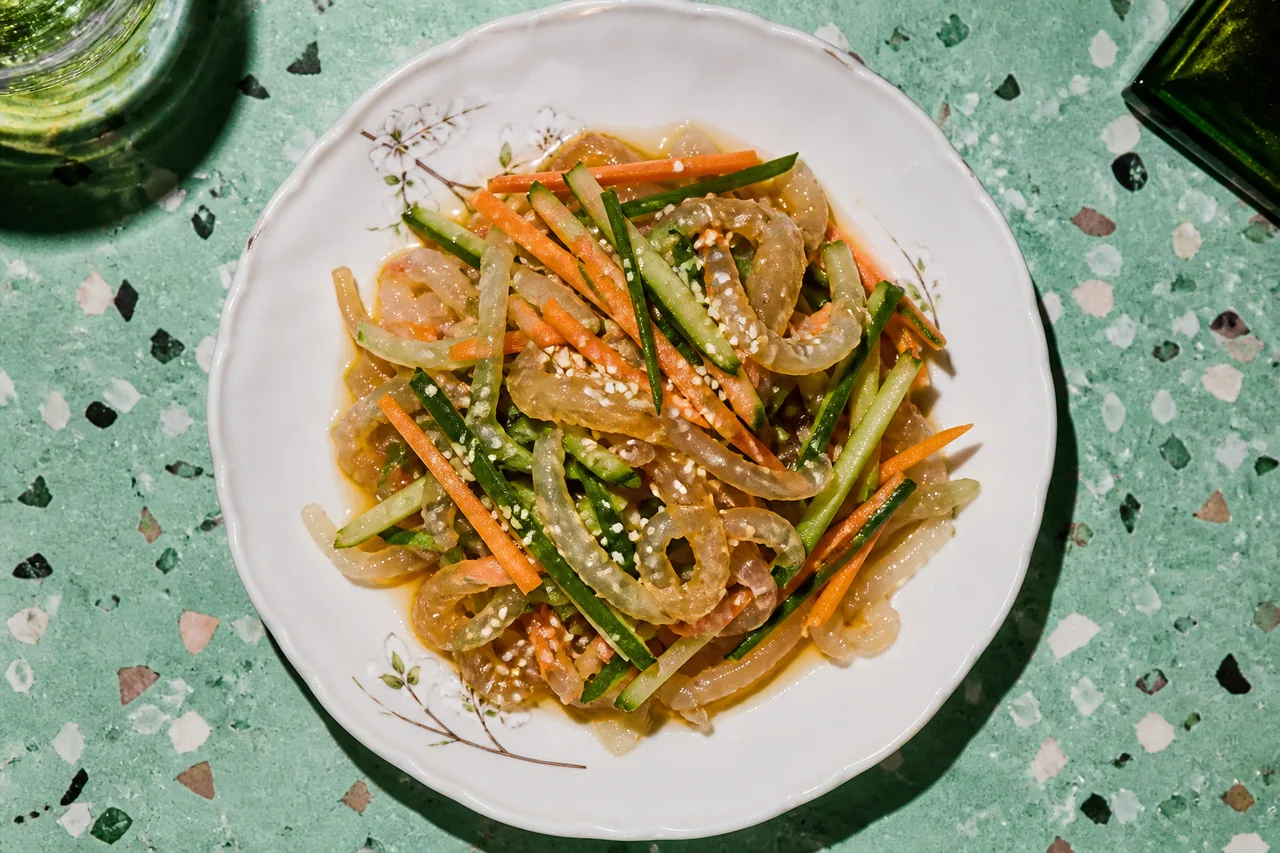
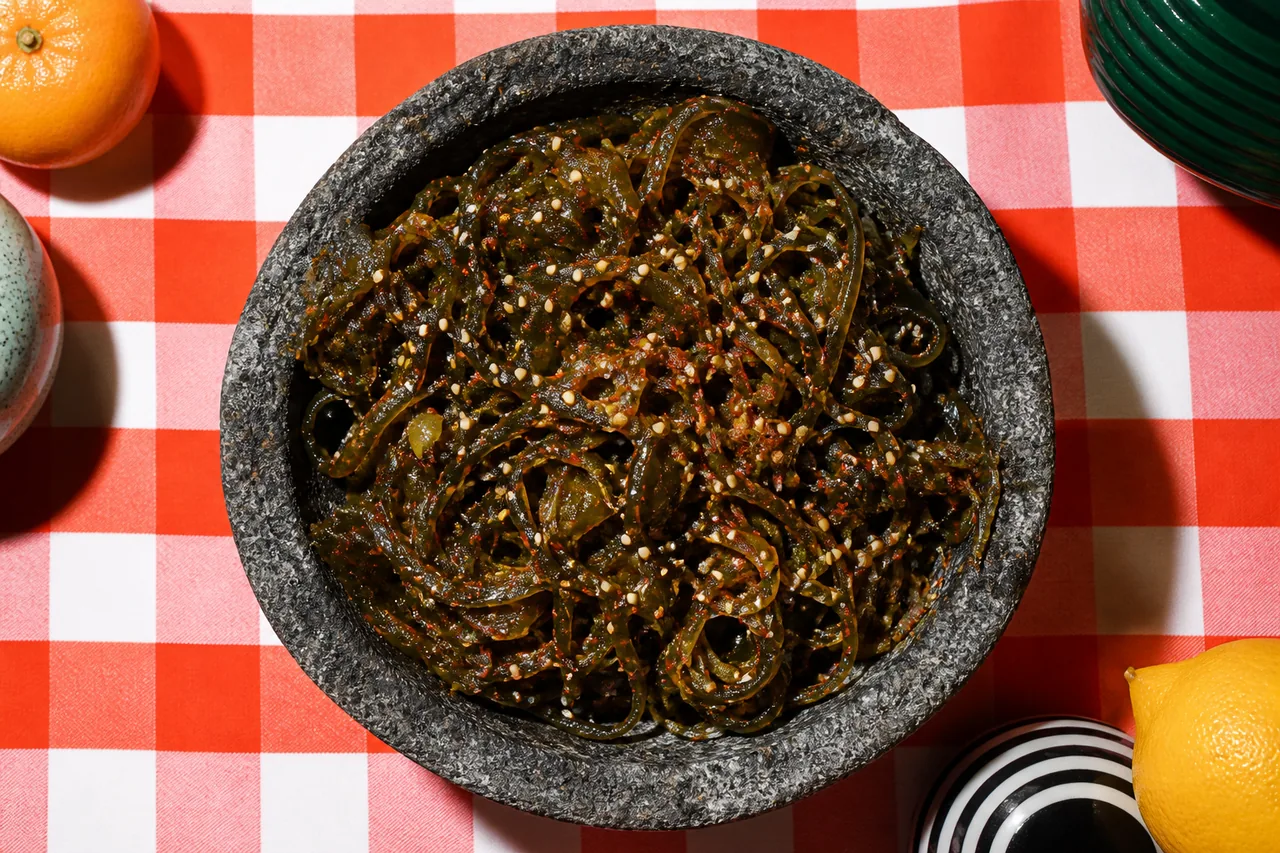
A fresh, spicy salad made with rehydrated sea lettuce, dressed with a classic Korean vinaigrette of sesame oil, gochugaru, and garlic. Served as banchan or a light starter.
Ingredients
- 30 g dried sea lettuce (parae)
- 2 tbsp soy sauce (such as Kikkoman or Korean-style)
- 1 tbsp rice vinegar
- 1 tsp white sugar
- 1 tbsp Korean chili flakes (gochugaru)
- 2 cloves fresh garlic
- 1 1/2 tbsp toasted sesame oil
- 2 tsp toasted sesame seeds
Method
- Place the dried sea lettuce in a large bowl and cover with cold water (about 1 liter). Rehydrate for 15 to 20 minutes: the leaves should become pliable and triple in volume. Test by pinching a piece: it should tear easily without feeling rubbery.
- Drain the sea lettuce in a fine-mesh strainer. Take handfuls and squeeze firmly to extract as much water as possible. Place it in a clean kitchen towel and wring it out by twisting the ends. The texture should be just moist, not waterlogged.
- Cut the sea lettuce into strips 3 to 4 cm wide using kitchen scissors. Set aside in a large bowl.
- Prepare the vinaigrette: in a small bowl, mix the soy sauce, rice vinegar, sugar, and gochugaru. Crush or finely mince the garlic cloves and add them. Whisk until the sugar dissolves (about 30 seconds).
- Add the sesame oil to the vinaigrette and whisk again to emulsify it slightly.
- Pour the vinaigrette over the sea lettuce and toss gently with chopsticks or a silicone spatula, lifting the leaves to coat each piece without crushing them. Taste and adjust the seasoning (a little more gochugaru for heat, or a pinch of salt if needed).
- Sprinkle the toasted sesame seeds on top. Serve immediately at room temperature, or refrigerate for 10 minutes for a fresher version (do not exceed 30 minutes, or the salad will lose its crunch).
Nutrition
Per serving
- Energy
- 106 kcal
- Protein
- 2.92 g
- Carbohydrate
- 8.29 g
- Fat
- 7.43 g
- Fibre
- 3.08 g
- Calcium
- 116.42 mg
- Iron
- 6.43 mg
- Magnesium
- 223.4 mg