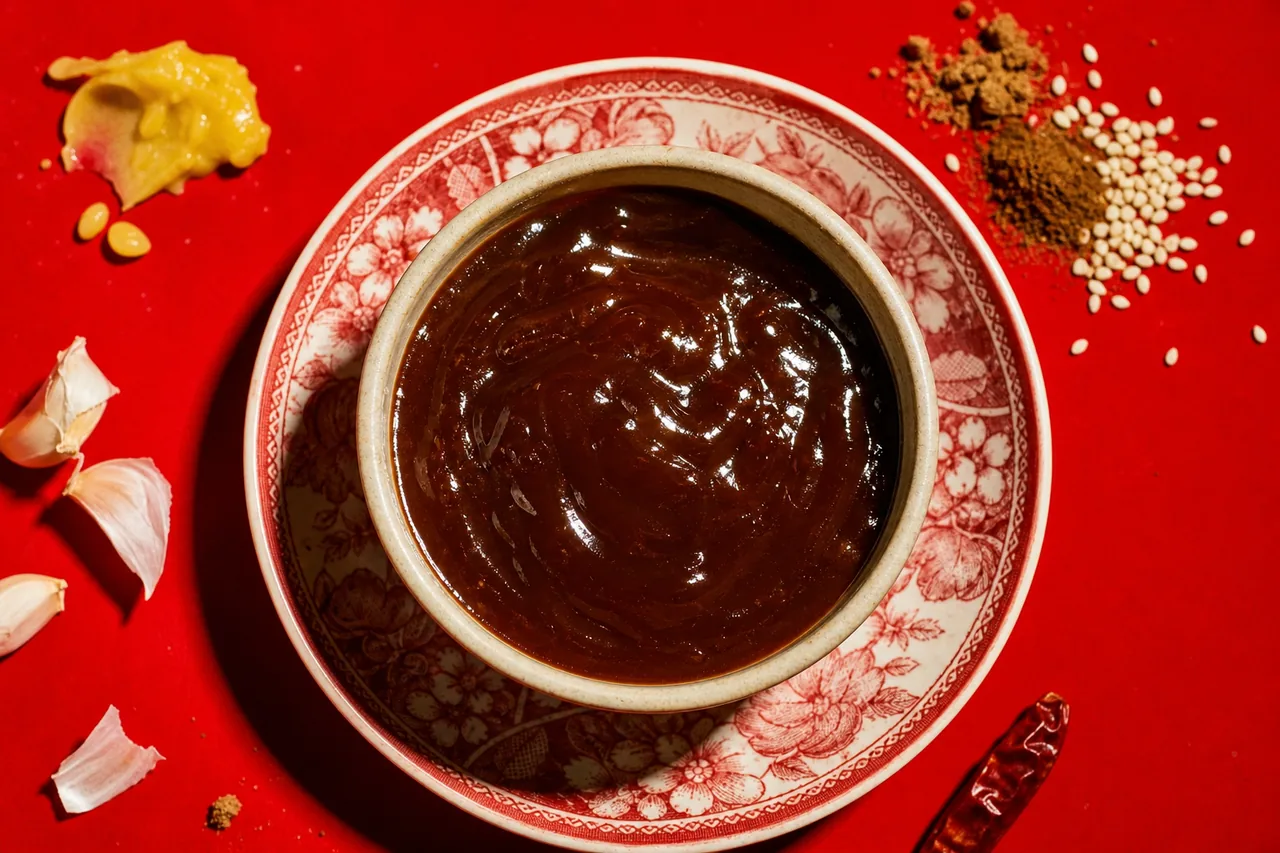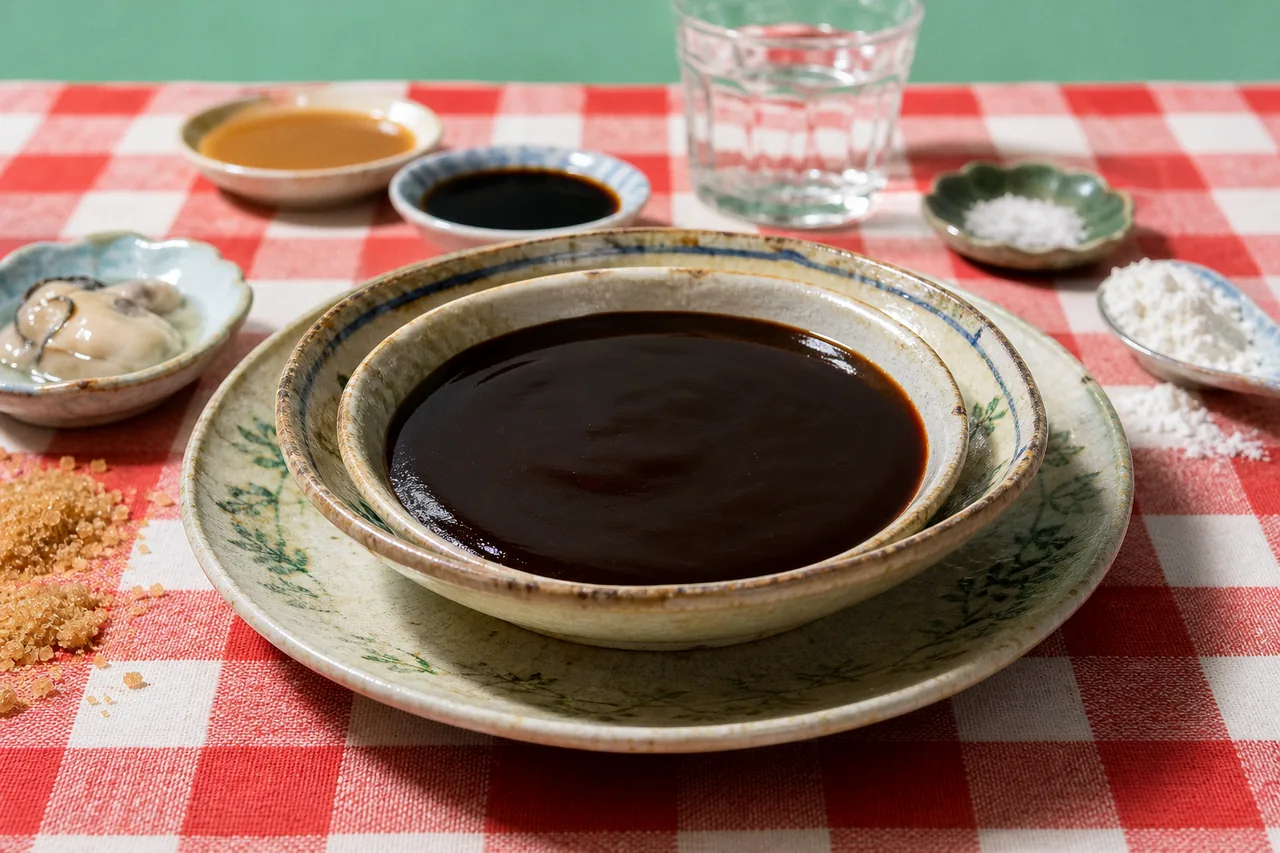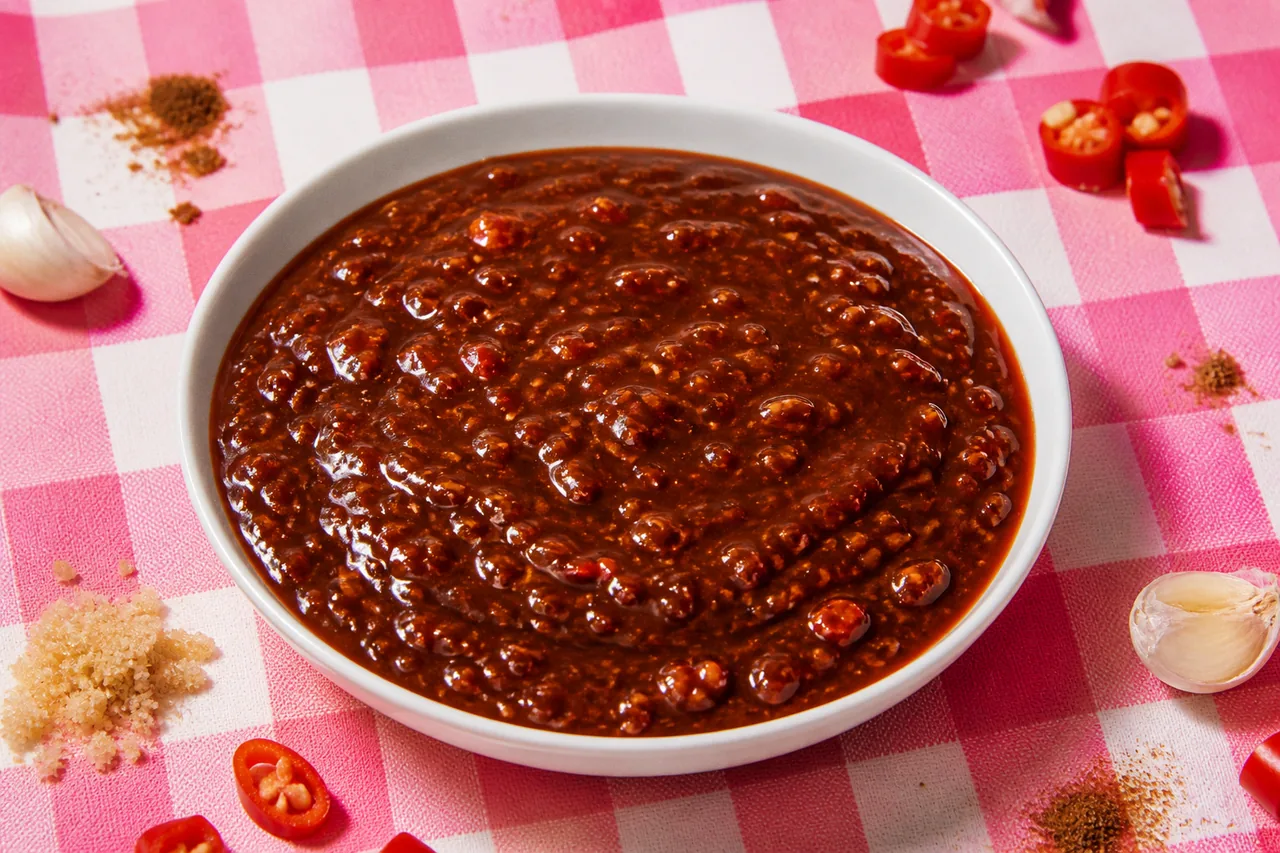
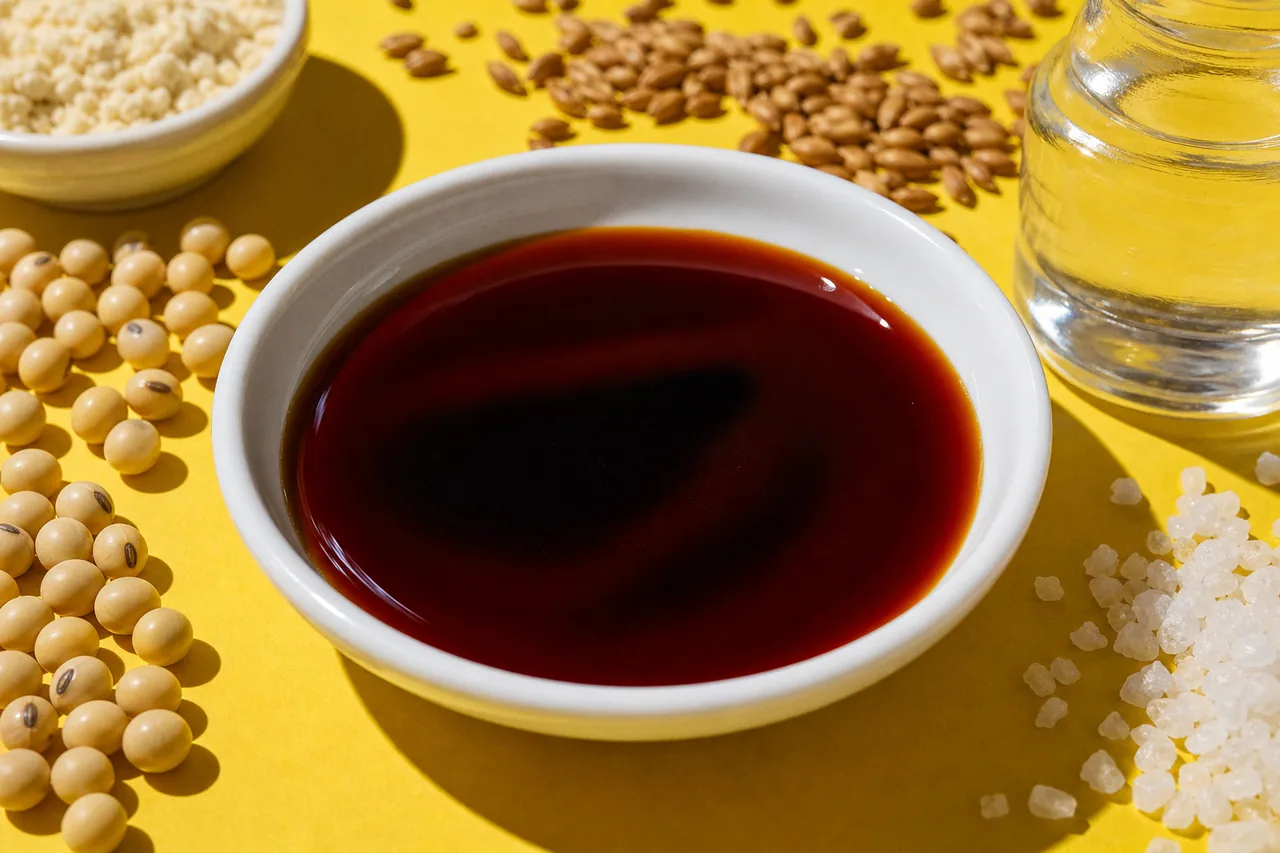
Traditional Chinese soy sauce, made by fermenting soybeans, roasted wheat, salt, and water, then pressing, clarifying, and pasteurizing it to produce an amber-brown, salty, umami sauce with a slight malty note.
Ingredients
- 500 g dried yellow soybeans
- 250 g whole soft wheat
- 250 g non-iodized sea salt
- 1200 ml spring water or filtered water
- 2 g koji starter for soy sauce
Method
- Rinse the soybeans until the water runs clear, then soak them in plenty of cold water overnight in a cool place, until they have visibly swollen and their skins wrinkle under your fingers.
- Drain the soybeans, cover them with fresh water, and cook at a gentle simmer without a rolling boil, until the beans mash easily between two fingers. Skim at the beginning of cooking to keep the base clean.
- Drain the cooked soybeans thoroughly and let them cool slightly on a clean tray. They should be hot to the touch but no longer release scalding steam, or the ferment will be weakened.
- Toast the wheat dry in a wide skillet over medium heat, stirring constantly, until it smells like toasted bread and turns a hazelnut-blond color. Let it cool, then crush it coarsely: it must not become a fine flour.
- Mix the warm soybeans, crushed wheat, and koji starter in a perfectly clean container. Spread the mixture in an even layer, cover with a clean cloth, and incubate in a warm, ventilated place until a white to beige bloom develops and the aroma is sweet, grainy, and mushroom-like, never putrid.
- Gently stir the mixture during incubation if it becomes too hot in the center: it should remain warm, pliable, and aerated. If a strong ammonia smell or black mold appears, discard the mixture and start again with cleaner equipment.
- Prepare a brine by dissolving the sea salt in filtered water. Stir until completely dissolved; no crystals should remain at the bottom of the container.
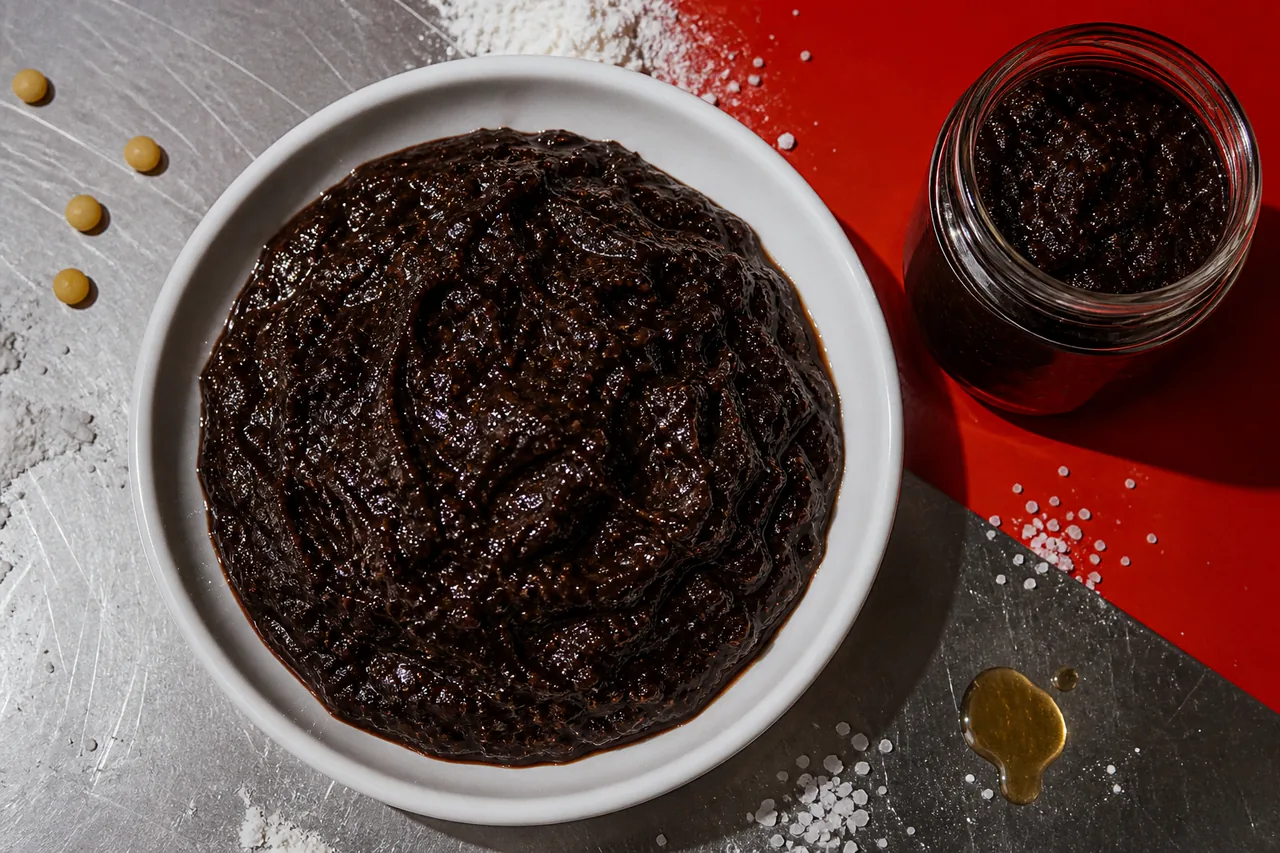
- Transfer the soybean and wheat koji to a clean jar or stoneware crock, then pour in the brine. Stir with a clean spoon to obtain a fluid, lumpy paste called moromi.
- Cover without sealing airtight, so the gas can escape, and ferment in a temperate place away from direct sunlight. Stir regularly with a clean utensil: at first, the mixture will smell of salted grain; over time, it will become dark brown, more fluid, glossy, and deeply umami.
- Continue fermenting for several months, until the grains have largely broken down, the liquid is mahogany-brown, and the aroma suggests broth, malt, dried mushrooms, and salt. A longer fermentation produces a rounder, less raw sauce.
- Press the moromi through sturdy cheesecloth or a filter bag. Work slowly: the first juice runs clear and dark, then pressing produces a cloudier liquid. Do not try to forcefully extract the dry paste, or the sauce will become gritty.
- Let the pressed liquid rest in a cool place until the particles settle to the bottom. Decant the clear portion without disturbing the sediment; if necessary, filter it again through clean cheesecloth.
- Heat the filtered sauce in a saucepan over low heat until lightly pasteurized: it should steam gently without coming to a full boil. Hold it at this heat briefly to stabilize the sauce and round out its aroma.
- Let cool completely, then bottle in a sterilized bottle. Refrigerate after opening. Serve in small amounts as a salty, umami condiment to season rice, vegetables, noodles, fish, meat, or broths.
Nutrition
Per serving
- Energy
- 275.9 kcal
- Protein
- 19.3 g
- Carbohydrate
- 29.96 g
- Fat
- 9.52 g
- Fibre
- 6.94 g
- Calcium
- 135.61 mg
- Iron
- 7.89 mg
- Magnesium
- 155.97 mg