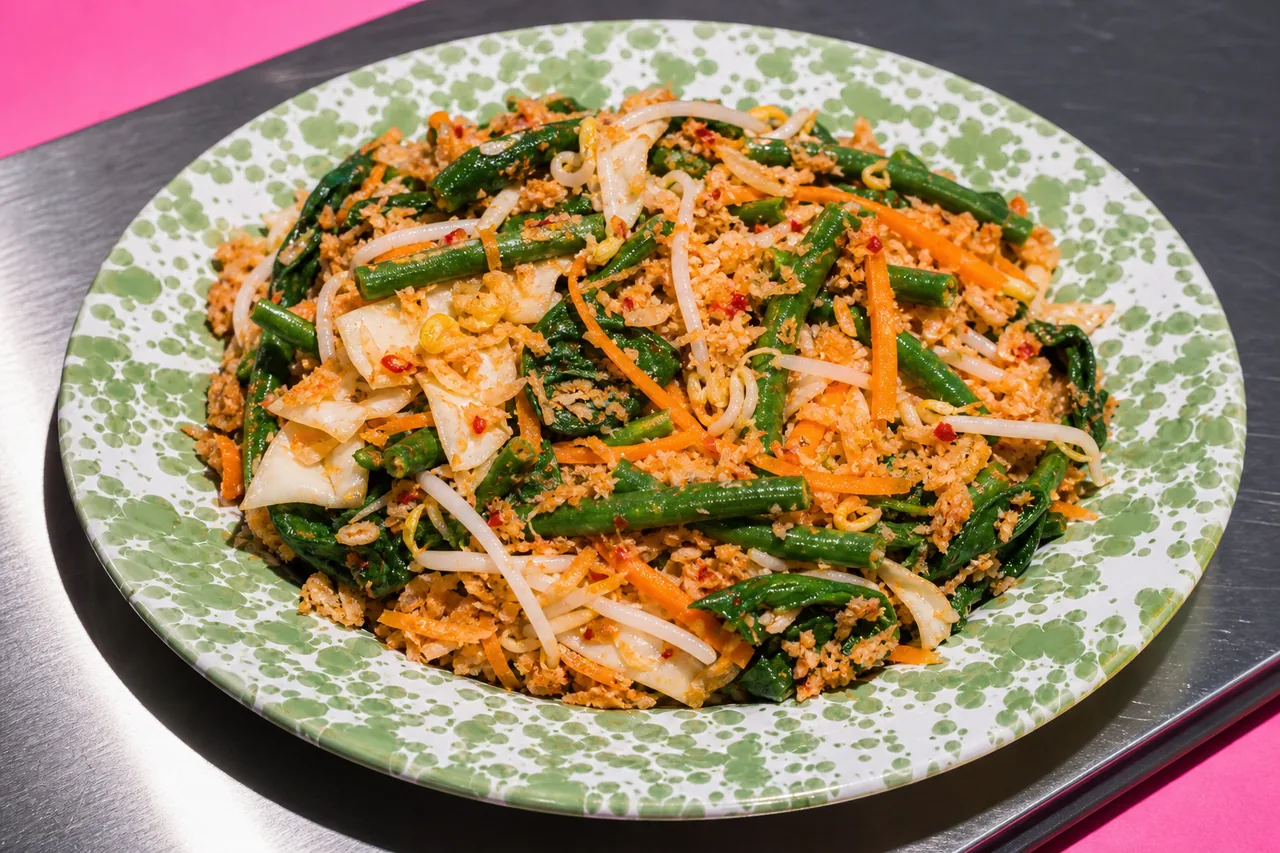
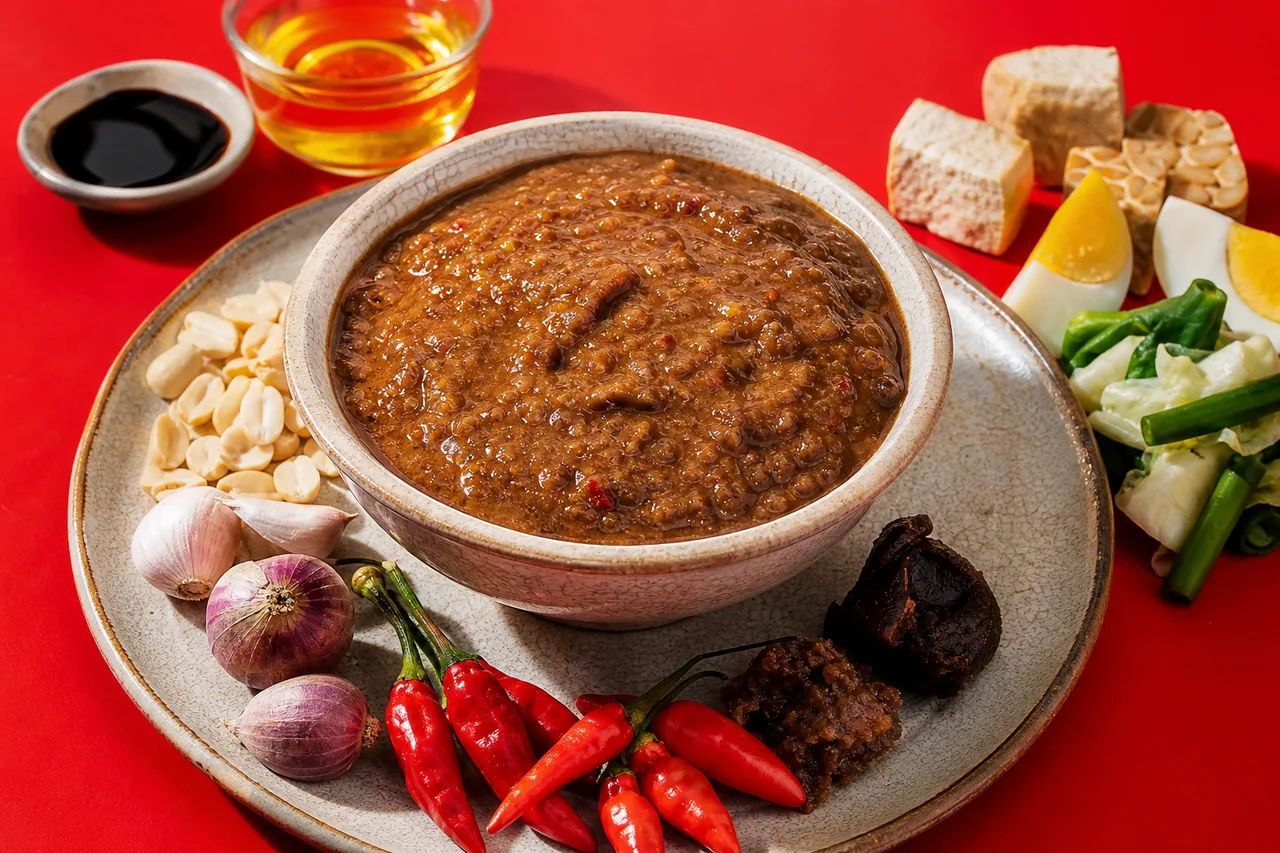
A thick, glossy, slightly coarse Indonesian peanut sauce designed to coat the vegetables, tofu, tempeh, and hard-boiled eggs in traditional gado-gado.
Ingredients
- 250 g shelled unsalted peanuts
- 3 tbsp peanut oil
- 3 cloves fresh garlic
- 2 pieces Asian shallots or gray shallots
- 2 pieces long fresh red chilies
- 1 piece fresh bird's eye chili
- 55 g Indonesian palm sugar or block coconut sugar
- 35 g seedless tamarind paste
- 3 tbsp Indonesian kecap manis
- 1 tsp Indonesian fermented shrimp paste
- 1 piece fresh lime
- 1 tsp fine salt
- 300 ml water
Method
- Toast the peanuts in a wide skillet with the peanut oil over medium heat, stirring constantly. They should turn amber-blond, smell roasted, and crackle gently without darkening. Drain them on paper towels and keep the fragrant oil in the skillet.
- Sauté the garlic, shallots, red chilies, and bird's eye chili in the same oil. Keep the heat medium-low: the aromatics should soften, take on a light golden color, and lose their raw smell without burning at the edges.
- Pound the peanuts with the sautéed aromatics, palm sugar, fermented shrimp paste, and salt. Use a mortar for a traditional texture: the paste should remain slightly coarse, with very fine peanut pieces visible. If necessary, pulse-blend briefly without turning the mixture into smooth peanut butter.
- Thin the tamarind paste with some of the water, then gradually add it to the peanut paste. Mix until you have a thick, golden-brown mass that is softer but still compact.
- Transfer to a heavy-bottomed saucepan. Add the remaining water little by little over low heat, stirring regularly with a spatula. The sauce should loosen, gently simmer at the surface, and become glossy; if it starts to stick, lower the heat immediately.
- Stir in the kecap manis and cook gently until the sauce heavily coats the spoon. The right cue is that a track drawn with your finger across the back of the spoon remains visible briefly, while the sauce falls slowly in a thick ribbon.
- Taste off the heat. Adjust with lime juice for the expected Indonesian balance: roasted peanut first, palm-sugar sweetness next, clear tamarind and lime acidity, and a salty, spicy finish.
- Serve warm or at room temperature over gado-gado: crisp blanched vegetables, potatoes, bean sprouts, cabbage, long beans, tofu, tempeh, and hard-boiled eggs. The sauce should coat generously without being runny; if it has thickened while resting, loosen it with a little hot water.
Nutrition
Per serving
- Energy
- 561.5 kcal
- Protein
- 17.7 g
- Carbohydrate
- 39.08 g
- Fat
- 39.34 g
- Fibre
- 7.44 g
- Calcium
- 14.32 mg
- Iron
- 0.16 mg
- Magnesium
- 5.88 mg