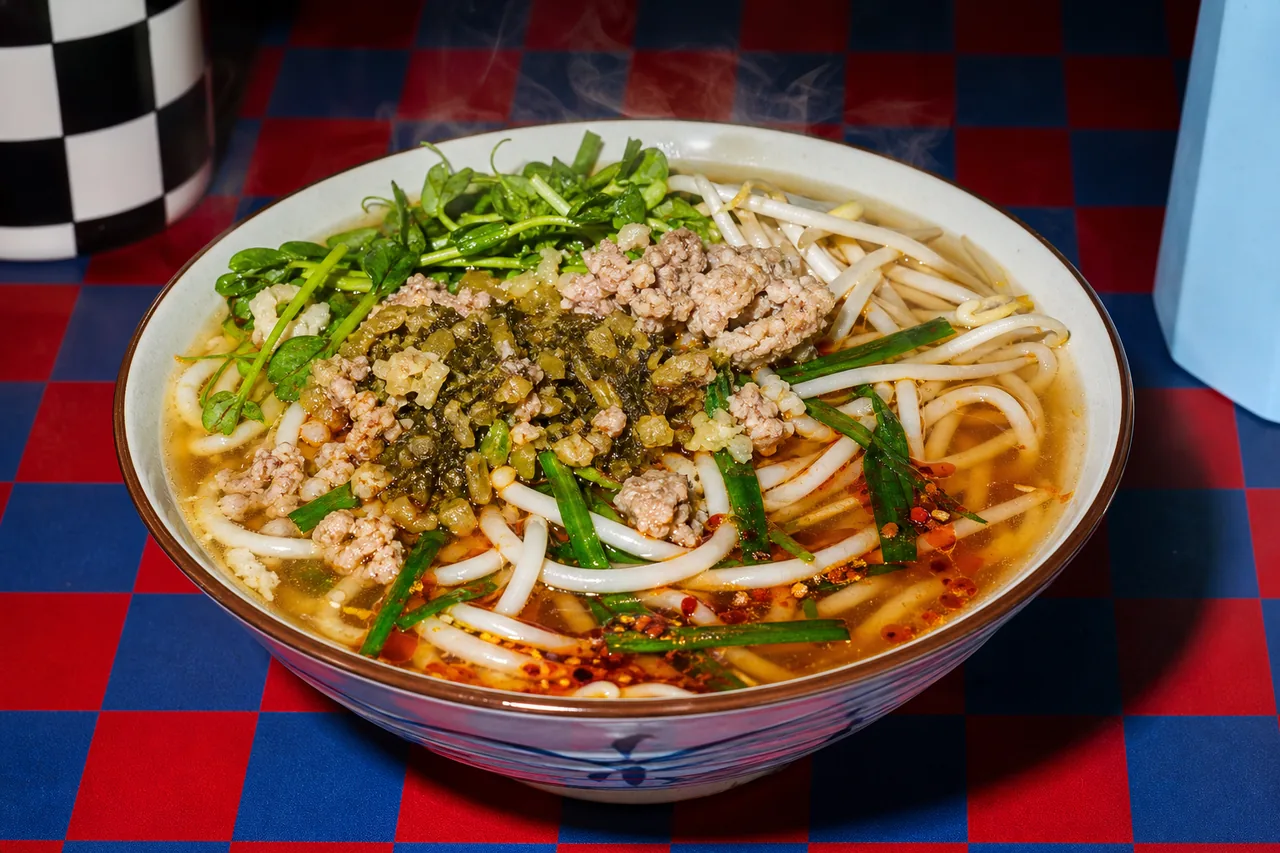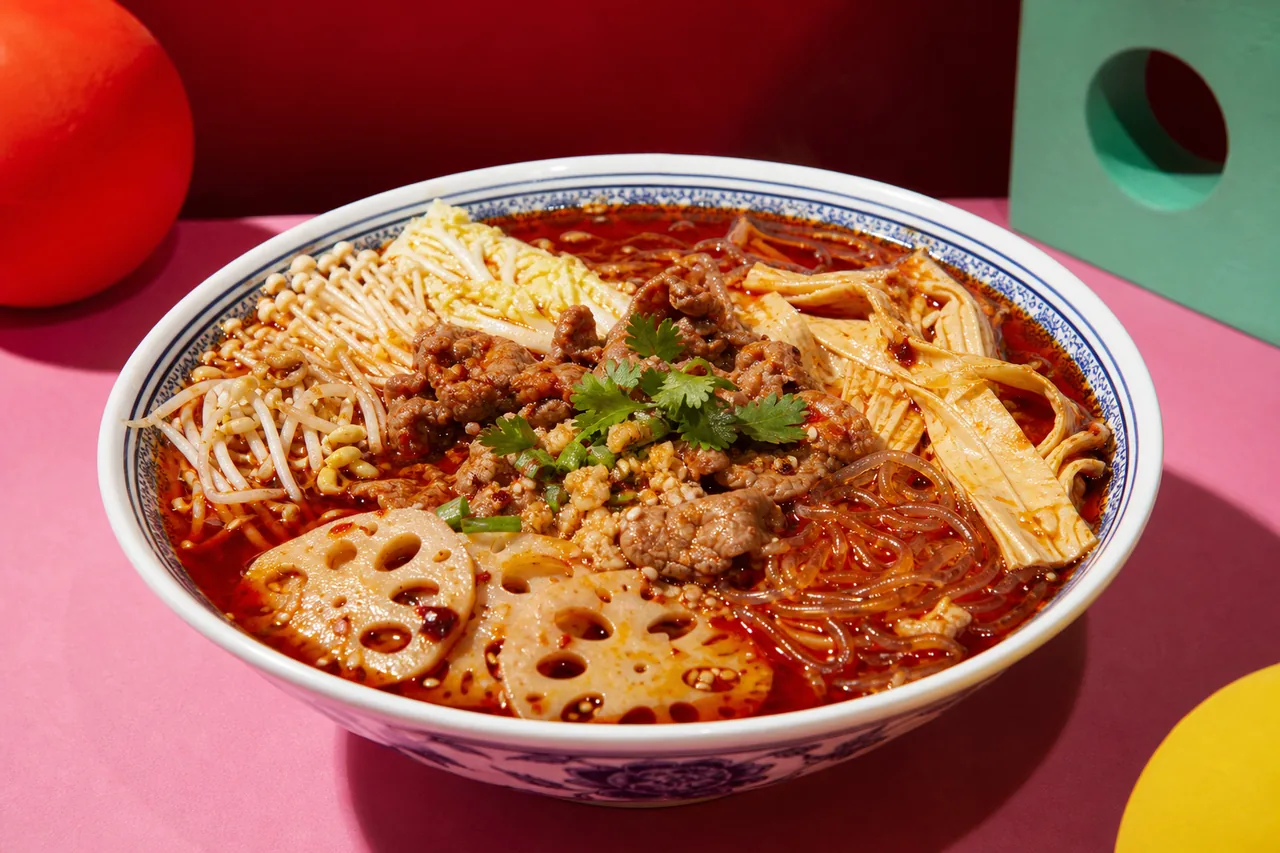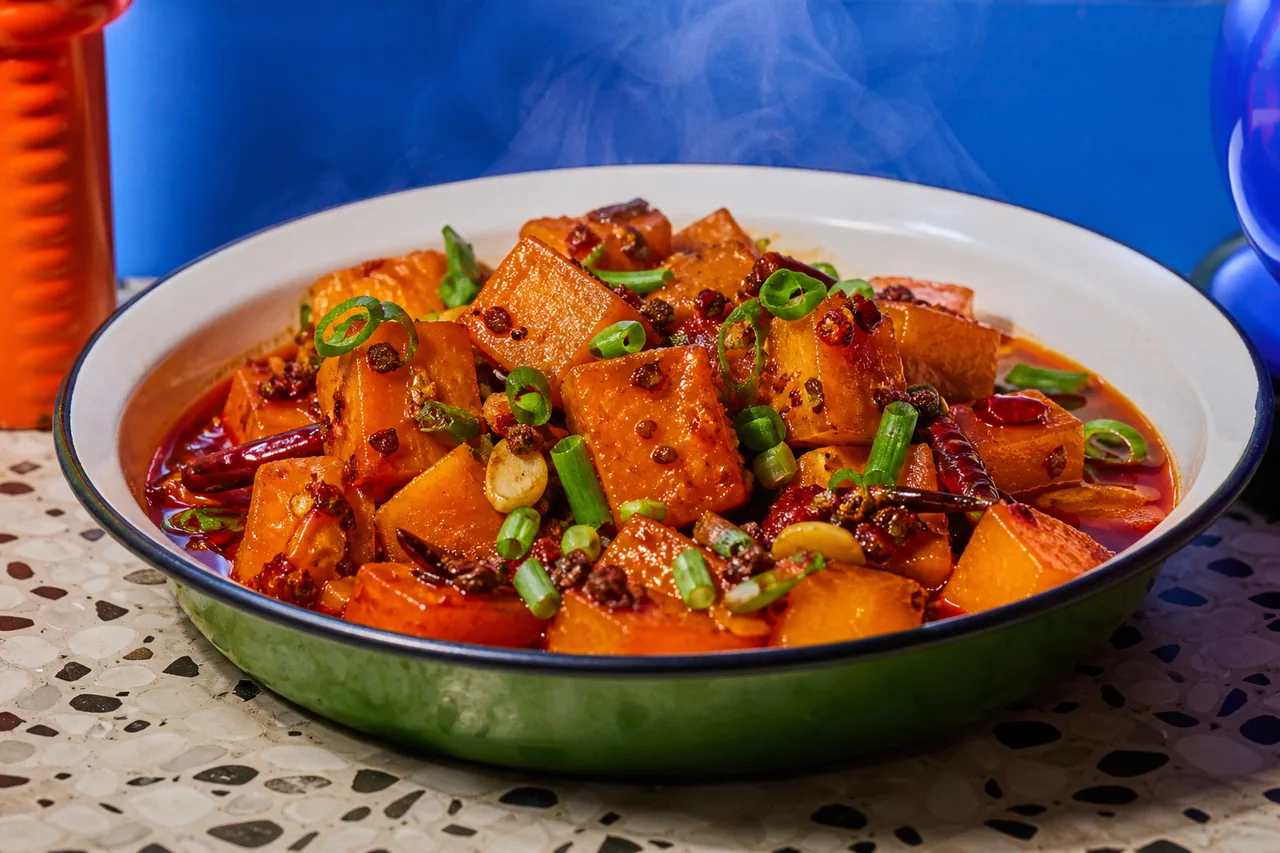
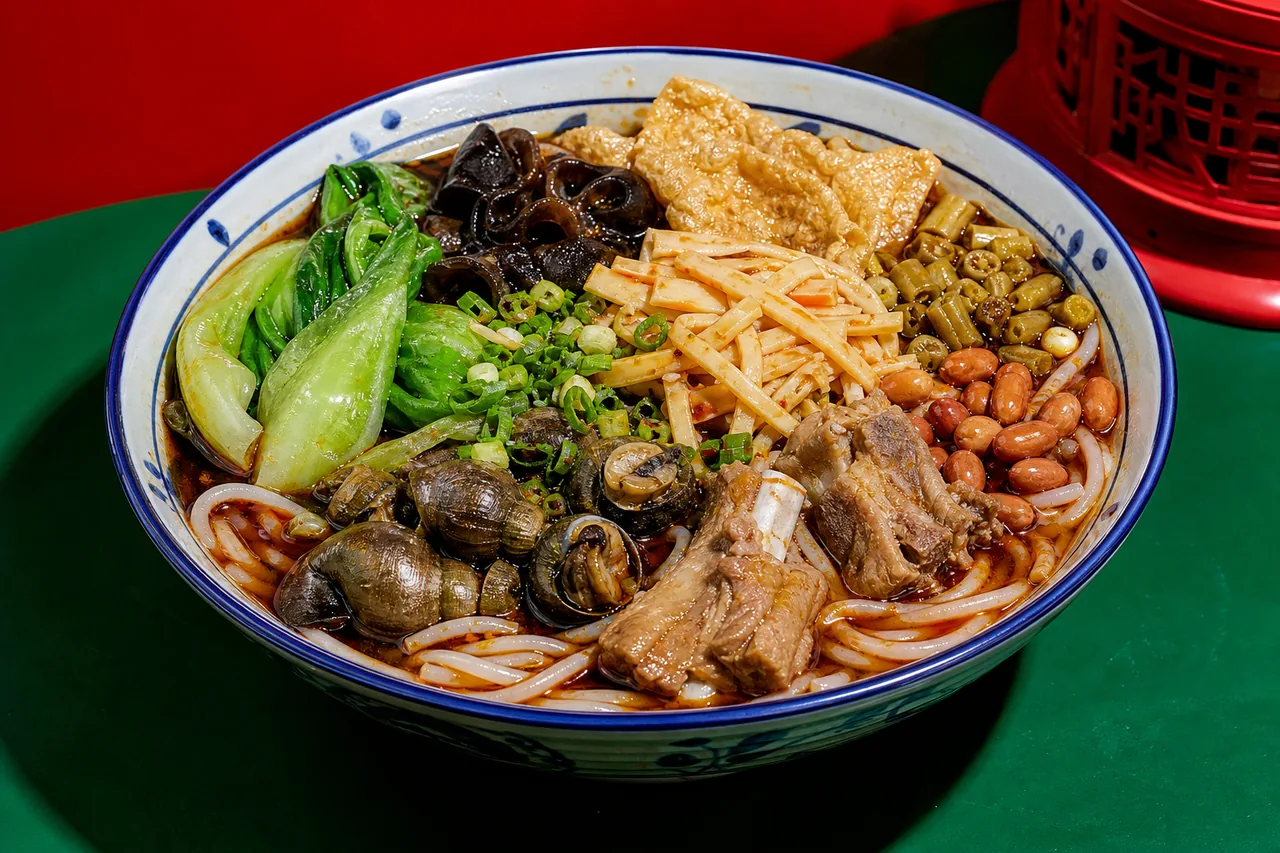
The signature specialty of Liuzhou, Guangxi: chewy rice noodles served in a bold, spicy red broth simmered with river snails and pork bones, loaded with sour pickled bamboo shoots, pickled long beans, fried tofu skin, peanuts, wood ear mushrooms, and fresh greens. Yield: two bowls of about 480 g each.
Ingredients
- 160 g thick dried Liuzhou rice noodles
- 250 g fresh river snails in shell
- 350 g meaty pork bones
- 900 ml water
- 90 g Chinese fermented sour bamboo shoots
- 50 g Chinese pickled long beans
- 40 g fried tofu skin sticks
- 3 tbsp Chinese red chili oil
- 30 g raw shelled peanuts
- 10 g dried wood ear mushrooms
- 100 g fresh baby bok choy
- 3 cloves fresh garlic
- 15 g fresh ginger
- 1 piece fresh scallions
- 2 pieces whole star anise
- 1 piece Chinese cinnamon stick
- 2 pieces whole cloves
- 2 leaves dried bay leaves
- 1 tsp fennel seeds
- 1 tsp whole Sichuan peppercorns
- 4 pieces whole dried Chinese red chiles
- 2 tbsp Chinese light soy sauce
- 2 tbsp Shaoxing rice wine
- 2 tbsp Chinese black rice vinegar
- 1 tsp granulated white sugar
- 4 tbsp peanut oil
- to taste fine sea salt
Method
- Soak the dried rice noodles in plenty of cold water until pliable and flexible but not soft. Drain thoroughly and set aside.
- Rehydrate the dried wood ear mushrooms in warm water. Trim away any tough, gritty stem ends, rinse well, and slice into thin strips.
- Rinse the river snails thoroughly in several changes of water, scrubbing the shells vigorously. Let them purge in lightly salted water, then rinse again until the water runs clear.
- Place the pork bones in a stockpot, cover with cold water, and bring to a boil. Skim off any surface scum, drain the bones, and rinse them under cold water to guarantee a clean broth.
- Heat a portion of the peanut oil in a large stockpot over medium heat. Add the ginger, garlic, dried chiles, star anise, Chinese cinnamon, cloves, bay leaves, fennel seeds, and Sichuan peppercorns. Stir constantly until fragrant without scorching the spices.
- Add the snails and stir-fry briskly to coat them thoroughly in the aromatics. Deglaze the pot with Shaoxing rice wine, then stir in the light soy sauce and sugar.
- Return the blanched pork bones to the pot and pour in the water. Bring to a gentle simmer, skim any foam from the surface, cover, and cook over very low heat until the broth is rich, reddish-brown, and deeply aromatic.
- Strain the broth through a fine-mesh sieve. Lightly press the aromatics to extract their juices, then discard the snail shells, whole spices, and bones. Taste, adjust the salt as needed, and keep the broth at a bare simmer.
- Dry-fry the fermented sour bamboo shoots in a skillet over medium heat to concentrate their aroma and cook off excess moisture. Add the pickled long beans and wood ear mushrooms, tossing briefly just until warmed through while preserving their crisp crunch.
- Fry the raw peanuts in the remaining peanut oil over medium heat until evenly golden brown. Drain immediately on a paper-towel-lined plate and season with a light pinch of salt.
- Bring a large pot of water to a rolling boil. Cook the soaked rice noodles until tender and bouncy with a pleasant chew, then lift them out with a spider strainer. In the same boiling water, blanch the baby bok choy just until tender-crisp and bright green.
- Divide the well-drained noodles evenly between two prewarmed deep serving bowls. Neatly arrange the blanched bok choy, sour bamboo shoots, pickled long beans, and wood ear mushrooms on top.
- Ladle the piping-hot broth over and around the noodles and toppings. Drizzle with chili oil and Chinese black vinegar, then crown with the crispy fried tofu skin sticks and fried peanuts. Garnish with thinly sliced scallions and serve immediately.
Nutrition
Per serving
- Energy
- 743.1 kcal
- Protein
- 31.36 g
- Carbohydrate
- 43.98 g
- Fat
- 49.29 g
- Fibre
- 6.75 g
- Calcium
- 32.74 mg
- Iron
- 0.79 mg
- Magnesium
- 28.49 mg