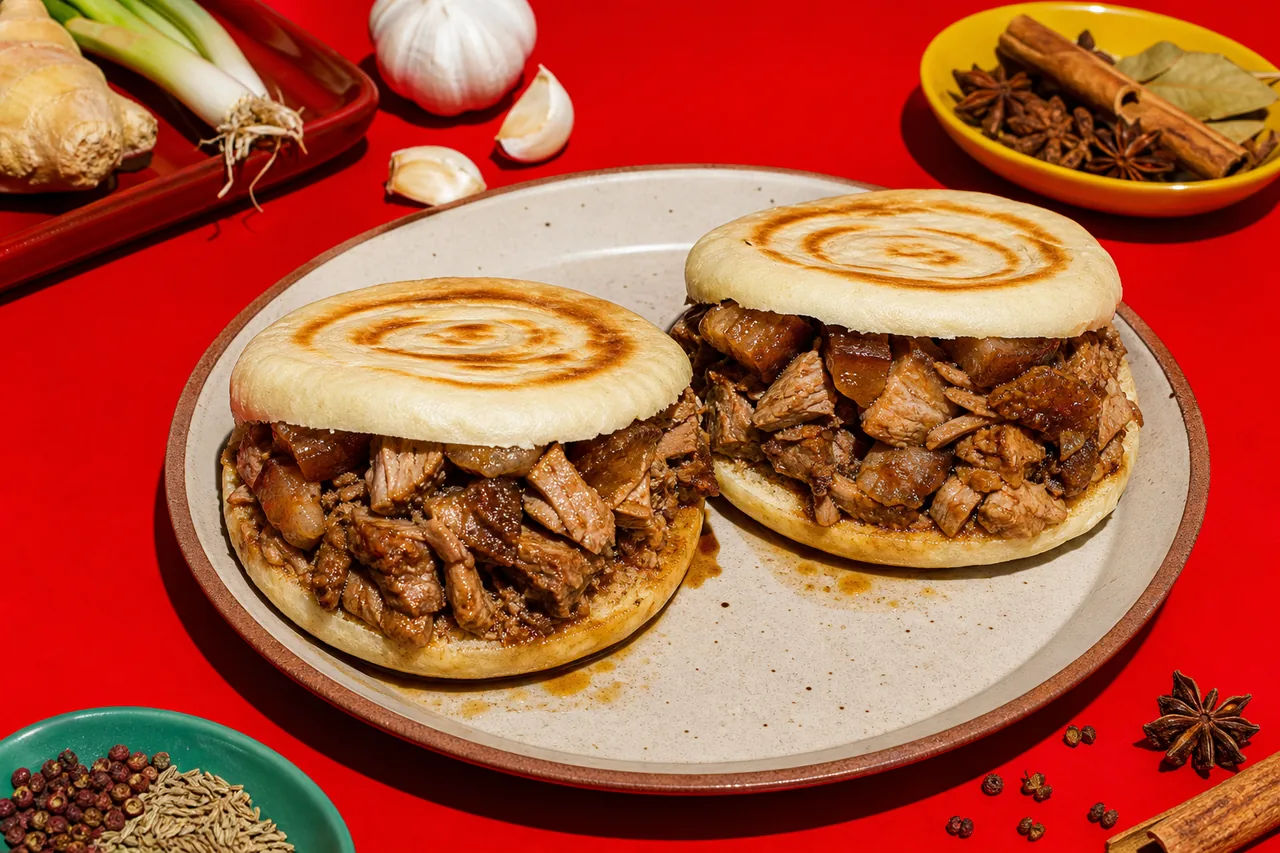
The Shaanxi classic: two lightly leavened baijimo flatbreads, pan-seared then baked in the oven, stuffed with slow-braised pork, hand-chopped with a knife and moistened with its spiced braising jus.
Ingredients
- 900 g boneless pork shoulder
- 300 g fresh pork belly with skin
- 600 g all-purpose wheat flour (Type 55 / T55)
- 330 ml water for the dough
- 4 g active dry yeast
- 14 g fine salt
- 2 tbsp peanut oil
- 35 g yellow rock sugar
- 70 ml light soy sauce
- 20 ml dark soy sauce
- 80 ml Shaoxing rice wine
- 900 ml water for braising
- 35 g fresh ginger
- 4 pieces fresh Chinese scallions
- 4 cloves fresh garlic
- 3 pieces whole star anise
- 1 piece Chinese cinnamon stick
- 3 leaves bay leaves
- 1 tsp fennel seeds
- 1 tsp whole Sichuan peppercorns
- 3 pieces whole cloves
- 2 pieces whole dried red chilies
Method
- Cut the pork shoulder and pork belly into large, even pieces, keeping the skin on. Place them in a pot, cover with cold water, and bring gradually to a simmer. Skim carefully, drain the pork, and rinse briefly under hot water.
- Warm a heavy Dutch oven over low heat. Add the star anise, cinnamon stick, bay leaves, fennel seeds, Sichuan peppercorns, cloves, and dried chili peppers. Toast briefly just until fragrant, then transfer to a plate and set aside.
- Pour the peanut oil into the Dutch oven and add the rock sugar. Melt over low heat until an amber caramel forms, taking care not to burn it. Immediately add the well-drained pork and turn methodically to coat every side.
- Add the thickly sliced ginger, knotted scallions, and lightly smashed garlic cloves. Deglaze with the Shaoxing wine, then stir in the soy sauces and all of the toasted spices.
- Pour in the braising water, which should almost cover the meat. Bring to a simmer, partially cover, and cook over very low heat until the pork is extremely tender yet still firm enough to chop. Turn the pieces occasionally and maintain a gentle simmer, never a rolling boil.
- While the meat braises, mix the yeast with the water for the dough. Combine the flour and salt, gradually pour in the water, and knead into a firm, smooth dough that is distinctly stiffer than standard French bread dough.
- Cover the dough and let rest until slightly puffy, without waiting for it to double in size completely. Traditional baijimo must remain dense with a tight crumb.
- Punch down the dough and divide it into equal portions according to the intended yield. Roll each portion into a long, slightly tapered rope, roll it up into a tight spiral, tuck the end underneath, and flatten with the palm of your hand. Roll out each spiral into a thick, even disc.
- Heat an ungreased heavy skillet over medium-low heat. Cook the discs on both sides until even brown spots appear. Finish baking them in the oven until cooked through, firm around the edges, and still slightly pliable in the center.
- Remove the tender pork from the pot. Discard the visible aromatics and whole spices. Reduce the braising liquid uncovered until it becomes a glossy, savory, spiced, and lightly syrupy jus, without turning into a thick sauce.
- Transfer the pork to a cutting board and chop finely with a cleaver or large knife. Gradually mix a little reduced jus into the meat: the filling should be very succulent and glossy, but not dripping wet.
- Split each baijimo along the side without cutting all the way through. Stuff generously with chopped pork and spoon in a little extra jus. Serve immediately, piping hot, without lettuce, cheese, mayonnaise, or Western toppings.
Nutrition
Per serving
- Energy
- 648.1 kcal
- Protein
- 35.09 g
- Carbohydrate
- 68.13 g
- Fat
- 26.4 g
- Fibre
- 8.9 g
- Calcium
- 107.05 mg
- Iron
- 3.5 mg
- Magnesium
- 78.55 mg