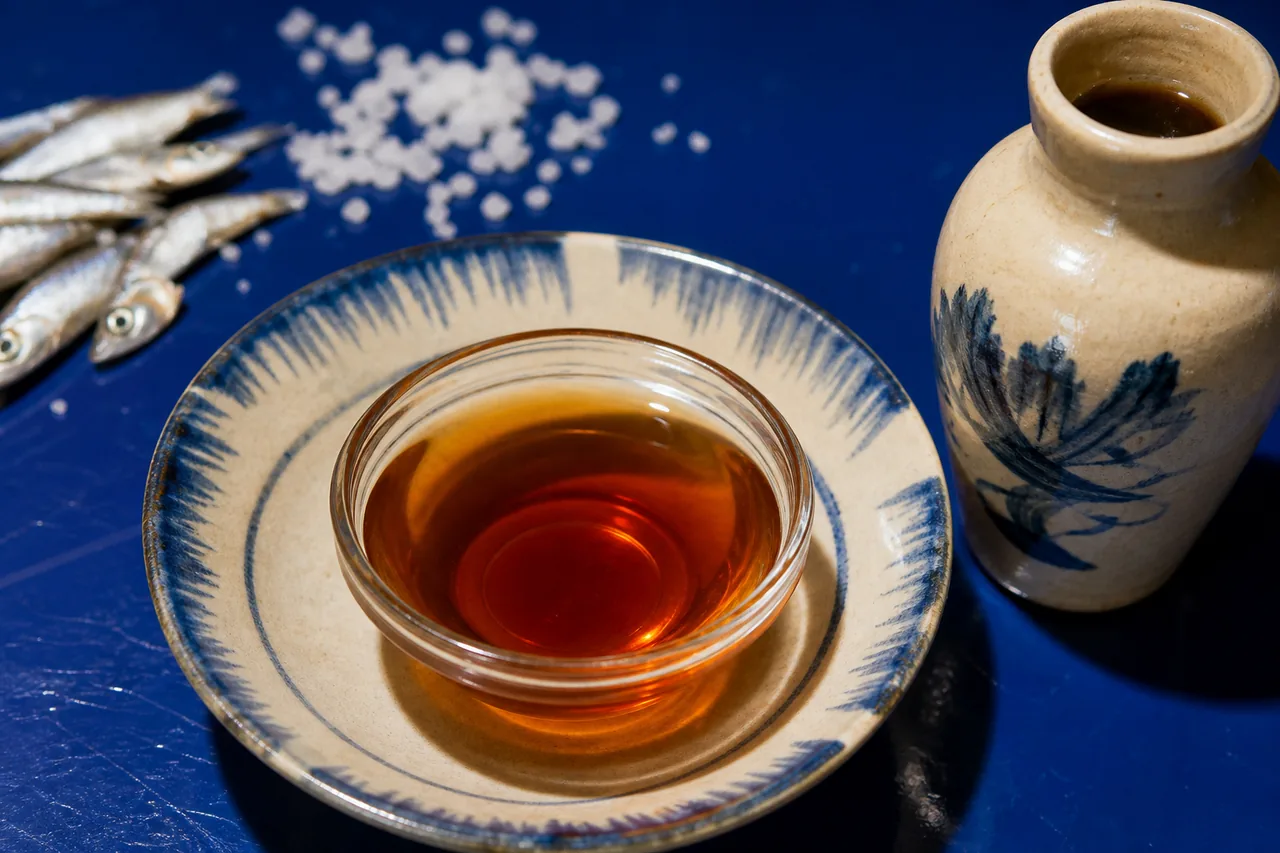
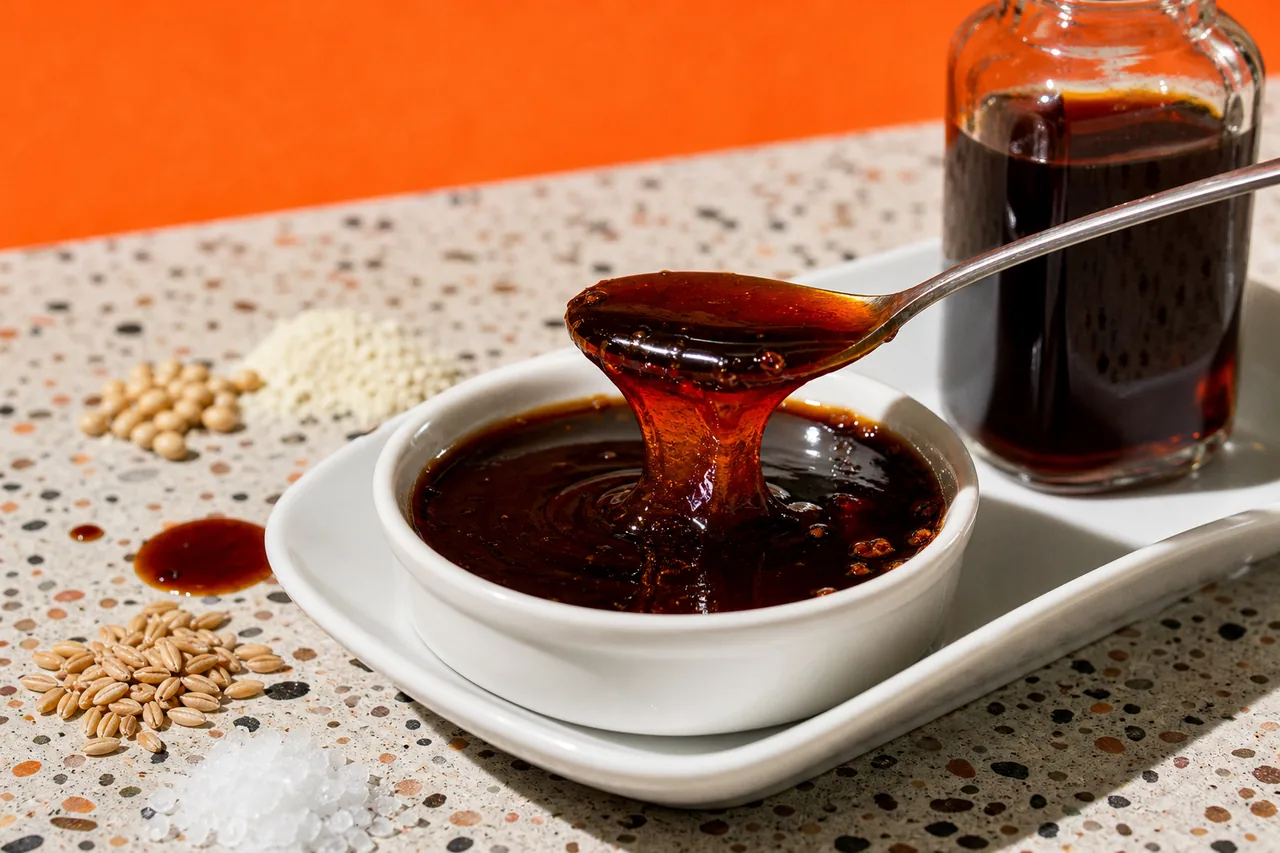
A salty, amber fermented condiment made by inoculating soybeans and wheat with koji, fermenting them in brine for a long time, then pressing and gently pasteurizing the result.
Ingredients
- 500 g hulled yellow soybeans
- 500 g organic whole wheat
- 3 g koji spores for shoyu
- 350 g non-iodized sea salt
- 1500 ml filtered water
- 30 ml unpasteurized soy sauce
Method
- Sort through the soybeans, rinse them until the water runs clear, then soak them overnight in plenty of cold water. The beans should double in volume and be difficult to crush between two fingers.
- Drain the soybeans, cover them with fresh water in a heavy pot, and simmer gently until a bean crushes easily between your thumb and forefinger without remaining chalky in the center. Skim at the beginning, then maintain steady heat so the skins do not scorch on the bottom.
- While the soybeans cook, dry-toast the wheat in a large skillet over medium heat, stirring often. It should smell like warm hazelnuts, turn golden in places, and crackle slightly under the spatula without darkening.
- Coarsely crush the toasted wheat in a mortar, mill, or blender using short pulses. Aim for an uneven grind, somewhere between coarse semolina and cracked grains, to keep air in the future koji.
- Drain the cooked soybeans thoroughly and spread them on a clean towel. Let them cool until comfortably warm to the touch: if they are too hot, they will kill the koji; if they are too cold and wet, they will encourage unwanted molds.
- Mix the warm soybeans and crushed wheat in a very clean tub. Sprinkle in the koji spores and mix thoroughly with gloved hands or a sanitized spatula, until every grain is lightly dusted.
- Spread the mixture in an airy layer in a shallow tub, cover it with a clean damp cloth, and keep it in a warm, humid place, around the temperature of a yogurt incubator. Stir halfway through to dissipate internal heat. The koji is ready when it is covered with an even white fuzz and smells of chestnut, fresh mushroom, and sweet cereal, with no ammonia smell or black spots.
- Dissolve the sea salt in the filtered water to make a clear brine. Stir until the crystals have completely disappeared; no salt deposit should remain on the bottom.
- Transfer the koji to a large, perfectly clean jar or food-safe bucket. Pour in the brine and unpasteurized soy sauce, then mix until you have a thick, moist, grainy mass called moromi.
- Close the container without sealing it airtight, since fermentation produces gas. Keep the moromi at a cool room temperature, away from sunlight. During the first few weeks, stir it every day with a clean utensil: the surface should remain moist, salty, brown, and active, with discreet little bubbles and a fermented cereal aroma.
- After fermentation gets underway, stir less often but regularly for several months. The paste will darken and become more fluid, wine-like, salty, and deeply umami. If a thin white film appears, incorporate it if it smells good; if colored, hairy mold or a putrid smell appears, discard the preparation.
- When the moromi is dark, glossy, highly aromatic, and the grains break down easily, pour it into a sturdy cheesecloth set over a colander. Press slowly, gently at first, to obtain a brown, cloudy liquid. Finish by twisting the cloth or using a small clean press.
- Let the liquid settle in the refrigerator until the heavy particles fall to the bottom. Decant the clear portion without disturbing the sediment.
- Heat the decanted sauce over very low heat, without bringing it to a vigorous boil, until it gives off a little steam and its aroma becomes rounder and less raw. Hold this gentle pasteurization for a few moments, then remove from the heat.
- Filter once more if necessary, pour into sterilized bottles, and seal. Let it rest before tasting so the salt, acidity, residual alcohol, and umami can round out.
Nutrition
Per serving
- Energy
- 992.1 kcal
- Protein
- 61.62 g
- Carbohydrate
- 116.29 g
- Fat
- 27.73 g
- Fibre
- 25.63 g
- Calcium
- 318.42 mg
- Iron
- 24.14 mg
- Magnesium
- 495.09 mg