 Open Umay
Italian
Pesto rosso
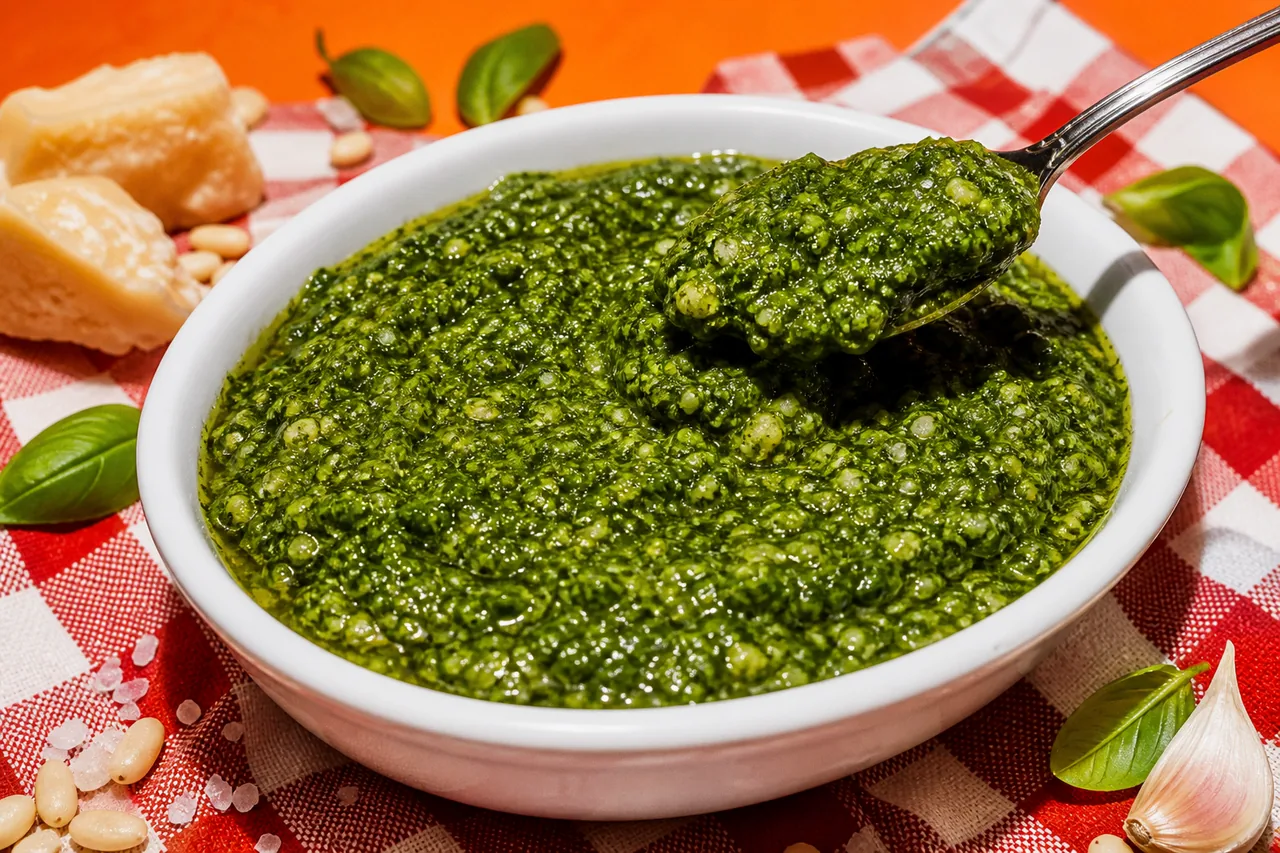
A classic Italian pesto rosso, dense and fragrant, made with sun-dried tomatoes, basil, garlic, almonds, aged cheese, and olive oil. It is pounded or briefly blended to retain a rustic, coating, slightly grainy texture.
4 servings
Ingredients
sun-dried tomatoes in olive oil, good quality220 g (7.8 oz)base
fresh basil leaves25 g (0.9 oz)pairing
blanched almonds45 g (1.6 oz)pairing
pine nuts25 g (0.9 oz)pairing
fresh pink or white garlic2 clovespairing
aged Parmigiano Reggiano35 g (1.2 oz)pantry
Pecorino Romano20 g (0.7 oz)pantry
Italian extra-virgin olive oil120 ml (1/2 cup)pantry
fine salt2 pinchespantry
whole black peppercorns1 pinchpantry
Steps
- Remove the sun-dried tomatoes from their oil and let them drain in a fine-mesh strainer. They should remain soft and glossy but should no longer release excess oil when lightly pressed.
- Heat a small skillet over medium-low heat. Add the almonds and pine nuts, then stir constantly until they smell warmly nutty and turn pale golden. Transfer them immediately to a cold plate to stop the toasting.
- Rinse the basil very briefly in cool water, then gently pat it dry in a towel. Remove the thick stems: only the leaves should flavor the pesto, without vegetal bitterness.
- Peel the garlic, halve it, and remove the green germ if present. Pound it first with the salt in a mortar, or mince it very finely if using a small blender. The desired texture is a moist garlic paste, not crunchy pieces.
- Add the toasted nuts and crush them until you have a coarse, still slightly grainy powder. An irregular texture should remain visible: it is what gives pesto rosso its traditional body.
- Add the sun-dried tomatoes and work them with short presses. In a mortar, crush them against the sides until the tomatoes break down into a dark red paste. In a blender, pulse in short bursts to avoid heating the oil and making the sauce too smooth.
- Incorporate the basil and continue pounding or blending briefly. The fragrance should become fresher and more herbal without the color turning brown; stop as soon as the leaves are well integrated.
- Add the finely grated cheeses, then gradually pour in the olive oil while working the paste. The pesto should become thick, glossy, and supple on the spoon, but not liquid.
- Add pepper, taste, and adjust the salt only if necessary: the sun-dried tomatoes, Parmigiano Reggiano, and pecorino already contribute plenty of salt. Let it rest briefly in the refrigerator so the garlic, tomato, and cheese meld.
- To serve with pasta, loosen the pesto off the heat with a little hot cooking water until it coats without separating. Never cook it vigorously: the heat should only awaken the oil and basil.
More recipes like this