
Species sheet · The Edible Ocean
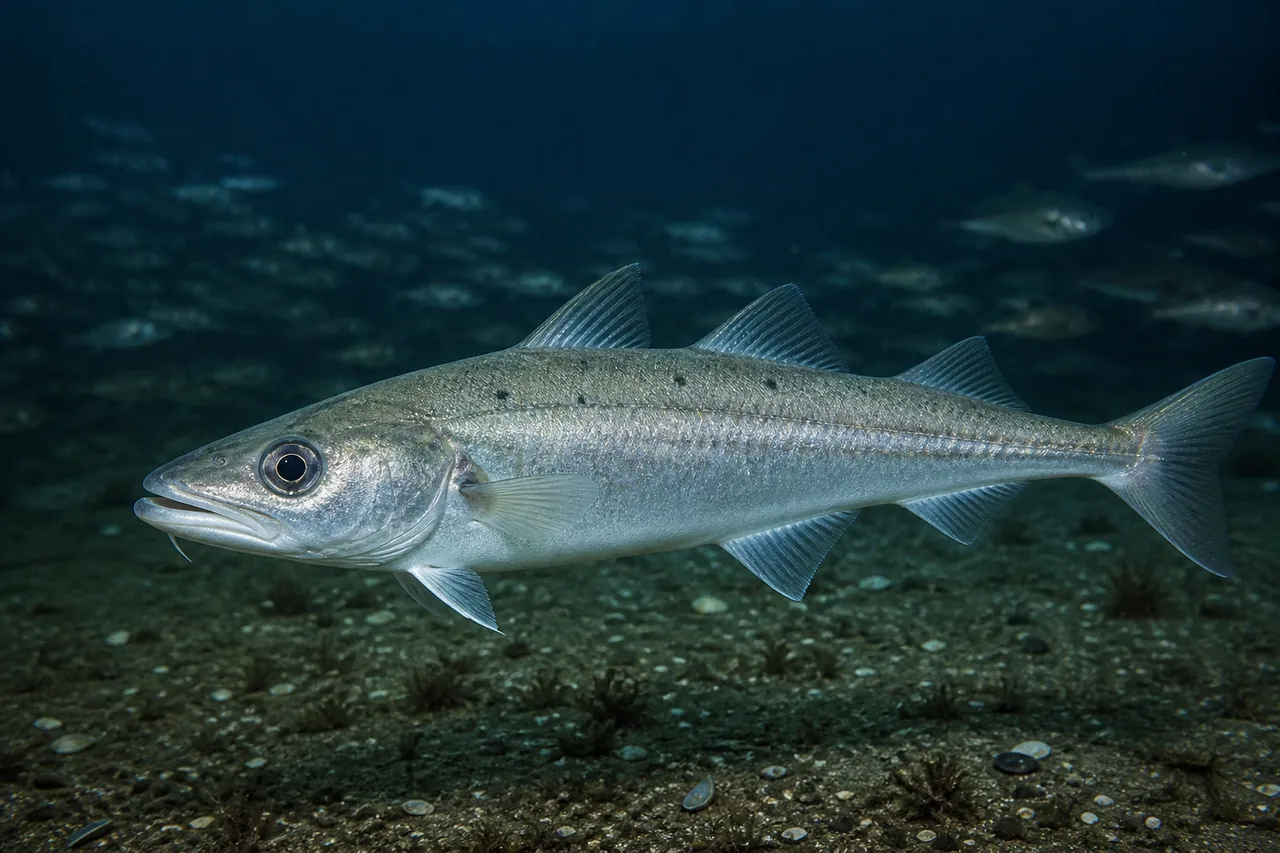
Alaska pollock
The most fished animal on Earth, and the least recognised.
- Breaded into fish sticks, its best-known form
- Reshaped into surimi, flavoured to taste like crab
- Poached plain, for a simple, light fillet
- In French
- Colin d'Alaska
- Scientific name
- Gadus chalcogrammus
- In the water
- Bottom waters of the North Pacific, the Bering Sea and the Gulf of Alaska, usually between 100 and 300 metres, in dense schools near the seabed.
- Season & buying
- Available year-round; the main fishery runs in spring across the North Pacific.
- Common length
- ~35 cm
- How to identify it
- Slightly projecting lower jaw with a barely visible barbel
Leaner, more silver body than a cod
A few small dark speckles scattered on the back, never many
On the plate
Mild, white, low-fat flesh, the neutral base of a huge share of prepared seafood.
Avoid: Confusing it with hake, sold in France under the same commercial name "colin": a completely different fish that only shares the name.
It is the most heavily fished species on the planet, several million tonnes a year: it hides inside most fish sticks, frozen dinners and surimi, without its name ever appearing on the package.