
Species sheet · The Edible Ocean
Tope shark
An old hand of the coastal seabed, critically endangered without anyone quite noticing.
- Nothing to cook here
Protected species
It is eaten in some cultures. It is also a protected species, and we have no wish to encourage that.
- In French
- Requin-hâ
- Scientific name
- Galeorhinus galeus
- Status
- Protected species
- In the water
- Coastal sand and mud bottoms of the Atlantic and the Mediterranean, from 2 metres down to more than 500, depending on season and age.
- Season & buying
- Listed Critically Endangered by the IUCN since 2020; its populations collapsed within a few decades.
- Common length
- ~150 cm
- How to identify it
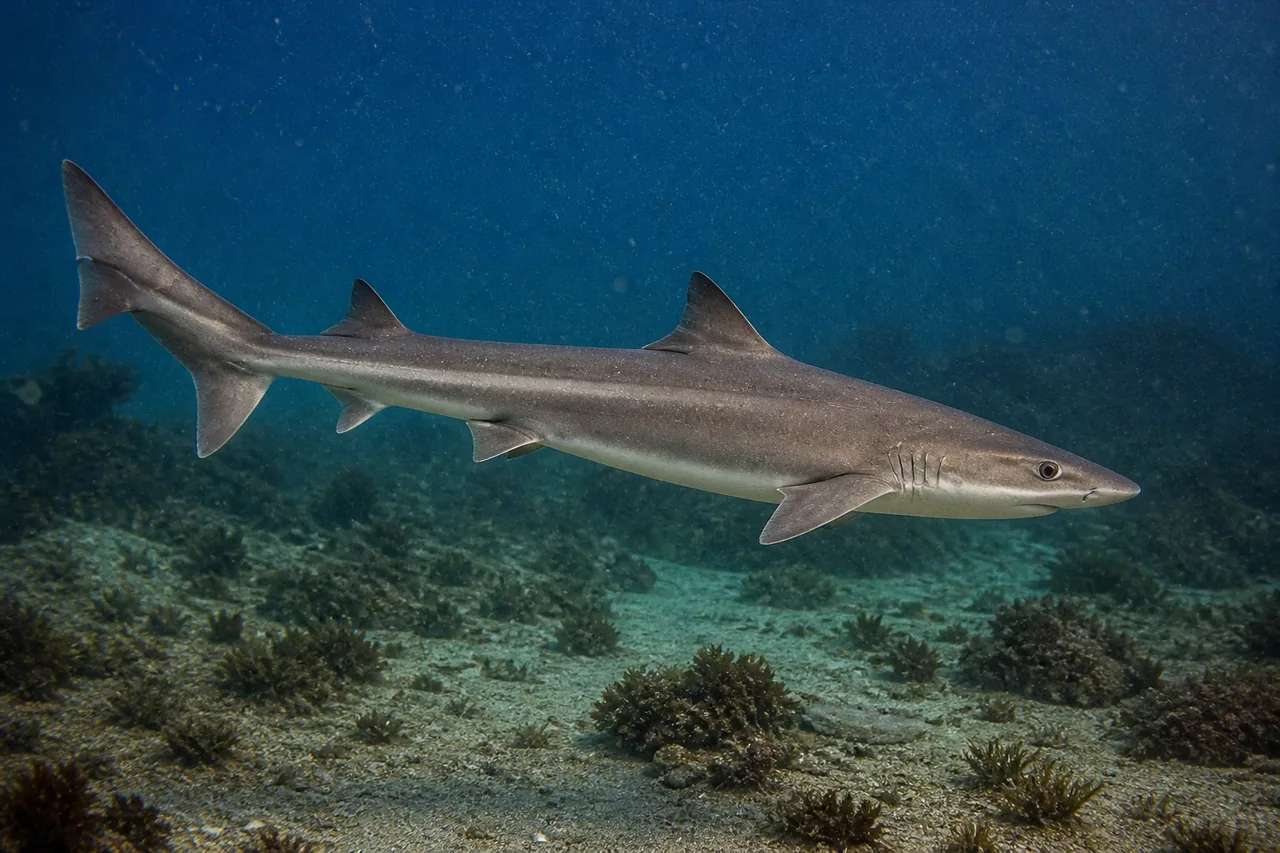
- Second dorsal fin nearly as large as the first
Long pointed snout with five clearly visible gill slits
Sharp pale line separating the bronze back from the white belly
On the plate
White, firm flesh, long sold skinned under the name saumonette once the skin is removed.
Avoid: Eating it at all: the species has never recovered from a century of fishing, better left alone.
The tope shark migrates long distances between coastal nurseries and deeper water, a habit that has made it especially vulnerable to nets set along its route.