
Species sheet · The Edible Ocean
Geoduck
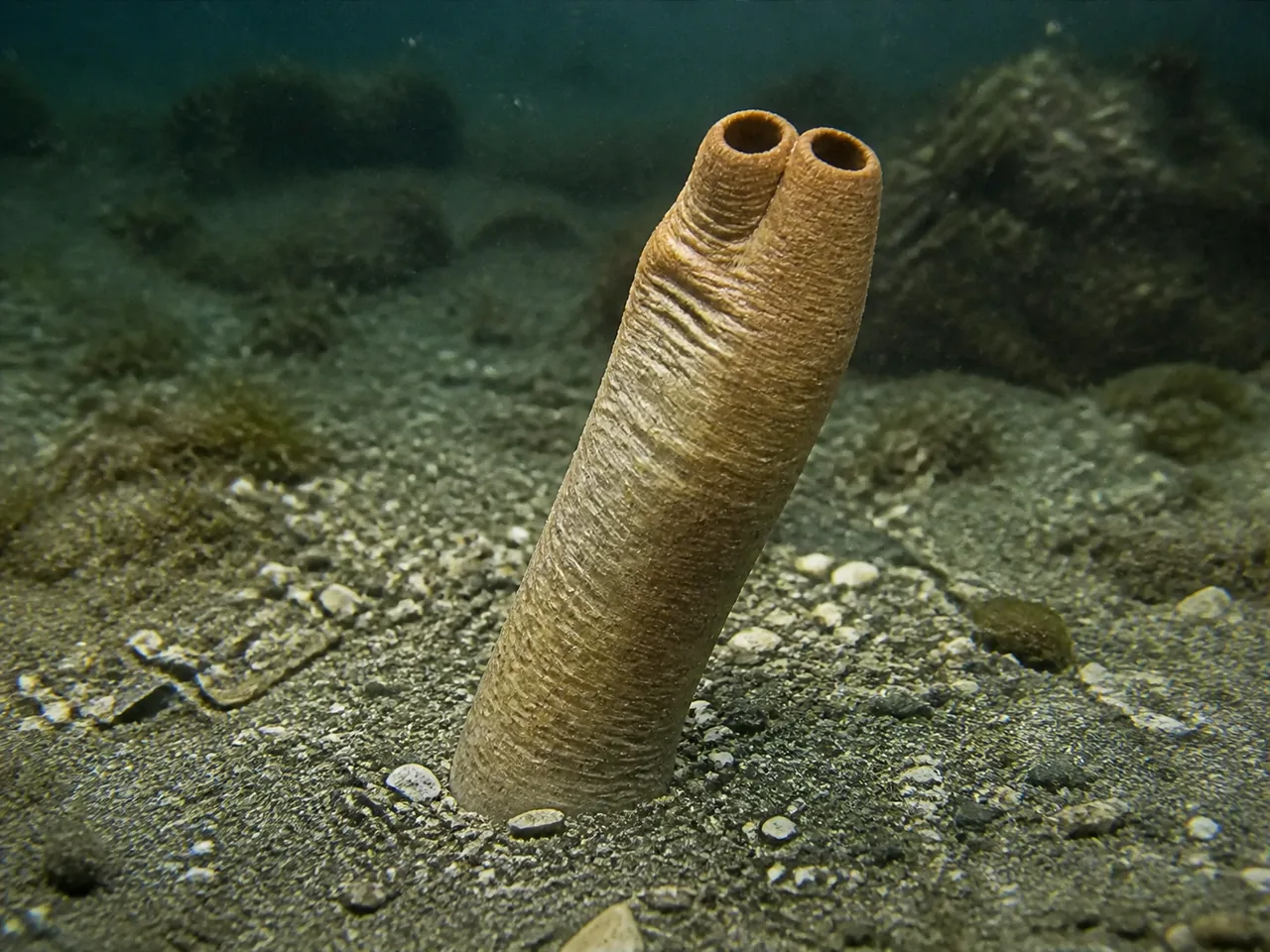
Two shells far too small, and a siphon that no longer fits.
- Raw as sashimi, siphon blanched and peeled
- Flash-seared in a very hot wok, seconds only
- Mantle in fritters, clam style
- In French
- Panope
- Scientific name
- Panopea generosa
- In the water
- Sands and gravels of the north-east Pacific, buried up to a metre deep, from the shore to about a hundred metres.
- Season & buying
- Harvested all year in British Columbia and Washington State.
- Common length
- ~20 cm
- How to identify it
- Long white shells, permanently gaping
Thick fleshy siphon, far longer than the shell
Two round openings at the siphon's tip
On the plate
Crunchy sweet siphon, almost cartilaginous; the softer mantle is cooked separately.
Avoid: Cooking the siphon more than a minute: it turns rubbery and loses all its crunch.
It is the heaviest burrowing clam in the world and one of the longest-lived animals known: some pass a hundred and fifty years.