
Species sheet · The Edible Ocean
Comb pen shell
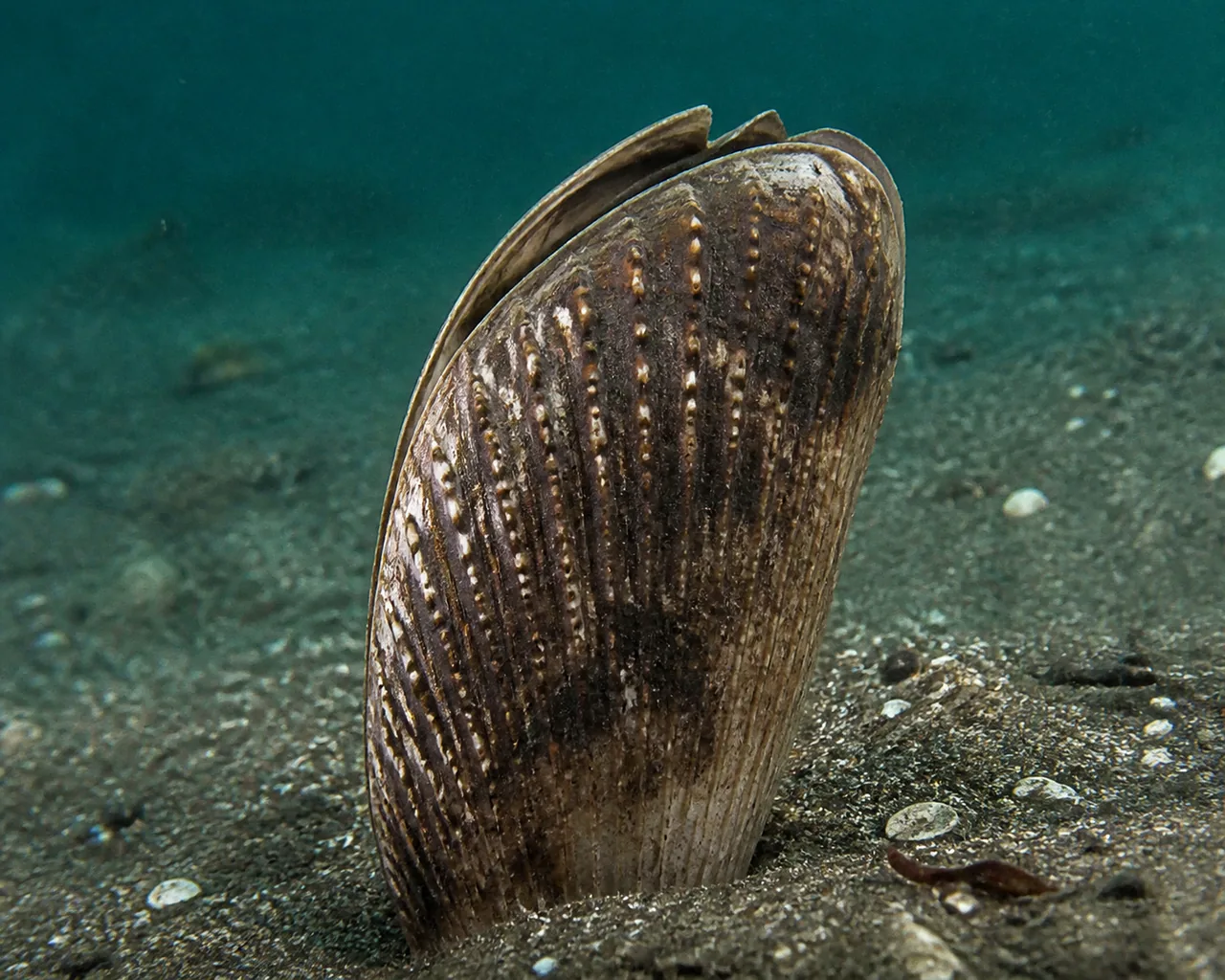
The Pacific pen shell, planted in the mud and served over rice.
- Raw as nigiri, sliced thick
- Seared a few seconds over coals, just for the toasted smell
- Salt and citrus rather than soy sauce, to keep the sweetness
- In French
- Tairagi
- Scientific name
- Atrina pectinata
- In the water
- Sand and mud bottoms of Japan, Korea and China, planted point-down like its Mediterranean cousin, mostly between twenty and thirty metres. It also lives far shallower, up to the tidal flats of the Ariake Sea where it is gathered on foot.
- Season & buying
- Autumn to spring, at its best in midwinter.
- Common length
- ~30 cm
- How to identify it
- Upright triangular shell, narrower and sharper than a noble pen shell
Thirty centimetres tall, a third the height of a noble pen shell
Fine radiating ribs carrying small raised scales on the upper half
On the plate
Only the large adductor muscle is eaten: a thick nut of meat, crisp under the tooth, sweet with a faint bitter finish. This is the tairagi of sushi counters.
Avoid: Cooking it long: the muscle turns rubbery and loses all its crispness in one minute too many.
Japanese landings collapsed in the Ariake Sea, to the point that the country now raises seed to restock its own bottoms, and Korea supplies a good share of what reaches the market.