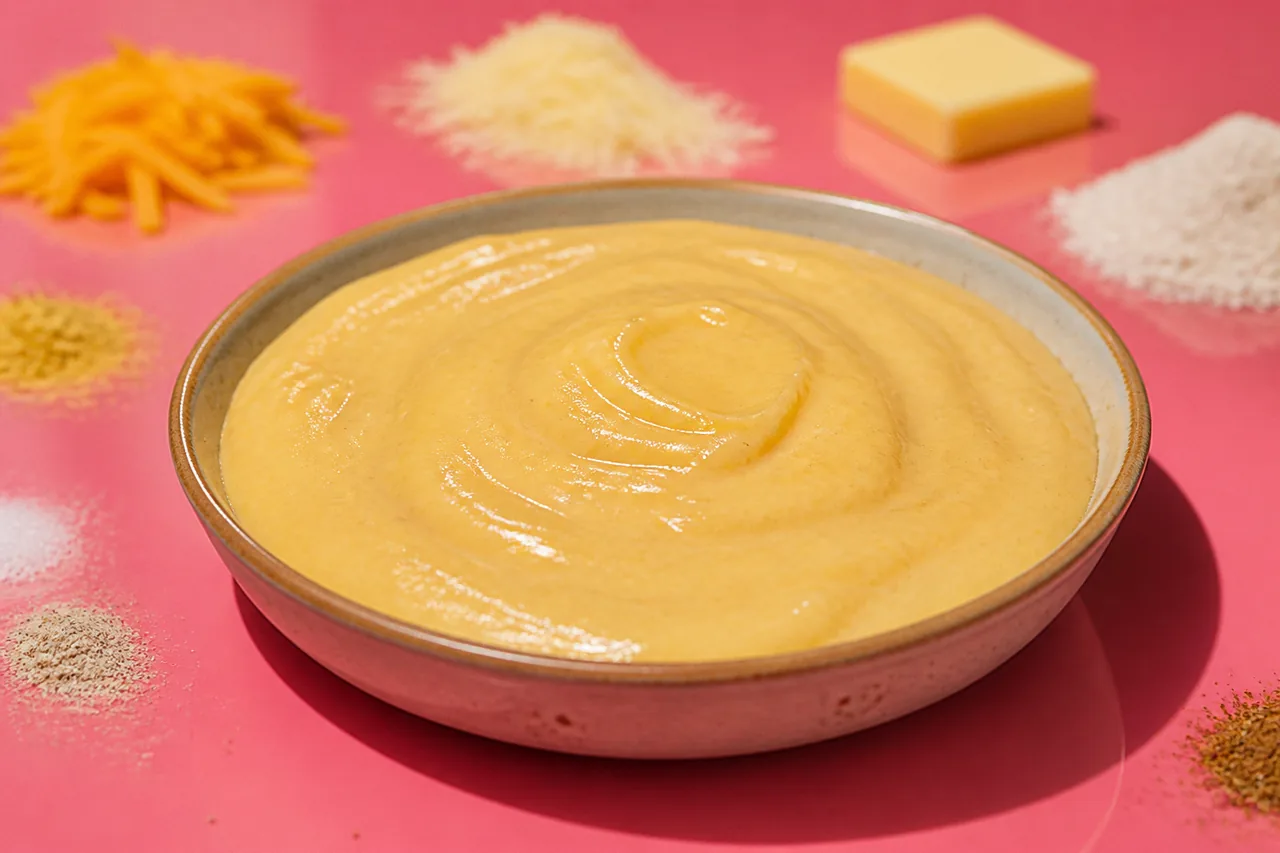
A classic thick, coating cheese sauce built on a smooth béchamel enriched with aged cheddar and grated Parmesan. It should be creamy, glossy, and generous, with the milky flavor of the roux and the savory saltiness of the cheeses.
Ingredients
- 500 ml whole milk
- 40 g unsalted butter
- 40 g type 45 wheat flour
- 180 g grated aged cheddar
- 50 g grated Parmesan
- 1 tsp English mustard powder
- 2 pinches fine salt
- 1 pinch ground white pepper
- 1 pinch ground nutmeg
Method
- Grate the cheeses if they are not already grated, then let them come to room temperature while the base heats. Cheese that is too cold melts less evenly and can make the sauce grainy.
- Pour the milk into a small saucepan and warm it over low heat until it lightly steams at the edges without boiling. The milk should feel hot and remain calm on the surface.
- In a heavy-based saucepan, melt the butter over medium-low heat. When it gently foams and smells of fresh butter, add the flour all at once.
- Whisk to form a blond roux. Cook gently until the paste becomes smooth, supple, and slightly satiny, without browning. It should smell like warm biscuits, not raw flour.
- Gradually add the hot milk, whisking constantly. Start with a small amount to loosen the roux into a smooth paste, then incorporate the rest little by little to prevent lumps.
- Bring the béchamel to a gentle simmer, whisking regularly, then cook over low heat until it thickens clearly. It is ready when it coats the spoon and a line drawn with a finger stays clean on the back of the spoon.
- Season with the English mustard powder, salt, white pepper, and nutmeg. Taste before adding more salt, as the cheeses will add more seasoning.
- Remove the saucepan from the heat. Add the cheddar by the handful, whisking or stirring with a spatula between additions until the sauce is smooth, glossy, and thick.
- Incorporate the Parmesan off the heat in the same way. The sauce should become more full-flavored and slightly elastic, without boiling. If it seems too dense, loosen it with a splash of hot milk.
- If necessary, return the saucepan to very low heat for a few moments, only to keep the sauce warm. Do not boil it after adding the cheeses: excessive heat separates the fat and makes the texture sandy.
- Serve immediately, piping hot, over cooked macaroni or as a cheese sauce for a gratin. The ideal texture is thick, creamy, and coating, covering the pasta without running like liquid cream.
Nutrition
Per serving
- Energy
- 415 kcal
- Protein
- 19.97 g
- Carbohydrate
- 13.47 g
- Fat
- 31.52 g
- Fibre
- 0.37 g
- Calcium
- 565.16 mg
- Iron
- 0.46 mg
- Magnesium
- 36.92 mg