Species sheet · The Edible Ocean
Norway lobster
It lives in a burrow, and that is why it costs so much.
- Barely set in steam
- Roasted split in two with salted butter
- Raw as carpaccio, very fresh
- In French
- Langoustine
- Scientific name
- Nephrops norvegicus
- In the water
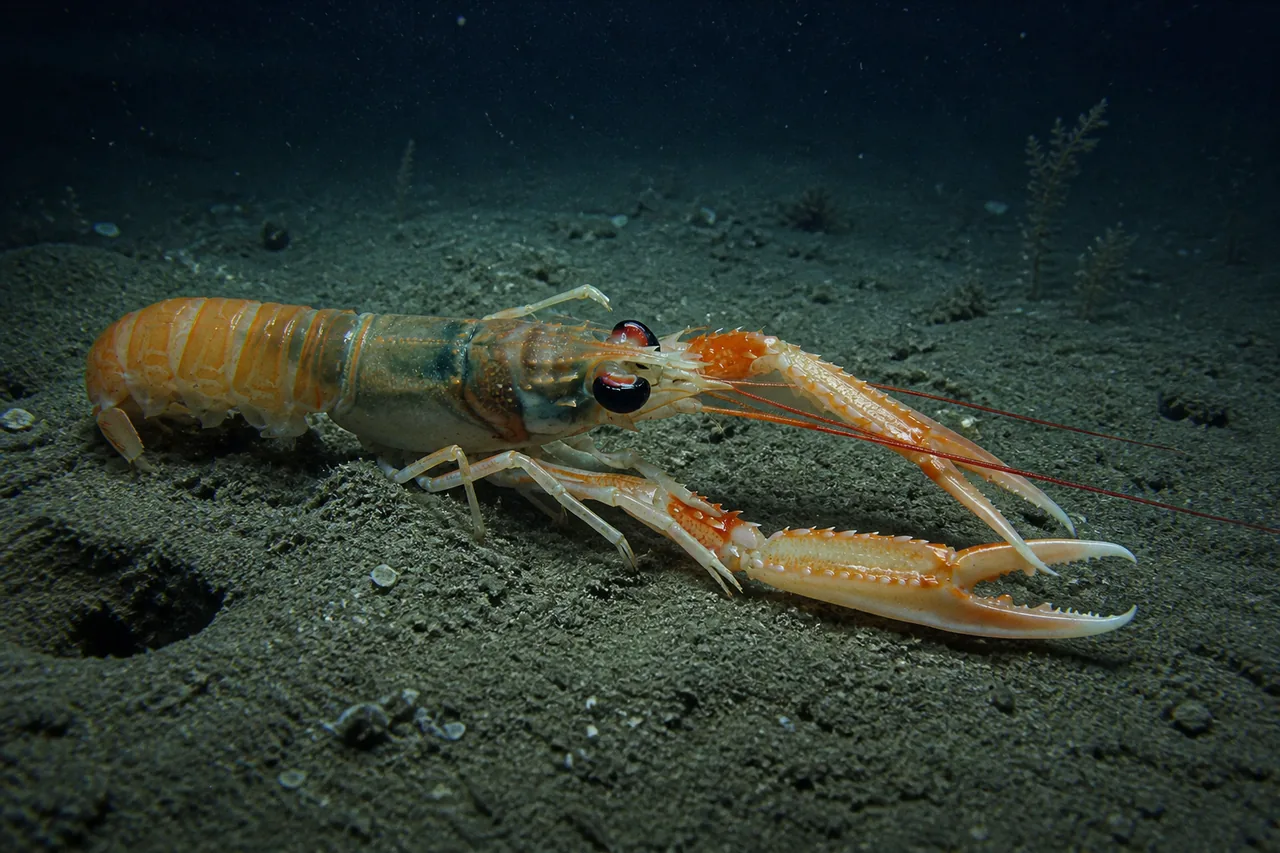
- Benthic; from 20 to 800 m, mostly 200 to 600 m; muddy shelf and slope bottoms, where it digs its burrow.
- Season & buying
- Caught year-round with a peak from May to October, but it spoils fast: choose one with its head still on, the eye black and glossy, the shell pink and firm.
- Common length
- ~19 cm
- How to identify it
- Coral pink, even alive
Long, slender, angular claws
Big black coffee-bean eyes
On the plate
Sweet delicate flesh, the finest of all the crustaceans, provided it is fresh.
Avoid: Buying it soft or blackened at the head: it degrades within hours of being landed.
It spends its life in a U-shaped burrow dug in the mud, leaving only in low light. Trawlers therefore only take it at dawn and dusk.
In Umay recipes
One Umay recipe calls for it.