Species sheet · The Edible River
Siberian sturgeon
An armoured fossil behind French caviar.
- Smoked, thinly sliced
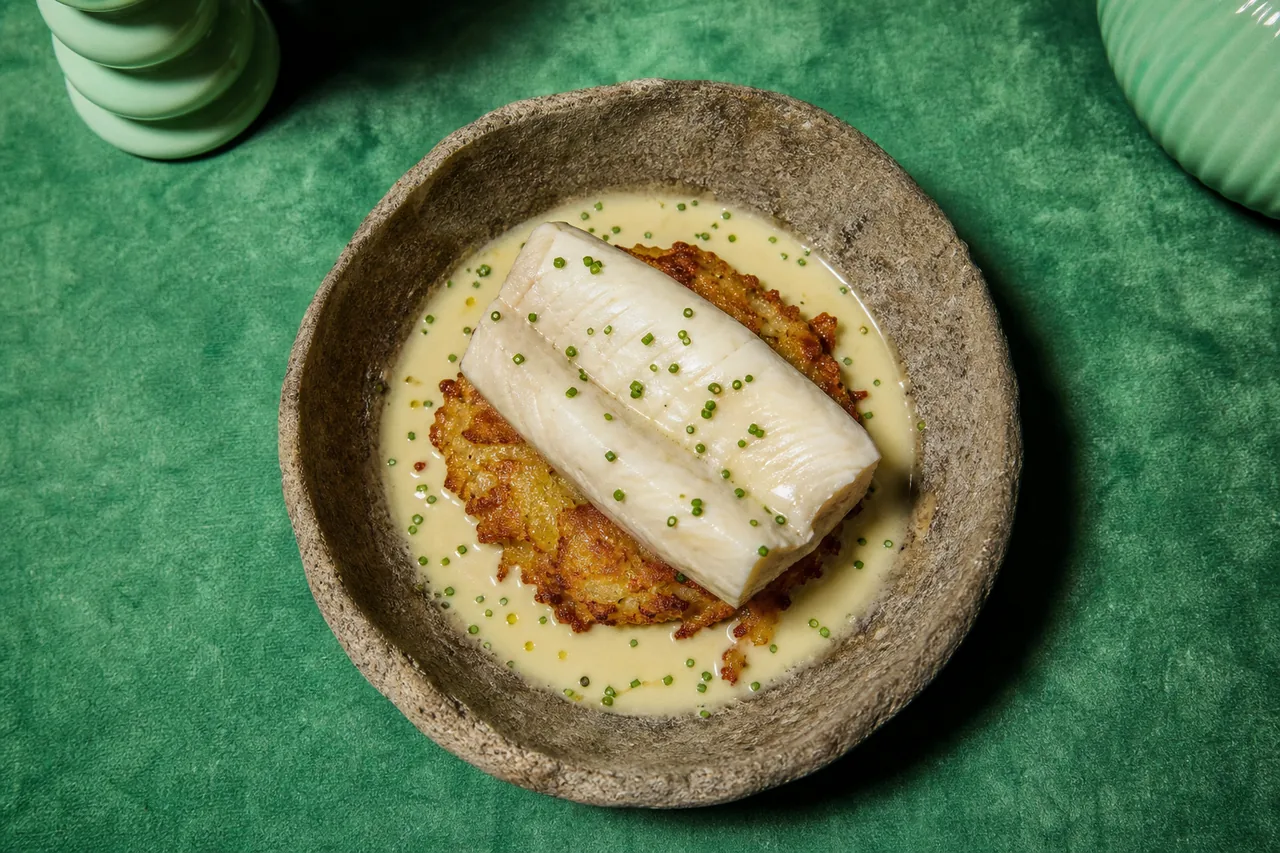
- Fillet pan-cooked gently, like a piece of meat
- Raw, as carpaccio or tartare
- In French
- Esturgeon sibérien
- Scientific name
- Acipenser baerii
- In the water
- Native to the great rivers of Siberia, it is now farmed in tanks and ponds, notably in Aquitaine and the Sologne; it cruises the bottom, rooting through silt with its snout.
- Season & buying
- Farmed year-round; the flesh is mostly sold smoked, while caviar is harvested in late autumn and winter.
- Common length
- ~100 cm
- How to identify it
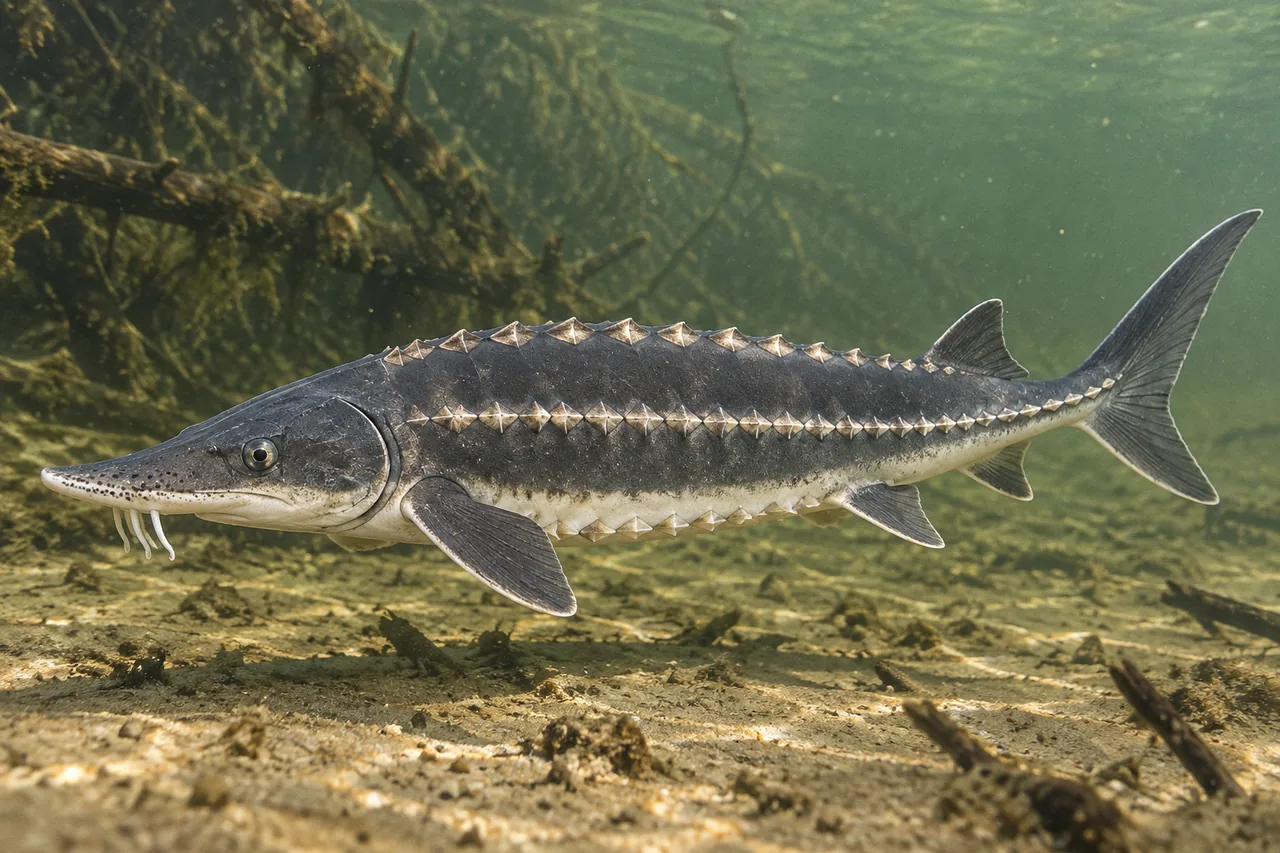
- Five rows of bony plates along the body
Pointed snout with four barbels ahead of the mouth
Asymmetric tail, shark-like
On the plate
White, firm, meaty flesh close to veal and a little fatty; its roe makes a caviar with nutty notes.
Avoid: Treating it like a delicate fish: the dense flesh needs slow cooking and a rest, or it stays rubbery.
On farms, young sturgeon are sexed by ultrasound, because it takes years before the females carry their eggs.
In Umay recipes
One Umay recipe calls for it.